


The experiment that changed my mind about cabbage
For years I treated cabbage as something that ended up in coleslaw or got buried in soup. Then I made an Egg Roll in a Bowl recipe and noticed how the cabbage caramelized in the pan with a little butter and garlic. That was the moment.
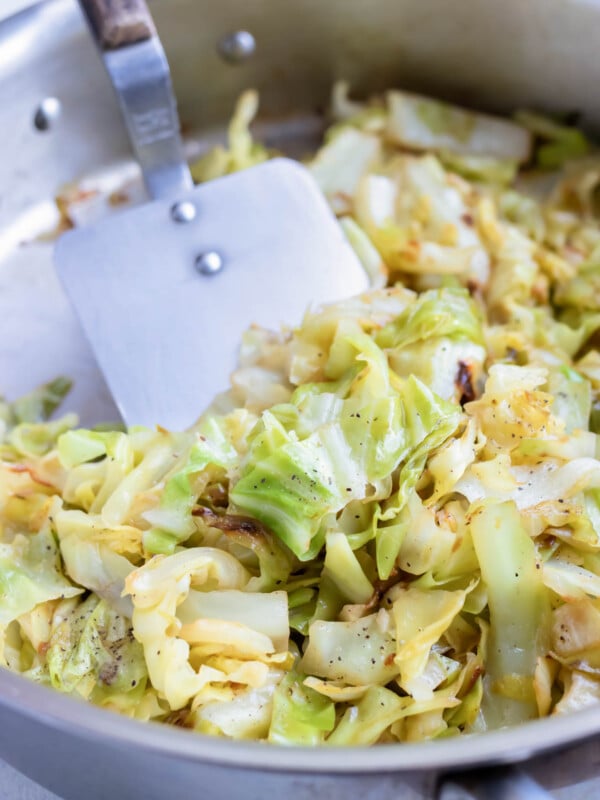
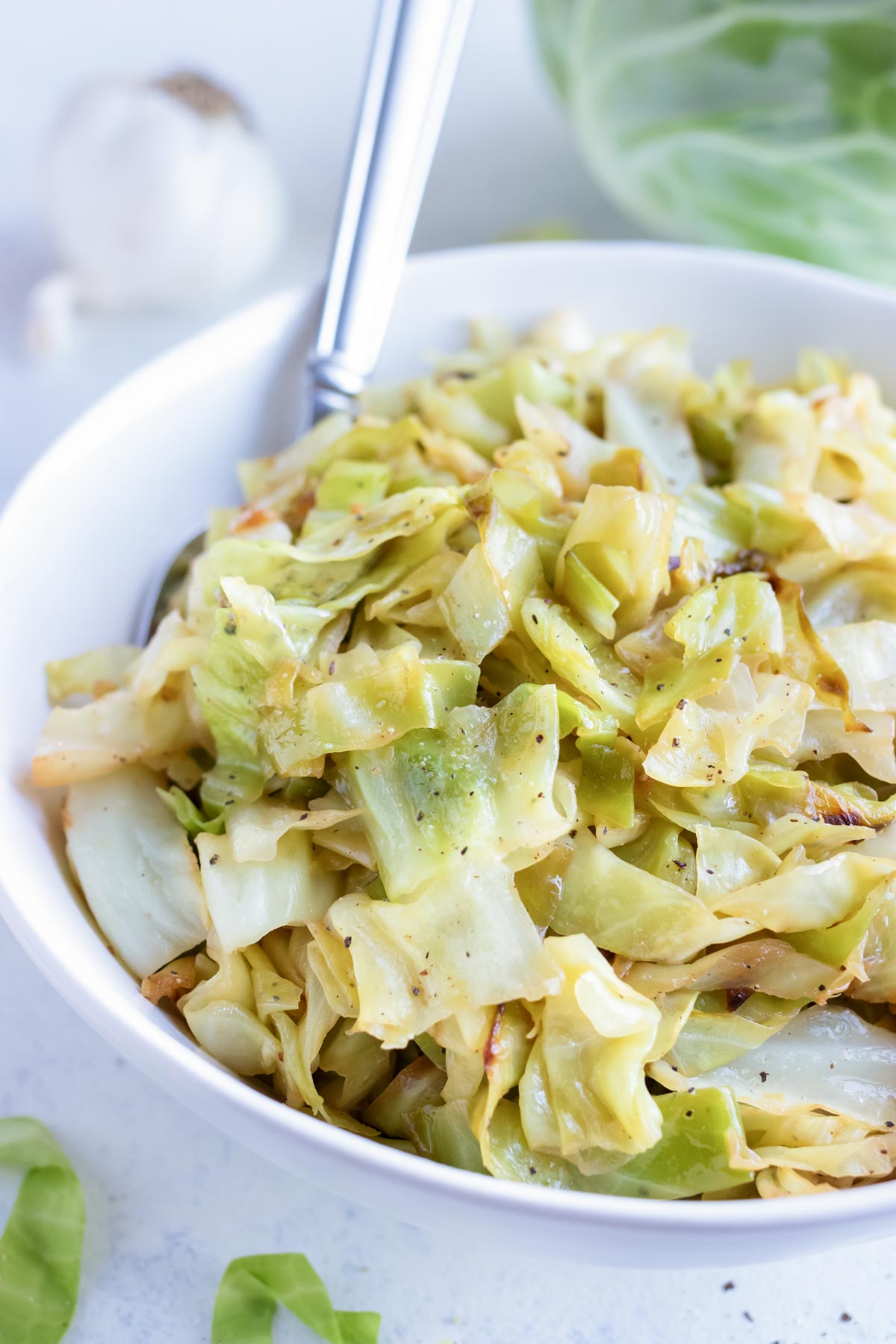
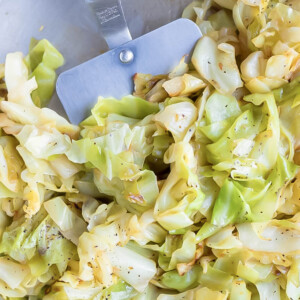
Now this Sauteed Cabbage lives on permanent rotation in our weeknight side-dish routine. Thinly sliced, sautéed in butter and garlic, allowed to sit on the heat just long enough to caramelize at the edges.
What makes the difference: slice the cabbage thin (¼-½ inch ribbons, longer pieces caramelize unevenly), don’t crowd the pan (sauté in two batches if you have to), and let it sit between stirs so the slices touch the hot skillet long enough to brown. About 20 minutes from cutting board to plate.
It’s the kind of side dish that quietly steals the plate. Make a double batch since leftovers reheat well and imo… even BETTER the next day!
Ingredients and Substitutions
For the exact measurements and detailed instructions, please see the recipe card below.

- Cabbage: A medium head of green cabbage is what this recipe is built around. Red or purple cabbage works for a slightly sweeter, peppier version (and a more dramatic color). See the Which Cabbage to Use section below for savoy and napa options.
- Butter: The flavor here. Salted butter for the simplest version, unsalted if you like to control the salt yourself. Olive oil or avocado oil work for a dairy-free swap, but butter is what makes this dish taste like more than just cooked cabbage.
- Garlic: One clove, crushed or minced. Fresh only here, garlic powder loses too much flavor in the pan. Add it after the butter melts but before the cabbage so it perfumes the fat.
- Salt and Pepper: Coarse salt and fresh-cracked pepper, generous on both. Cabbage soaks up salt; under-salted cabbage tastes flat.
Step-by-step Instructions
Please see the recipe card below for the full instructions, ingredient amounts, and a printable recipe.
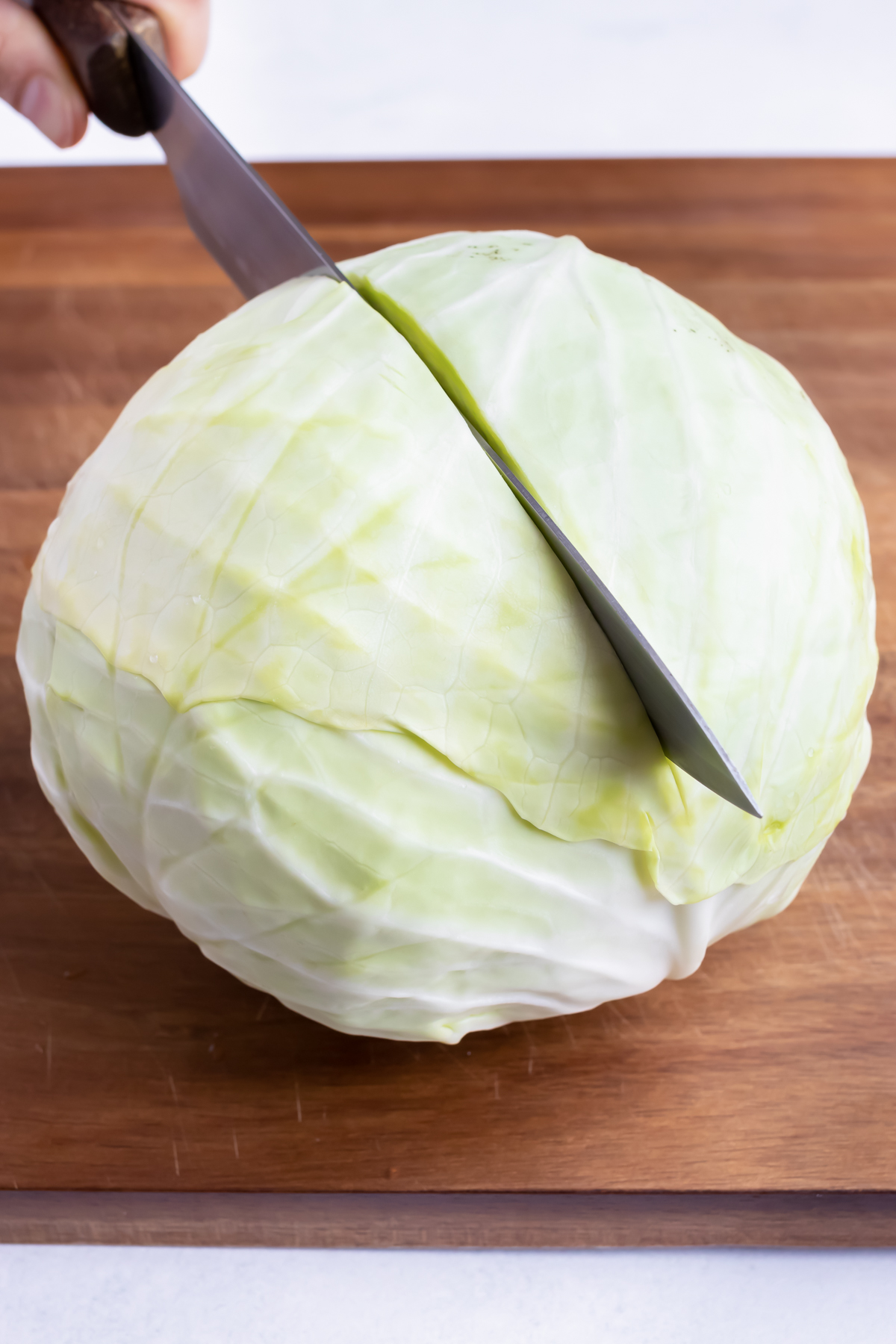
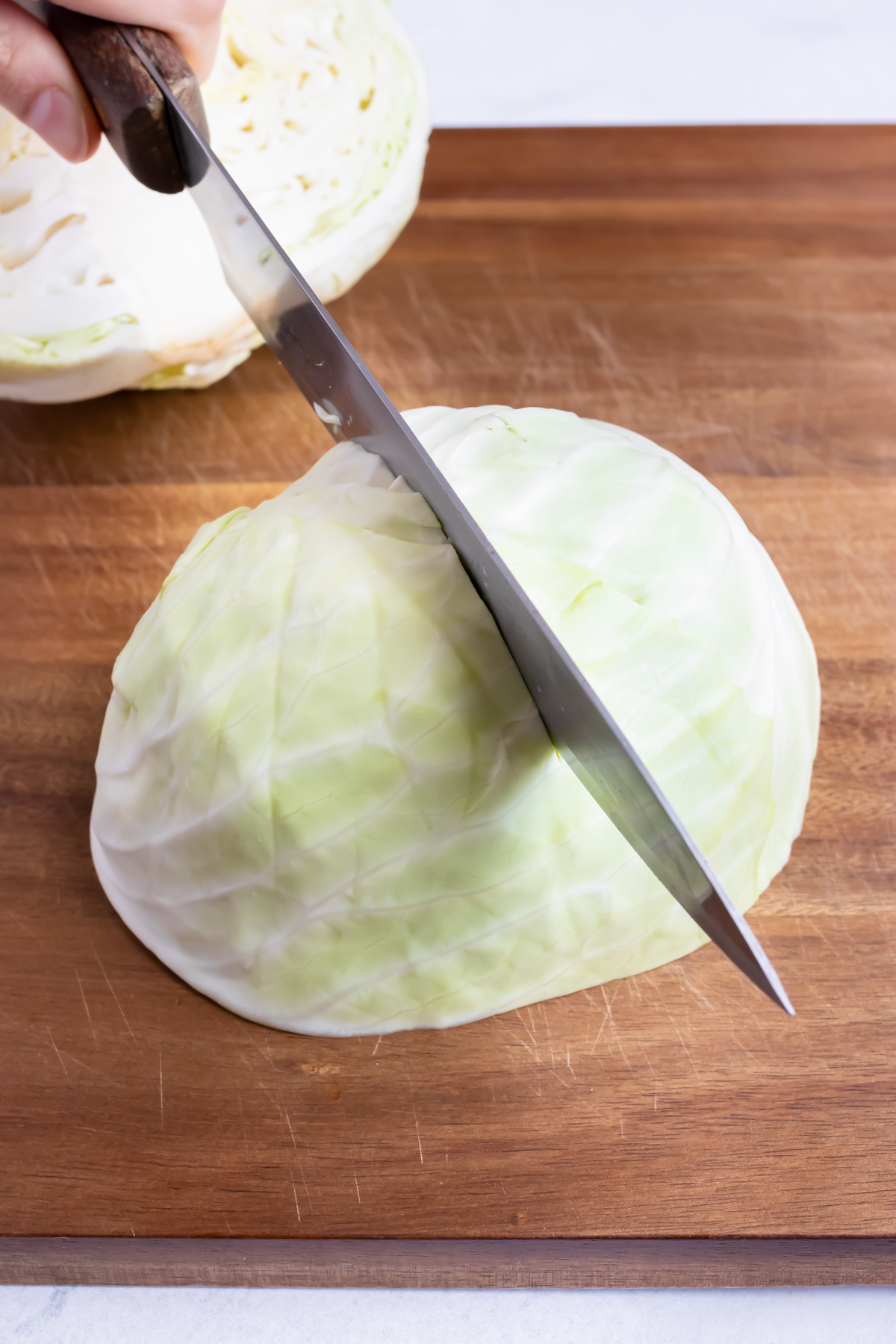
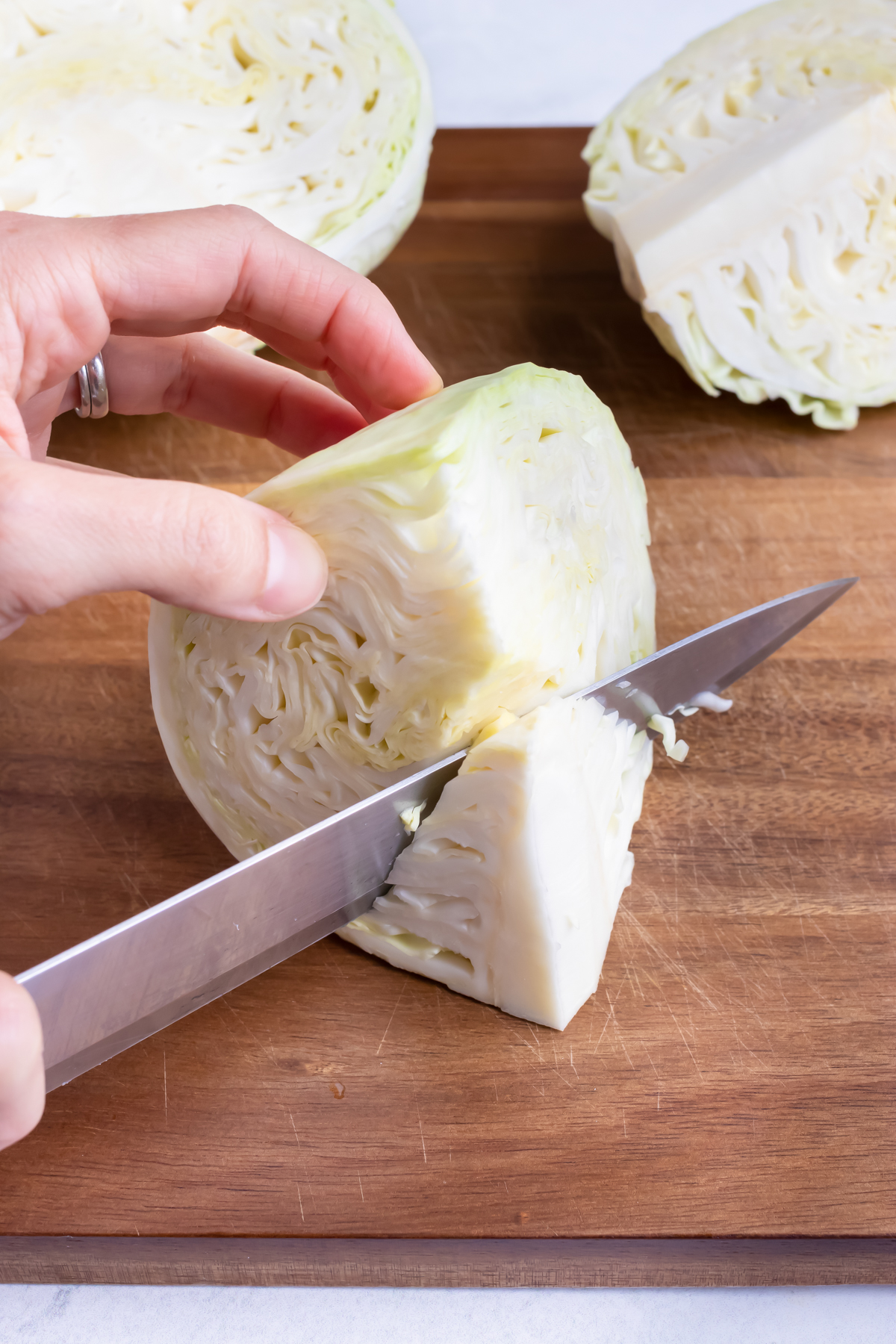
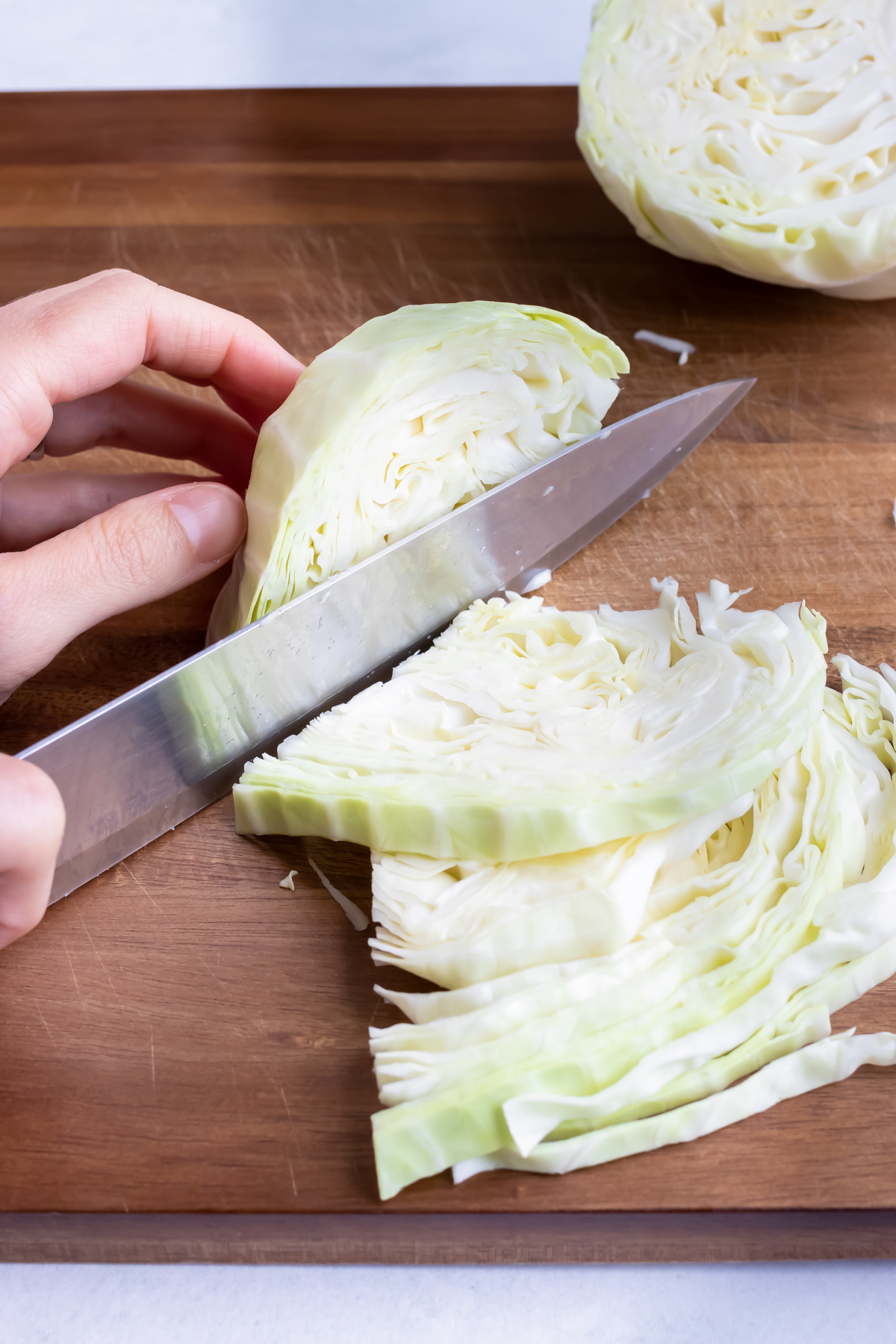
Slice the cabbage thin.
Place the head stem-side down on a cutting board and cut it in half, then quarters. Cut the core out of each quarter at an angle. Place each quarter flat-side down and slice into ¼-½ inch ribbons.
You should end up with about 7-8 cups of shredded cabbage. (Need a more detailed walkthrough? See How to Shred Cabbage.)
Heat the butter and garlic.
Place a large, shallow skillet over medium heat. Melt 2 tablespoons of butter, then add the crushed garlic and sauté for about 1 minute until fragrant. Don’t let the garlic brown.
Sauté in two batches.
Add half of the shredded cabbage to the skillet. Cook for 1-2 minutes until it starts to wilt and shrink down. Then add the remaining cabbage, salt, and pepper.
Caramelize and serve.
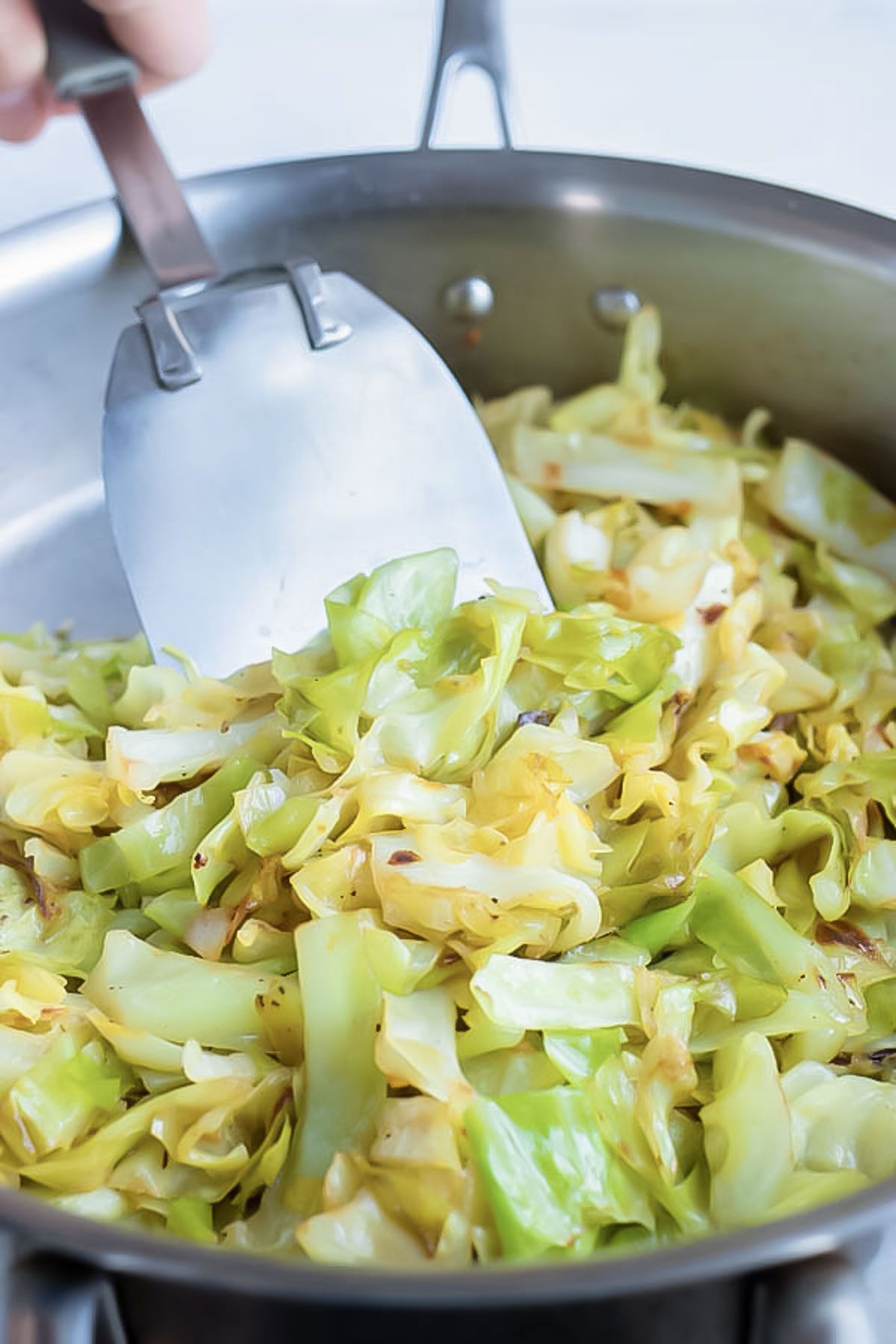
Cook for another 12-15 minutes total, stirring every 2-3 minutes. Let the cabbage sit between stirs so the slices that touch the skillet have time to brown. The longer you let it sit (within reason), the more caramelized it gets. Serve immediately.
Why Is My Cabbage Bitter, Soggy, or Watery?
The three failure modes for sautéed cabbage all trace back to a few specific moves. Here’s what went wrong and how to fix it.
Bitter: Either you over-cooked it (cabbage gets sulfurous and bitter past 25 minutes on heat) or you used cabbage that was past its prime. Pull the pan off the heat as soon as the cabbage is tender with caramelized edges. Older cabbage with limp outer leaves will also taste sharper, so peel those off before slicing.
Soggy: Pan was crowded, heat was too low, or you covered it with a lid. Cabbage releases water as it cooks, and if there’s nowhere for the steam to escape, you end up steaming instead of sautéing. Use a wide skillet, keep the heat at medium to medium-high, and leave the lid OFF.
Watery: You added liquid (broth, water, vinegar) too early. Save any liquid finishes for the last minute, after the cabbage is already caramelized. If the head was particularly fresh, pat the slices dry with a kitchen towel before sautéing.
FAQs
Place the head stem-side down on a cutting board, cut it in half, then quarters. Cut out the core from each quarter at an angle. Lay each quarter flat-side down and slice into ¼-½ inch ribbons. See the step-by-step photos above for the visual breakdown.
Green cabbage is the classic. Red or purple cabbage works equally well for a sweeter, more dramatic-colored version. Savoy cabbage cooks faster (cut sauté time by 5 min). Skip napa for this recipe, it’s too delicate. See the Which Cabbage to Use section above.
Soggy = pan was crowded, heat too low, or lid was on. Bitter = over-cooked or older cabbage. See the troubleshooting section above for the full breakdown.
Yes. Freeze cooked cabbage in an airtight container for up to 3 months. Thawed cabbage is softer, so use it stirred into soups, stews, or fried rice rather than as a standalone side.
Anything from corned beef to salmon to chicken piccata. See the What to Serve section below for the full pairing menu.
3-4 days in the fridge in an airtight container. Reheat in a hot skillet with a pat of butter for the best texture.
Tap stars to rate!
Simple Sautéed Cabbage Recipe

email this recipe!
Ingredients
- 1 medium head cabbage green
- 2 Tbsp. butter or oil
- 1 clove garlic crushed
- ½ tsp. salt to taste
- ¼ tsp. black pepper to taste

Instructions
- Shred the Cabbage: Cut entire head of cabbage into ¼-½” slices.* You should end up with roughly 7-8 cups of shredded cabbage. (Read recipe notes below to learn how to shred cabbage.)1 medium head cabbage
- Sauté the first Half: Place a large skillet over medium heat and add butter and crushed garlic. Sauté for 1 minute. Add in roughly half of the sliced cabbage and cook for a minute or two until it starts to wilt and shrink down some.2 Tbsp. butter, 1 clove garlic
- Add the Rest: Add in the remaining half of the cabbage along with the salt and pepper. Continue cooking for 12-15 minutes, stirring every 2-3 minutes. (Let it sit for a few minutes without stirring if you’d like it to caramelize.)½ tsp. salt, ¼ tsp. black pepper
- Serve immediately and enjoy!
Tap stars to rate!
Notes
- Similar sized. Cut the cabbage into slices that are the same thickness so it all cooks up at the same rate.
- Do it twice. Add the cabbage into the skillet in two batches so it will all fit easily.
- Let it sit. Letting the cabbage cook in the skillet without stirring for a few minutes gives it time to contact the hot skillet and caramelize.
- Bigger is better. Use a larger skillet or saucepan so the most cabbage makes contact with the heat and can caramelize.
- Keep it fresh. Opt for whole garlic cloves when possible. In a pinch, garlic powder will work.
Nutrition
Nutrition information is automatically calculated, so should only be used as an approximation.
What to Serve with Sauteed Cabbage
Sauteed cabbage is one of those side dishes that goes with almost any protein. Here are some of my favorite options, categorized by what mood you’re cooking for.
Classic Comfort
The traditional pairing: corned beef and cabbage. Sauteed cabbage also goes beautifully with pot roast, brisket, pork chops, or any roasted meat.
Quick Weeknight
Pair with grilled chicken, baked salmon, pork tenderloin, or chicken piccata for a fast dinner that feels balanced. The buttery cabbage rounds out a simple protein.
Asian-Leaning
Stir into Egg Roll in a Bowl as the base, or serve next to teriyaki salmon, orange chicken, or beef stir-fry. Add a splash of soy sauce or sesame oil at the end if you want to lean further in this flavor direction.
Other Cabbage Recipes to Try
If sauteed isn’t the texture you want tonight, try Roasted Cabbage Steaks with Garlic or Unstuffed Cabbage Rolls for the same head of cabbage played differently.


very easy to make and turned out amazing
Thanks so much for leaving a comment, Caroline! I’m so glad you found it easy to make and that it turned out amazing. Thanks for sharing!
First time cooking cabbage and it turned out amazing! Thanks
Yay! So happy to hear you enjoyed the recipe, Jamie! Cabbage is so underrated. Thanks so much for taking the time to leave a comment and rating!
What a tasty way to use extra cabbage, cut from large one. I added some red pepper flakes. Yum.
Yay! So happy to hear you enjoyed the recipe, Marlene! Sounds tasty. Thanks so much for taking the time to leave a comment!
Yummy 😋
Awesome recipe 😊
Yay!! So happy you enjoyed it. Thanks so much for taking the time to leave a comment/rating!
I cooked this recipe and it was delicious! I did add a Vidalia onion and since I have to eat low sodium I used unsalted butter and no table salt.
I added McCormick Garlic and Herb no salt seasoning to replace the salt. It needed some liquid to complete the cooking so I used very low sodium chicken broth. I am adding this to my menu options and I will cook this more often now!
Yay! So happy to hear you enjoyed the recipe, Jayne! I’m glad you could make it work for you. Thanks so much for taking the time to leave a comment!
Having this for the 2nd time this week. Easy and delicious. Great sour of fiber and vitamin C too!
Yay! So happy to hear you enjoyed the recipe, Nancy! Twice in one week is high praise. Thanks so much for taking the time to leave a comment!