

- Why this Greek dressing works
- Ingredients and Substitutions
- Step-by-step Instructions
- The Blender I L❤️VE!
- How to store homemade Greek dressing
- Greek dressing vs. Italian dressing: what’s the difference?
- Greek Salad Dressing Recipe
- What to serve with Greek salad dressing
- More Homemade Salad Dressing Recipes
- 17 Simple Salad Dressings e-Book
Our new go-to homemade dressing!

If you’ve been buying Greek dressing in a bottle because it feels easier, I get it. But homemade Greek dressing is genuinely a 5-minute project, and once you make it, you won’t go back.
I went down the homemade dressing rabbit hole after making my own Balsamic Vinaigrette for the first time, and now I keep a whole rotation in the fridge. They’re my not-so-secret-anymore ingredient for making any green, pasta, or grain bowl taste better than it has any right to.
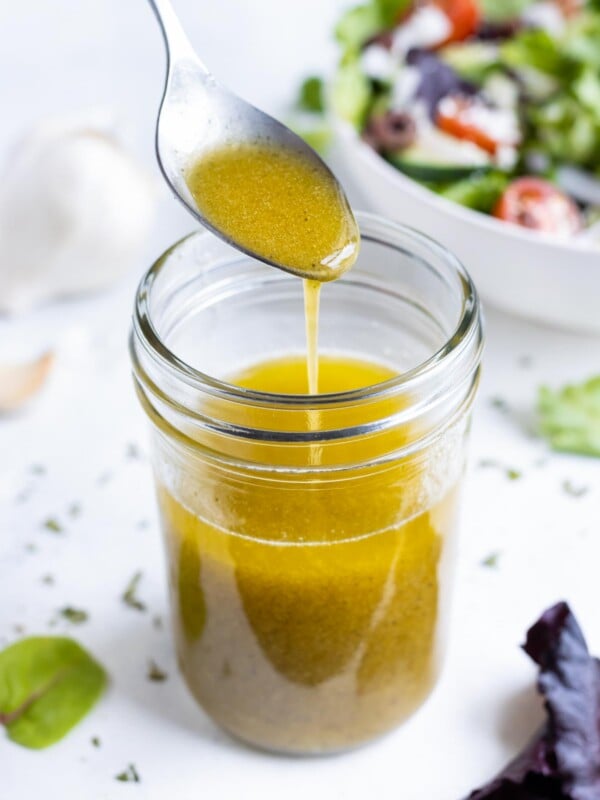
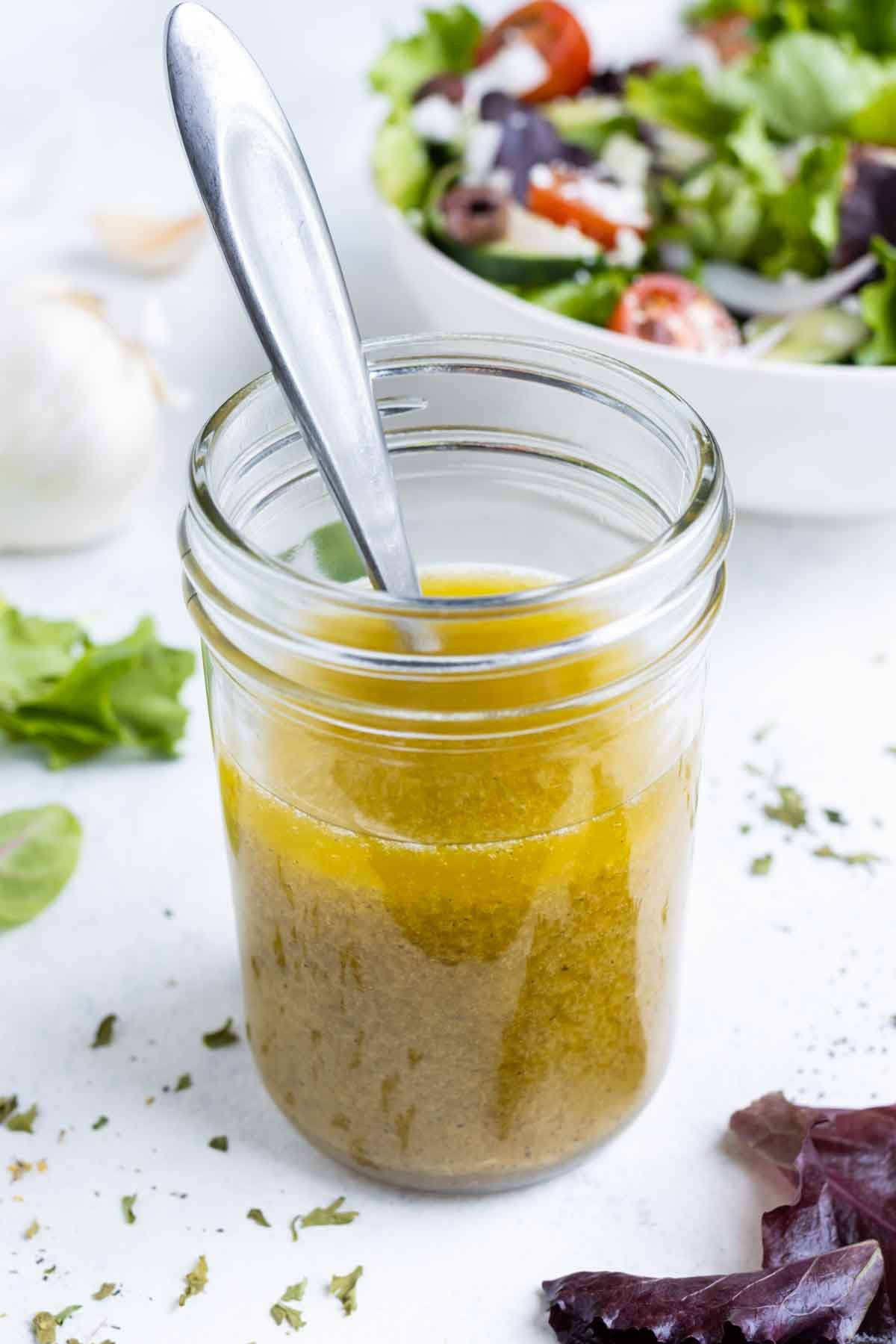
Take this Greek Salad Dressing. Toss the ingredients in a mason jar, shake, done.
Why this Greek dressing works
It’s all about the ratio. Most homemade dressings get the oil-to-acid balance wrong, ending up either too oily or too sharp. This one lands at roughly 2.5-parts olive oil to 1-part red wine vinegar. It also has a touch of honey and Dijon doing two jobs at once: balancing the acidity AND helping the dressing emulsify so it actually clings to your salad.
The herb blend (dried oregano, parsley, and basil) is what makes this Greek and not just any vinaigrette. Most recipes lean on oregano alone, but layering in parsley and basil gives the dressing more depth than the bottled stuff.
Ingredients and Substitutions
For the exact measurements and detailed instructions, please see the recipe card below.
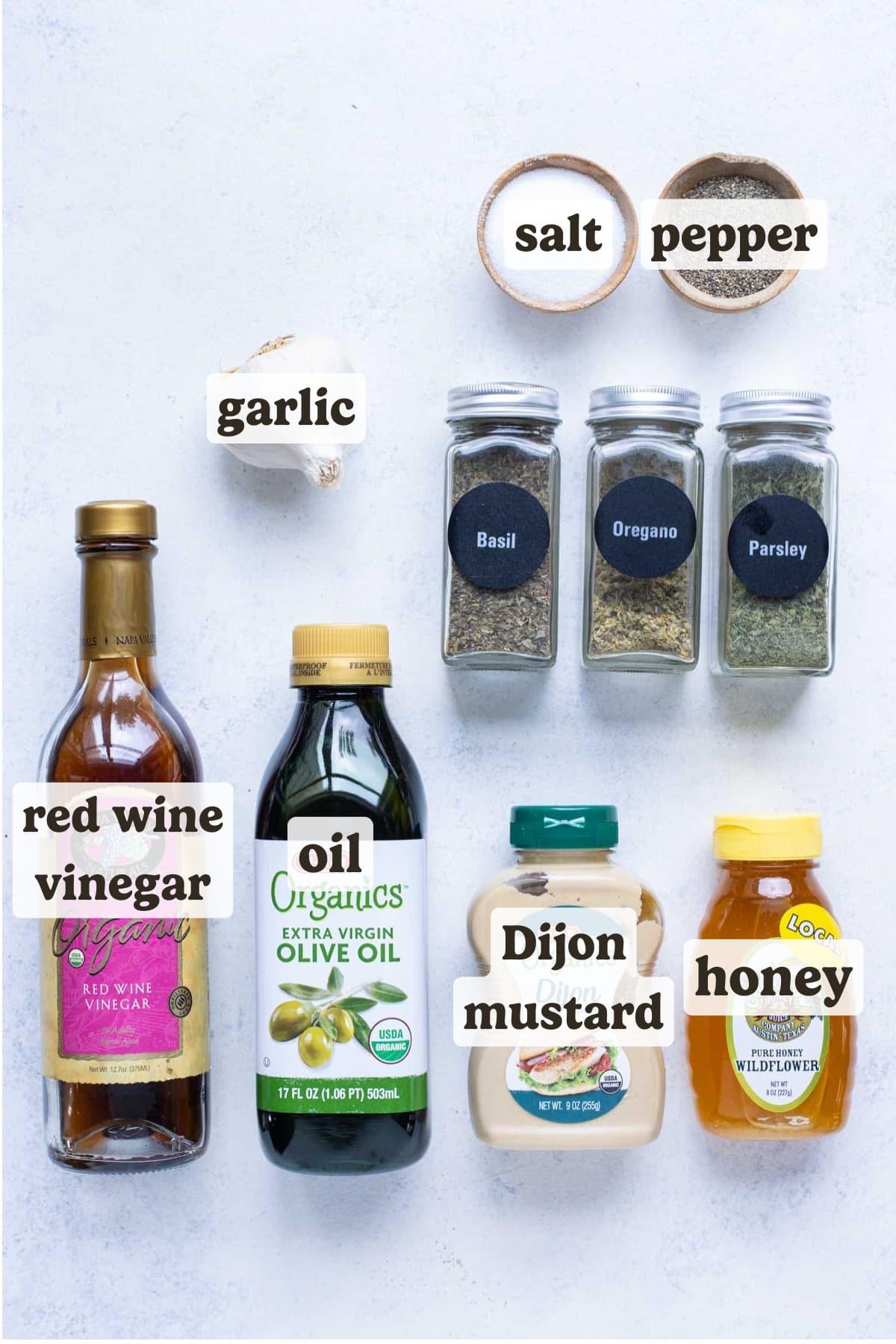
- Oil. You need a good quality one, like extra-virgin olive oil. This makes up the majority of the flavor profile, so you want to like it! You can also use avocado oil.
- Vinegar. Red wine vinegar gives this dressing that classic Greek taste. You can also sub with apple cider vinegar, but it won’t have the same flavor.
- Sweetener. Honey is used in this recipe, but you can try out agave nectar, sugar, or leave it out completely.
- Garlic. Fresh is best, be sure to mince the garlic cloves. You can also use ¼ teaspoon garlic powder if that’s what you have.
- Mustard. One teaspoon Dijon mustard is what adds the best flavor and helps the dressing emulsify. If necessary, you can sub yellow, but it will change the flavor drastically.
- Herbs. Use a mix of dried oregano, parsley, and basil for that Mediterranean flavor. You can leave out one, but a blend of the three gives a more interesting taste. Fresh herbs go nicely as well, but you need to double the amount since dried are more potent than fresh.
Step-by-step Instructions
Please see the recipe card below for the full instructions, ingredient amounts, and a printable recipe.
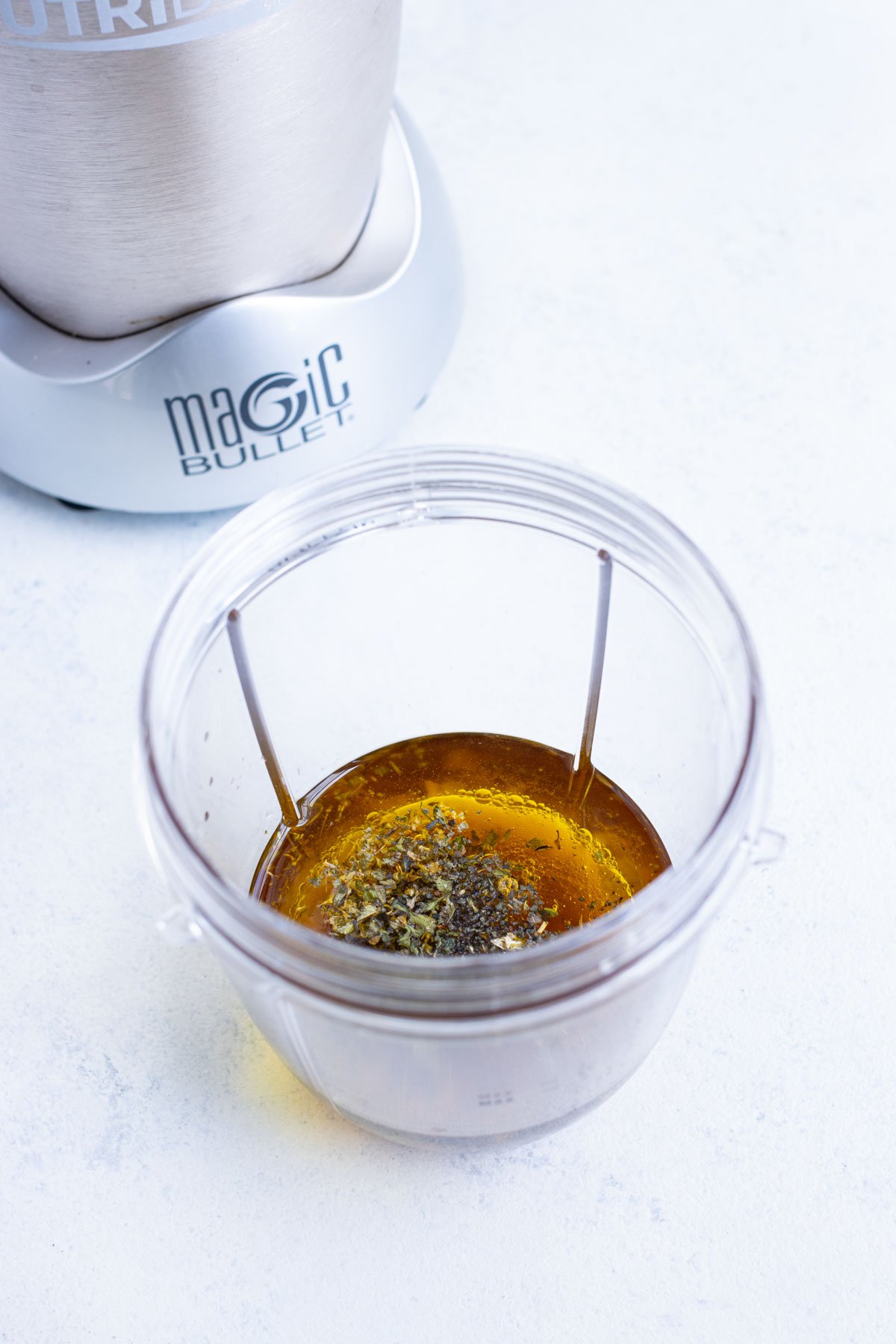
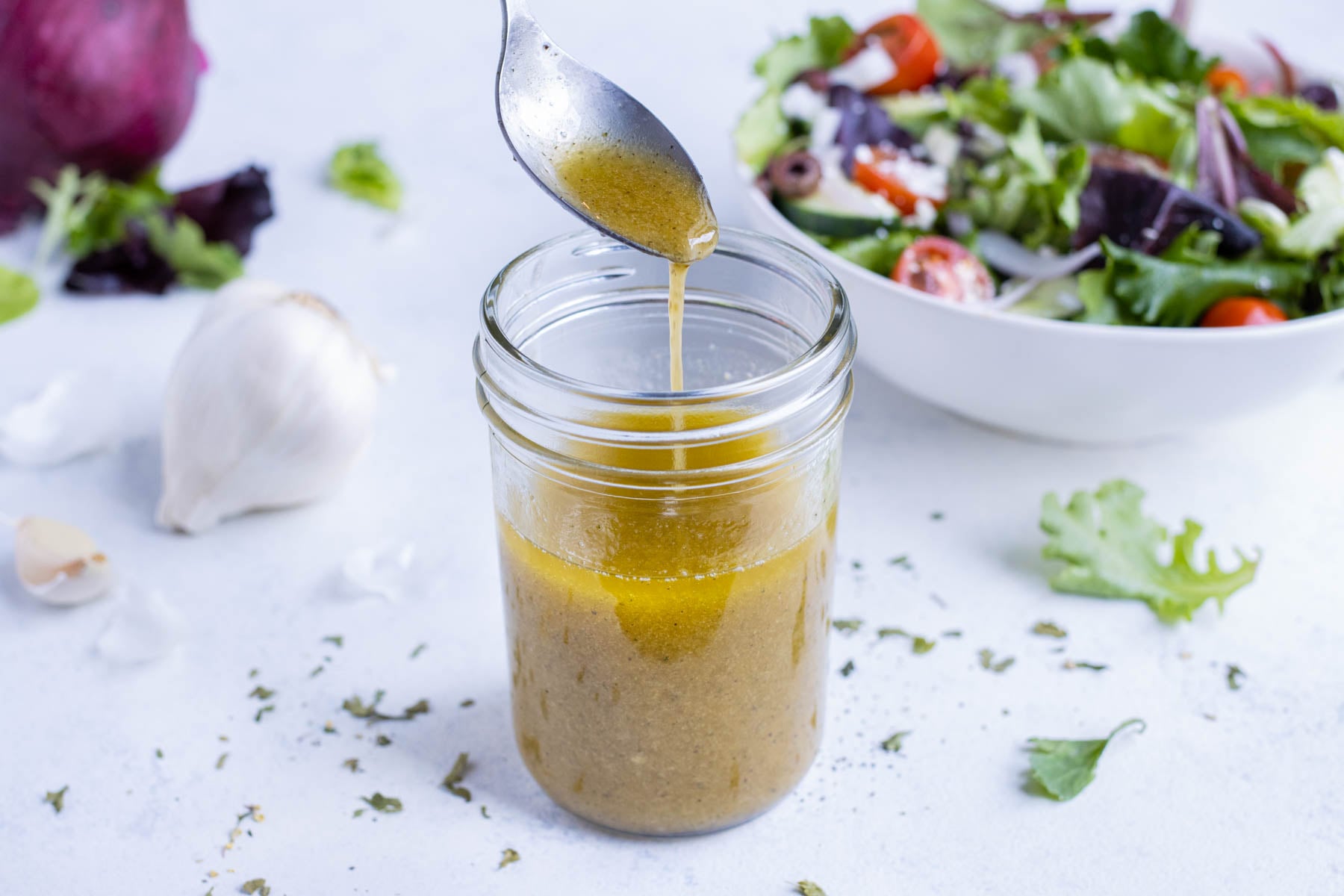
Add ingredients to a jar or blender.
Combine all the ingredients in a mason jar, or any other container with a tight-fitting lid. Vigorously shake for 15 to 20 seconds until everything is blended.
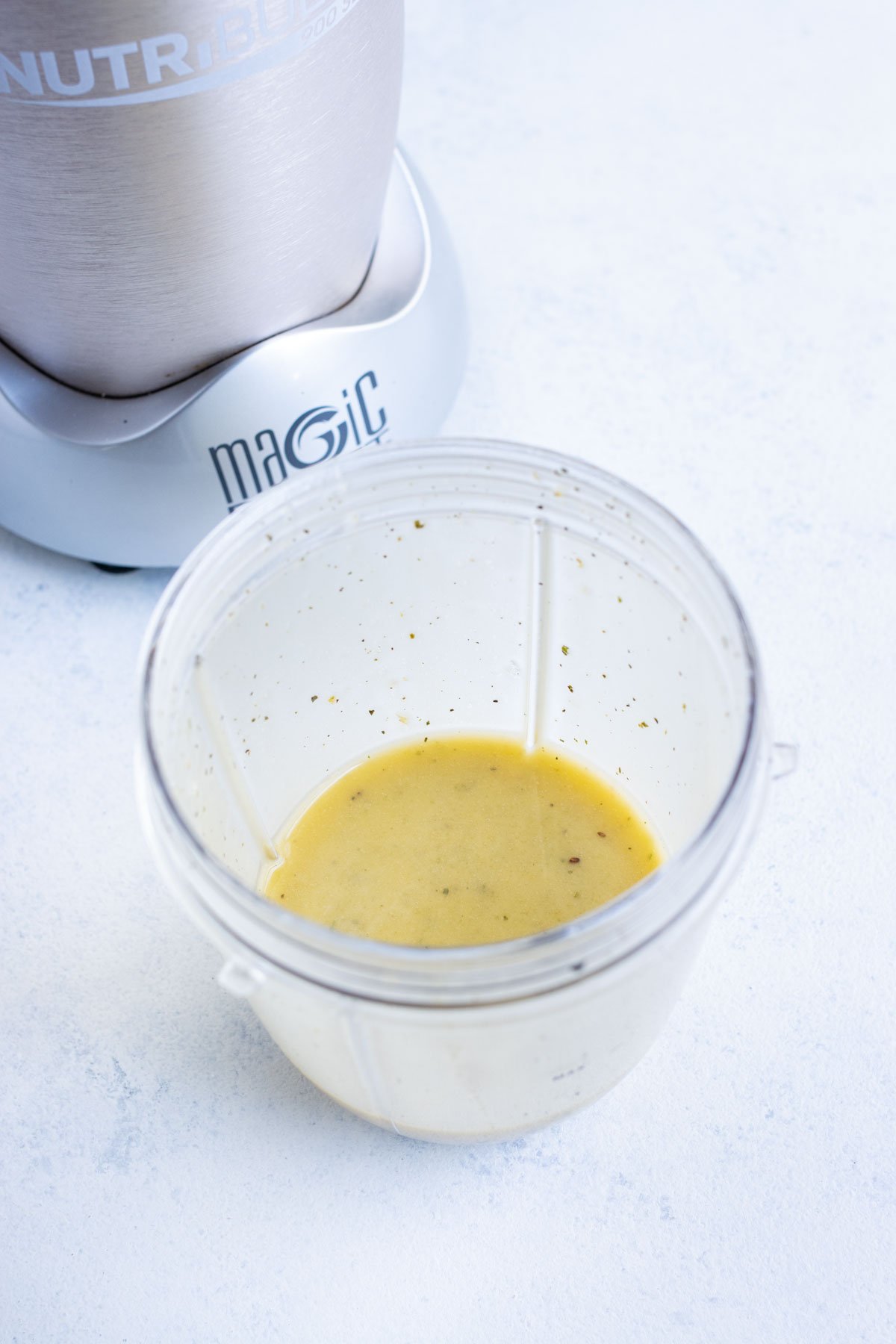
Alternatively, add all dressing ingredients to the cup of a high-speed blender or food processor. Blend for 10-20 seconds, or until emulsified.

The Blender I L❤️VE!
If you’d rather skip the mason jar shake, a high-speed blender like the Vitamix Ascent X4 emulsifies the dressing in 10-20 seconds and gives it a slightly creamier finish. Honestly use the heck out of mine for everything from soups and sauces to smoothies.
Store or serve immediately.
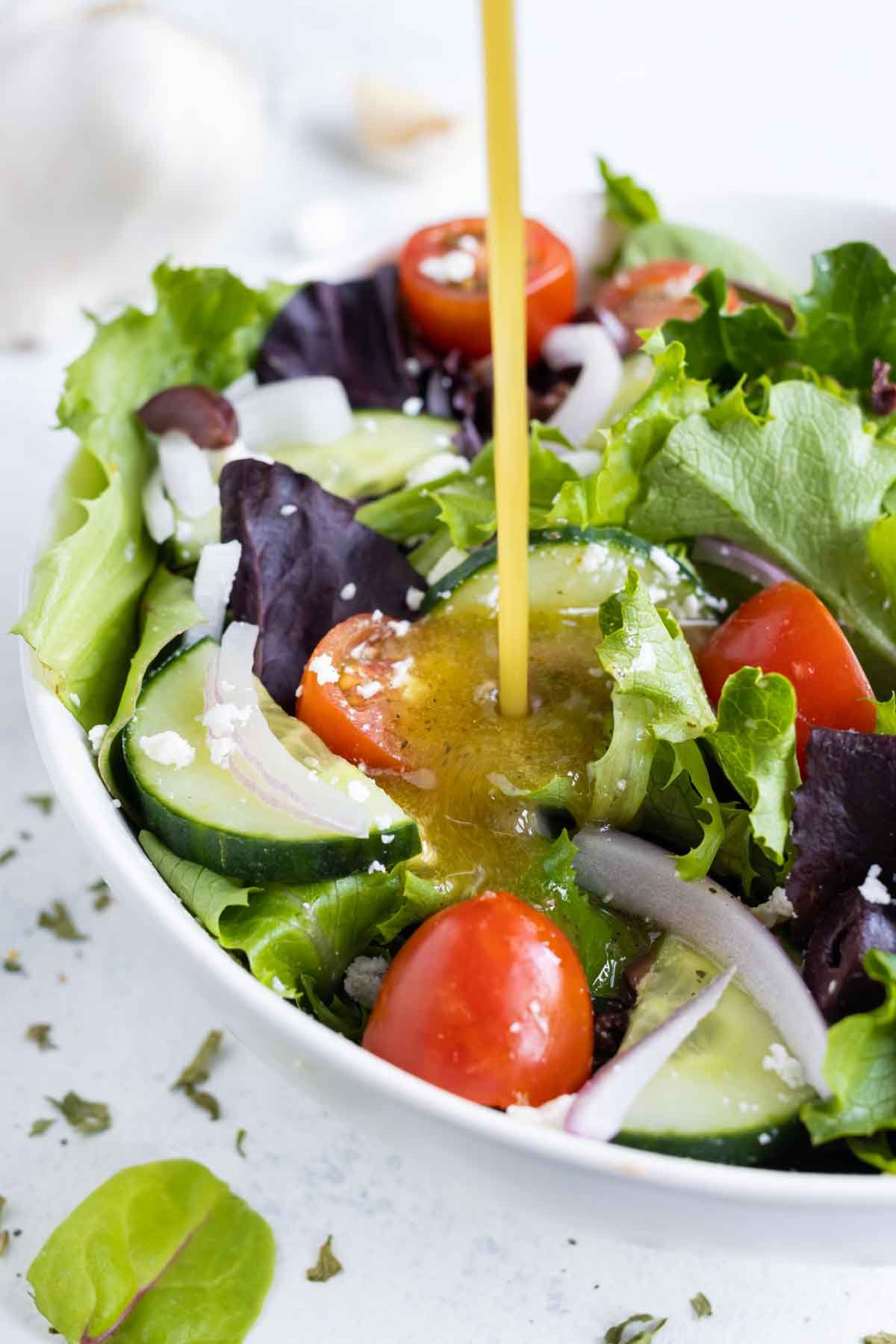
This dressing is delicious on SO MANY dishes! The tangy flavor is perfect on a regular Greek salad or pasta salad. It perfectly complements the tomatoes, red onion, kalamata olives, and feta cheese. Don’t forget the homemade croutons!
Or, store in the refrigerator for up to a week until you’re ready to use it.
How to store homemade Greek dressing
This dressing keeps in the fridge for up to 1 week in an airtight container or mason jar. The olive oil will thicken when chilled and separate slightly, which is totally normal. Pull it out 15-20 minutes before serving so it can come back to room temperature, then give it a good shake before pouring.
Greek dressing vs. Italian dressing: what’s the difference?
They look almost identical from across the salad-dressing aisle, but Greek and Italian dressings are built on different flavors. If you’re deciding which one to make tonight, here’s how they actually compare:
| Greek dressing | Italian dressing | |
|---|---|---|
| Base | Olive oil + red wine vinegar | Olive oil + white wine vinegar (sometimes red) |
| Herbs | Blend (oregano, parsley, basil) | Often just oregano |
| Citrus | Usually none | Sometimes lemon juice or zest |
| Other flavors | Garlic, honey, Dijon | Garlic, sometimes Parmesan or red pepper flakes |
| Best on | Greek salad, grilled veggies, marinades for chicken | Italian salads, pasta salad, antipasto plates |
| Taste | Tangier, more herbaceous | Slightly milder, more garlic-forward |
In short: Greek leans tangier and more herbaceous; Italian is more garlic-forward, often with lemon. Want both in your fridge? The homemade Italian Dressing recipe is also 5 minutes flat.
FAQs
Greek salad dressing is built on olive oil, red wine vinegar, garlic, Dijon mustard, honey, and a blend of dried herbs (oregano, parsley, and basil). Shake it all up in a mason jar and you’ve got dressing in 5 minutes.
You can. Some recipes add a tablespoon of lemon juice for extra brightness, though it isn’t traditional. If you want to add it, sub 1 tablespoon of the red wine vinegar for fresh lemon juice. (Bottled lemon juice doesn’t taste the same.)
Yes. Whisk in 2 tablespoons of plain Greek yogurt or mayonnaise to turn this into a creamy dressing that clings to lettuce a little better. Tahini works too if you want it dairy-free.
It’s optional. The honey balances the acidity of the vinegar and rounds out the taste, but you can leave it out for a more traditional vinaigrette. If you do skip it, taste and adjust the salt at the end.
Tap stars to rate!
Greek Salad Dressing Recipe

email this recipe!
Equipment
- Cuisinart Food Processor optional
Ingredients
- ½ cup olive oil
- 3 tablespoons red wine vinegar
- 2 teaspoons honey optional
- 1 garlic clove finely minced
- 1 teaspoon Dijon mustard
- ¼ teaspoon dried oregano
- ¼ teaspoon dried parsley
- ¼ teaspoon dried basil
- ¼ teaspoon salt plus more to taste
- ⅛ teaspoon black pepper plus more to taste

Instructions
- Add ingredients to a 16-ounce mason jar and shake until well combined. Alternatively, you can add the ingredients to a high-speed blender or food processor and blend for 10-20 seconds, or until smooth.½ cup olive oil, 3 tablespoons red wine vinegar, 2 teaspoons honey, 1 garlic clove, 1 teaspoon Dijon mustard, ¼ teaspoon dried oregano, ¼ teaspoon salt, ⅛ teaspoon black pepper
- Use immediately or store Greek dressing in the refrigerator for up to 1 week between servings. Bring to room temperature and shake well before using.
Tap stars to rate!
Video
Notes
Nutrition
Nutrition information is automatically calculated, so should only be used as an approximation.
What to serve with Greek salad dressing
A big green salad is the obvious move, but this dressing is way more versatile than that. Here are some of my favorite ways to use it:
- Tossed with Greek Pasta Salad for a Mediterranean side that holds up at picnics and BBQs
- Drizzled over Cucumber Tomato Salad when summer tomatoes are at their peak
- Spooned onto Mediterranean Couscous Salad for an easy weeknight side
- As a marinade for Grilled Greek Chicken Kabobs (let the chicken sit in the dressing for 30 minutes before grilling)
- Drizzled over Greek Chicken Tacos for a tangy finishing sauce
- Tossed with Mediterranean Yellow Rice and chickpeas for a lunchbox grain bowl
- Spooned over Chicken Shawarma Orzo Skillet to brighten things up at the end
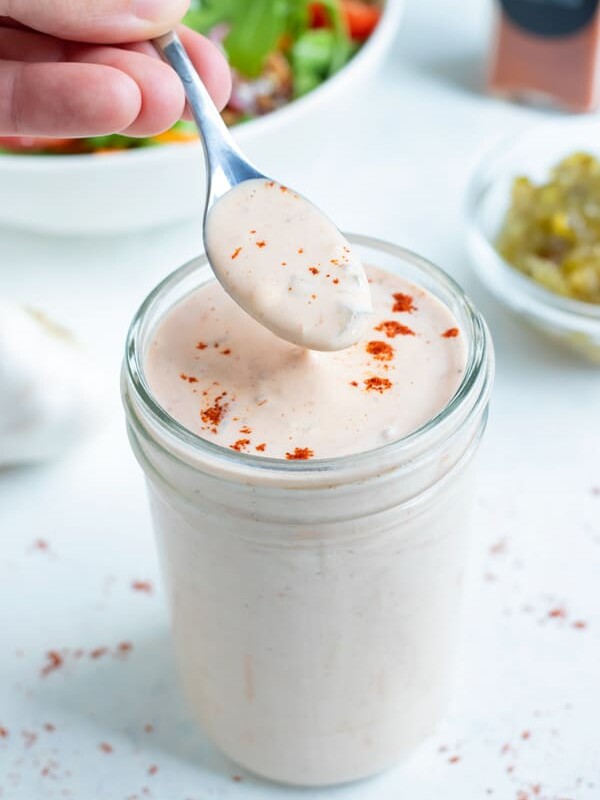
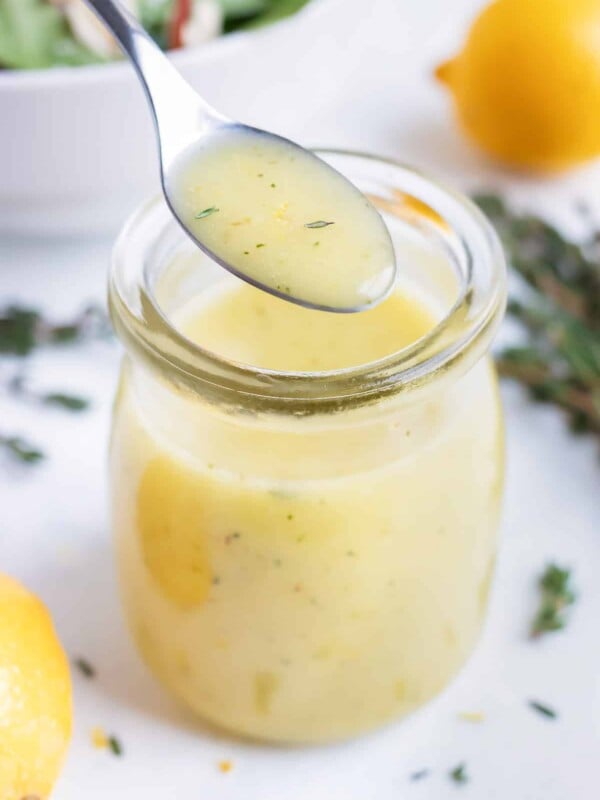
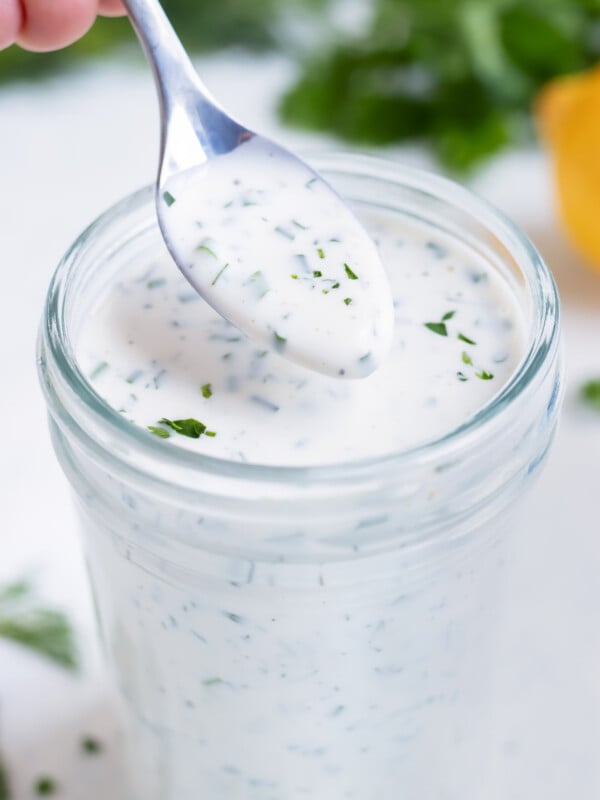
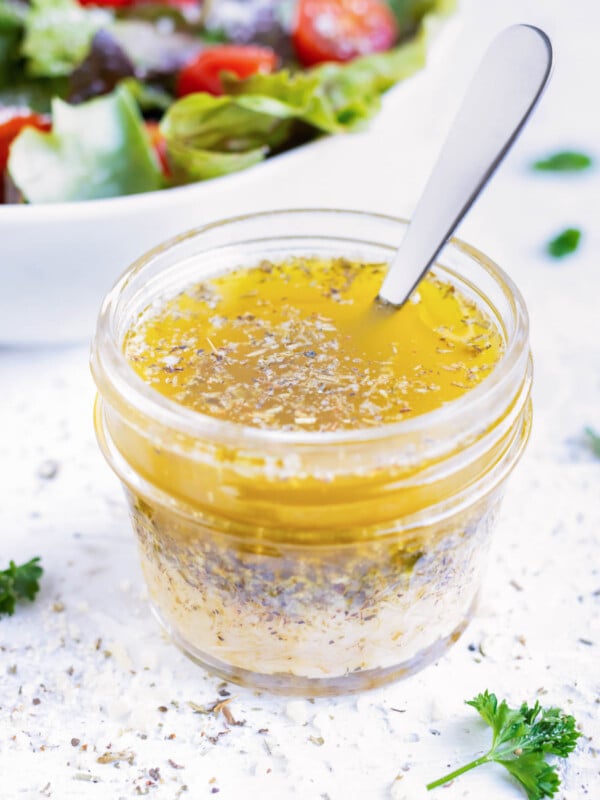
More Homemade Salad Dressing Recipes
Once you see how easy it is to make your own dressings, try these recipes next:
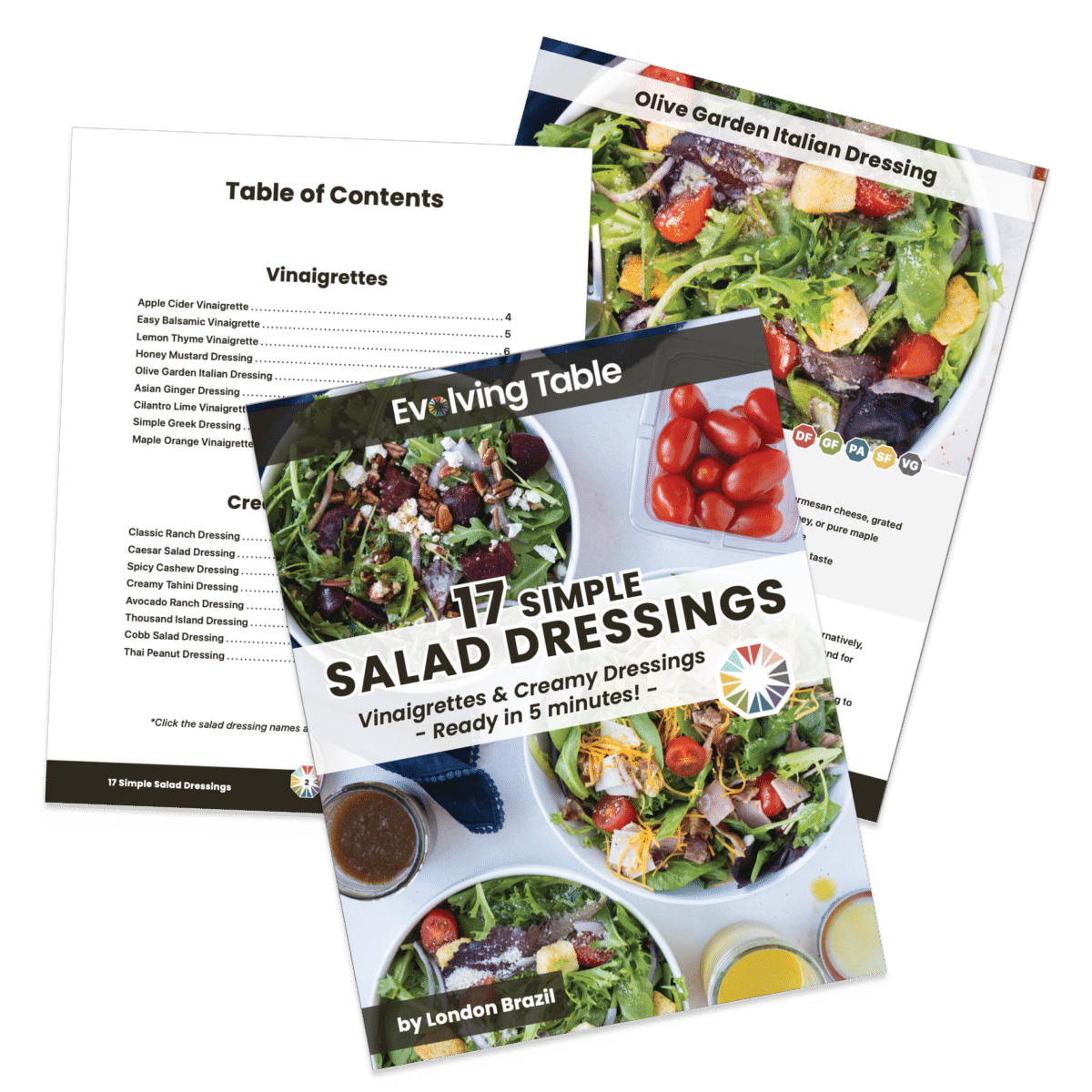
17 Simple Salad Dressings e-Book
An e-cookbook full of quick vinaigrettes and creamy dressings that are ready in under 5 minutes!