

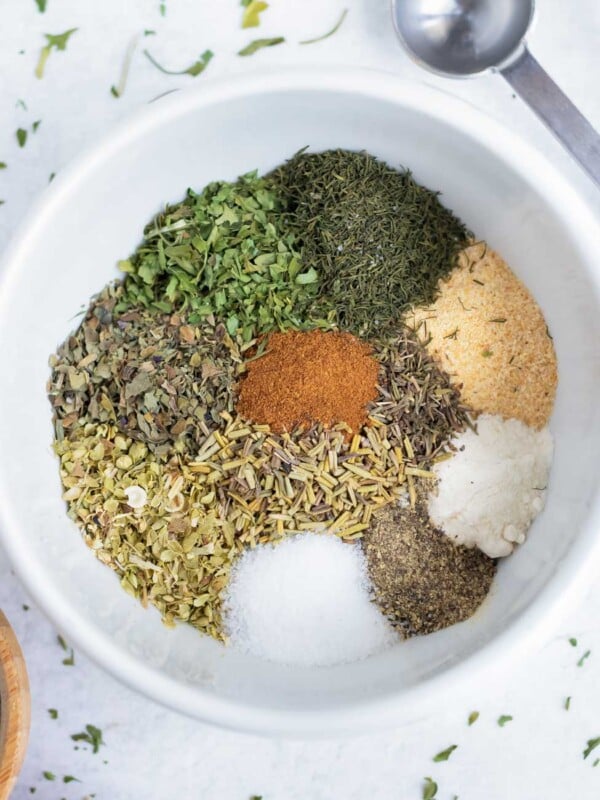

The mix I use on everything!

I first threw this Greek Seasoning together when I ran out of my favorite Cavender’s blend while making Lamb Koftas at home.
And you know what? I ended up liking it even more!
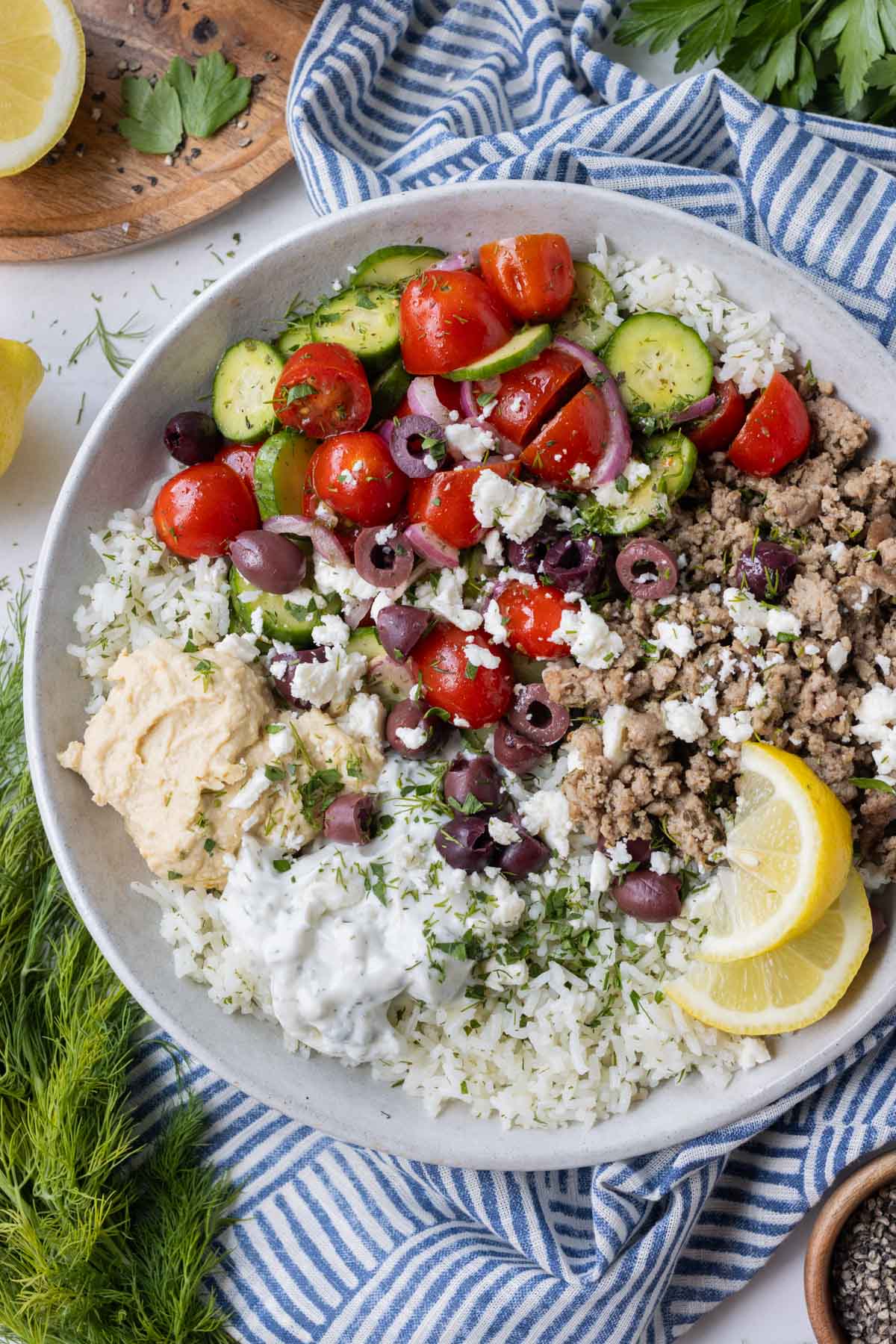
So much so, that I found myself whipping up batch after batch for a Greek Ground Turkey Bowl, then a Greek Salad Dressing (so, so good!!), Greek Chicken Kabobs… you name it, I was sprinkling Greek seasoning onto it!! LOL
After using this blend in over a dozen recipes on the site, I can confidently say it beats Cavender’s every single time.
What makes this seasoning different?
It’s all about the tiny hint of cinnamon. It’s subtle, but it adds this lovely warmth and depth that makes the flavors pop.
And while it looks like a lot of herbs and spices, I promise they’re all pantry staples. Together they make the most deliciously complex blend—way better than anything you’ll grab off the shelf!
I’ve made this 3 or 4 times now! It is very good! It’s getting ready to be grilling season and I highly recommend keeping a batch of this made. I have used this with lemon juice for grilled chicken, added to ground lamb, and as the seasoning mix in a brine. The only thing I do different is add less salt. It’s a crowd pleaser every time!
– Dana
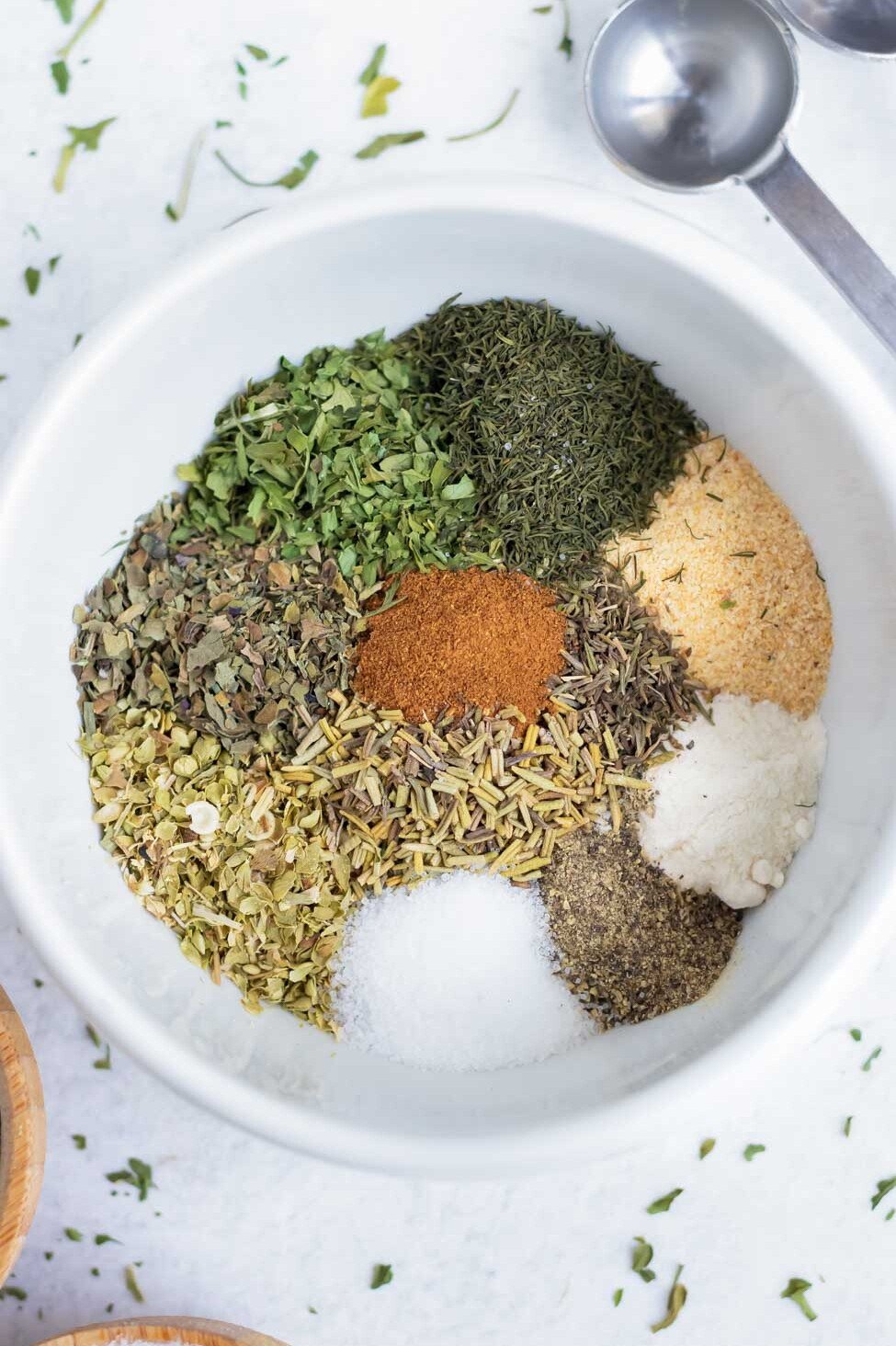
Ingredients and Substitutions
For the exact measurements and detailed instructions, please see the recipe card below.
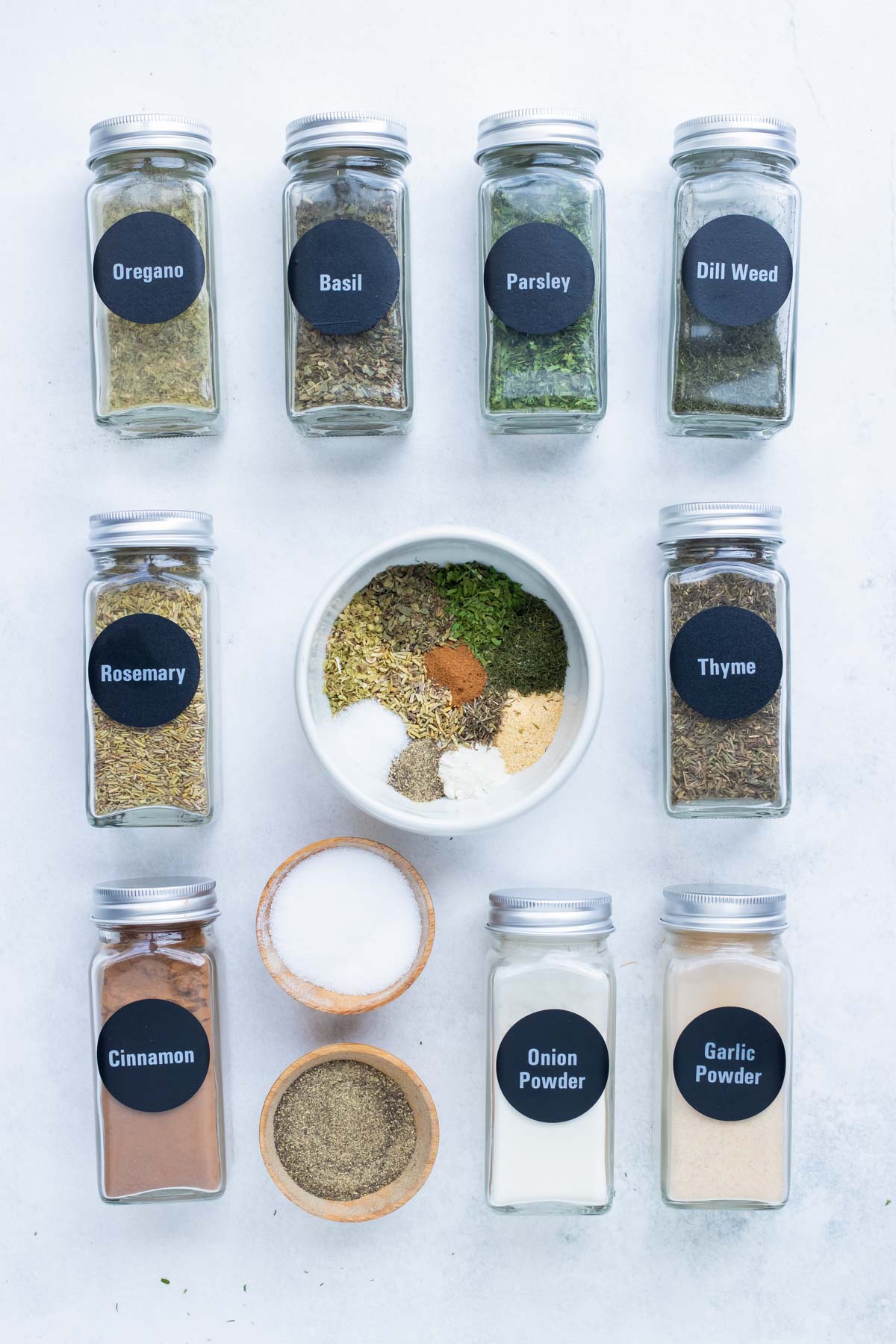
- Salt and Black Pepper. I often like to leave these out so I can adjust the amount I add depending on the recipe I’m cooking.
- Greek Oregano. This woody, earthy spice is the base of this mix. There is a Mexican oregano variety that is more commonly found in grocery stores. It can easily be used but will impart a slight licorice flavor.
- Basil. This is the other essential herb, so try and avoid substituting if possible.
- Other Dried Herbs. Parsley, dill, rosemary, and thyme are all used in smaller amounts. Try to use as many as you can for the best flavor, but feel free to swap out one for the other if you don’t have it on hand.
- Garlic and Onions Powders. If you don’t happen to have these, remember when adding your blend to recipes and up the amount of fresh garlic and onions you use.
- Cinnamon. If there’s a second ingredient you MUST use, it’s cinnamon. Nutmeg can be used if you must.
Step-by-step Instructions
Please see the recipe card below for the full instructions, ingredient amounts, and a printable recipe.
The only step: whisk it up!!
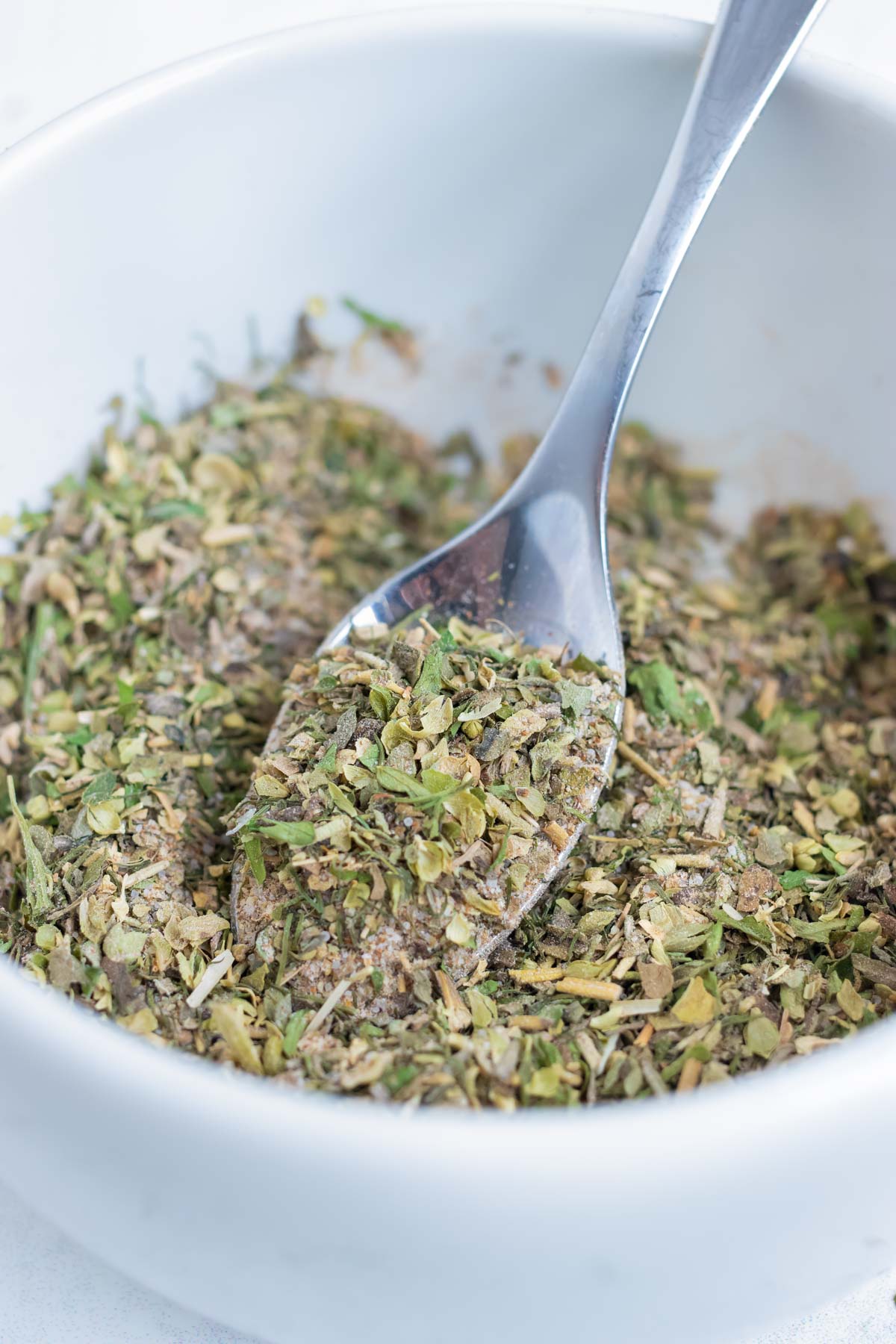
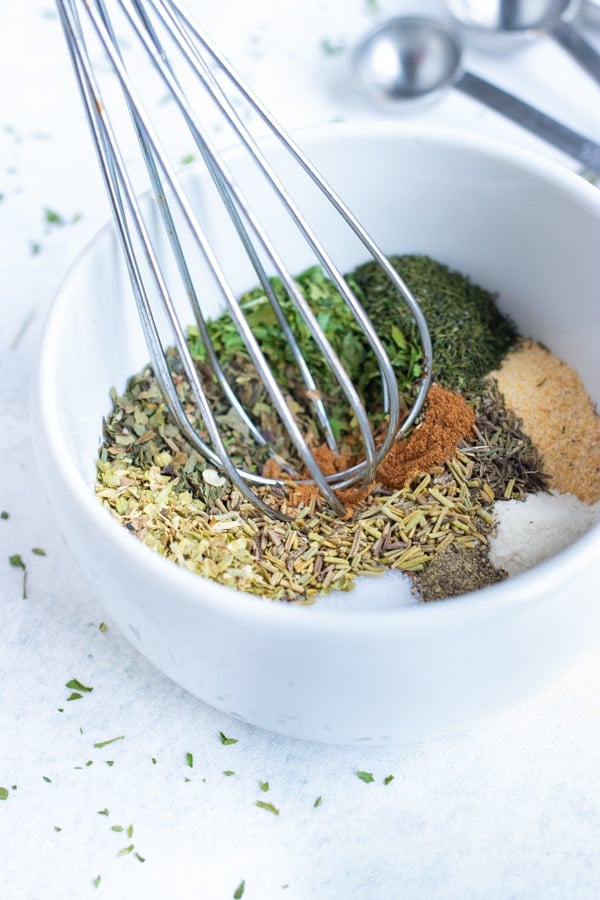
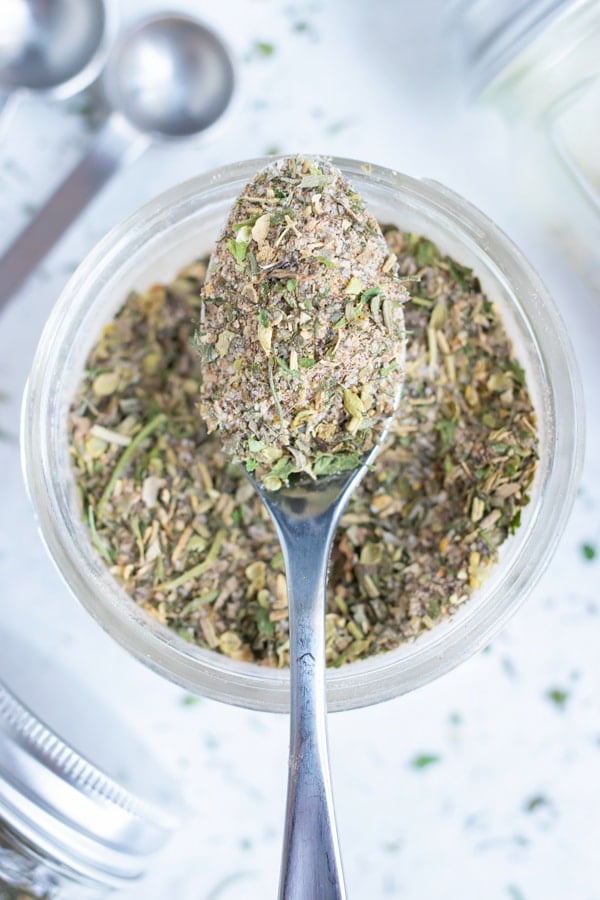
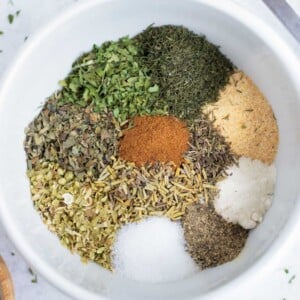
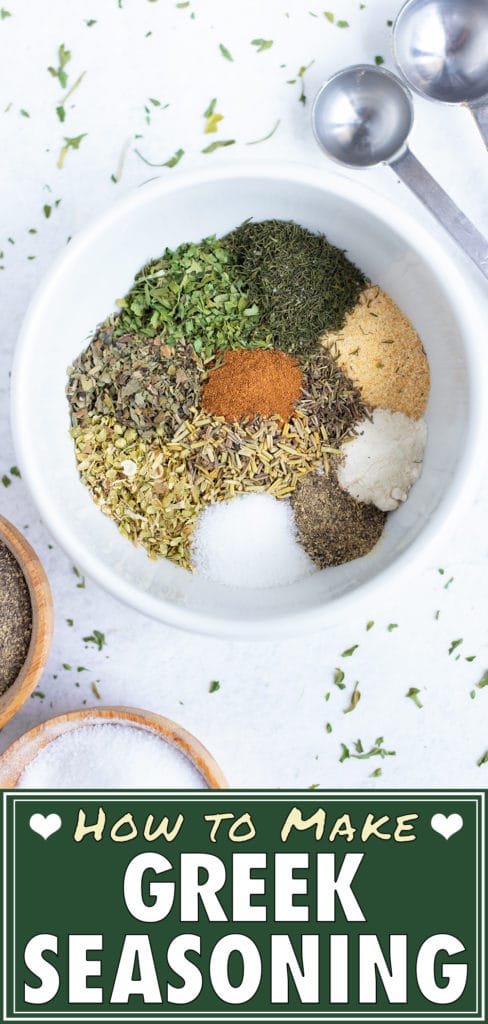
Once you’ve gathered up all of your ingredients, whisk them together in either a small jar, mason jar, or in the container you will be storing them in.
Pro Tip: Make sure you whisk again before using as the onion and garlic powders have a tendency to settle at the bottom of the mix during storage!
How much does this recipe make?
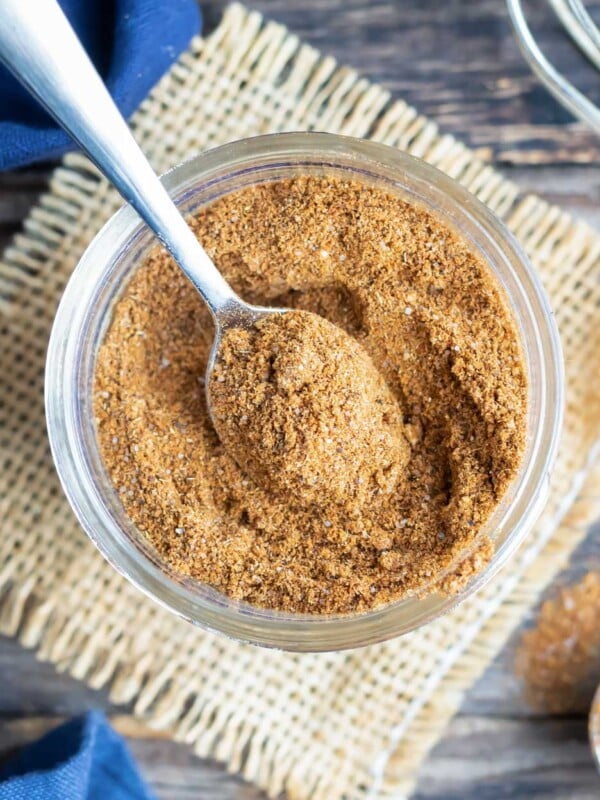
This recipe makes ~¼ cup, or 4 tablespoons, of seasoning mix. Use 1-2 tablespoons for every pound of ground meat or vegetables.
Storing Instructions
When stored properly your Greek seasoning should last for up to 1-2 years.
When stored properly, this Greek seasoning can last up to 1-2 years. Keep it in an airtight container in a cool, dry spot (like your pantry or a spice cabinet!) and out of direct sunlight. Avoid storing it over the stove, where heat and humidity can weaken the spices.
For the best flavor, use a container that just fits the mix so there’s minimal air inside. Small glass spice jars and 4-ounce mason jars work perfectly.
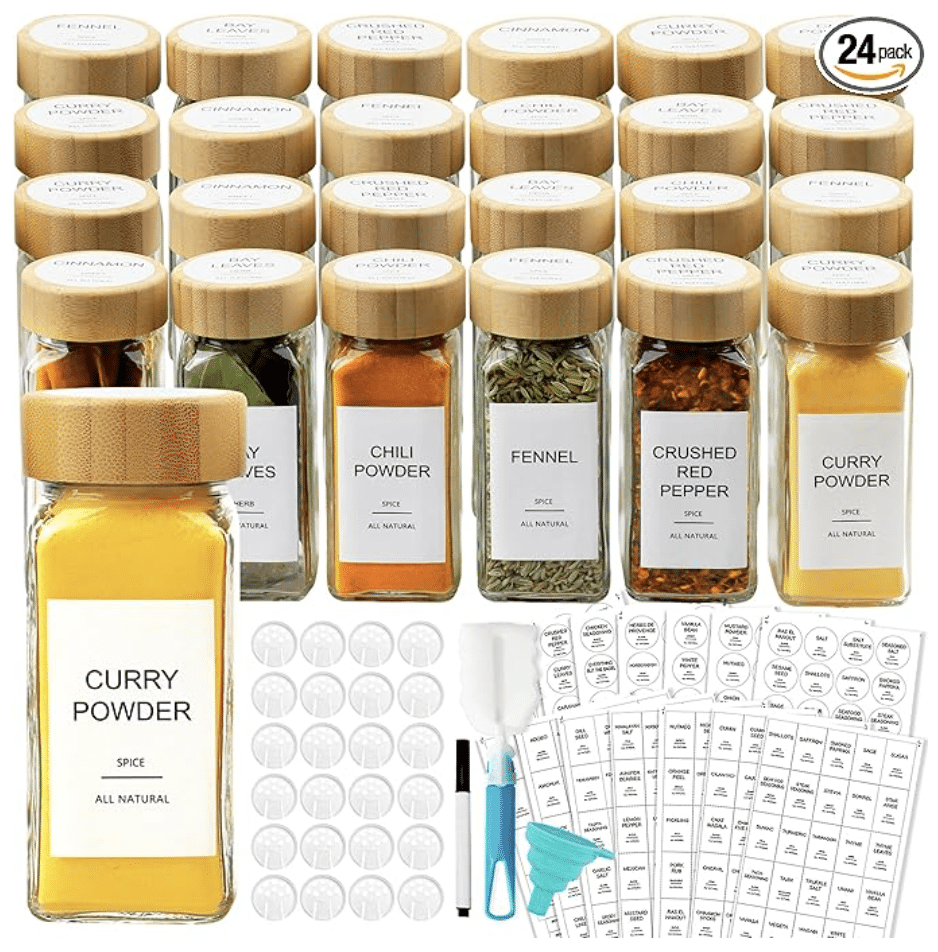
My all-time FAVE spice jars!
I got these cute spice jars to organize all of my spices and dried herbs and now it’s SO easy to find exactly what I need!
Plus, they come with blank labels so you can add your own personalized ones for your homemade seasoning mixes.
Ways to Use Greek Seasoning
- Chicken: Whether seasoning Greek Chicken Kabobs, Greek Chicken Tacos, Chicken Shawarma Orzo Skillet or to add a little extra flavor on some baked chicken breasts or thighs, this is probably the most-used method in our house.
- Lamb: these Lamb Koftas were the reason I originally created this seasoning mix and tastes incredible!
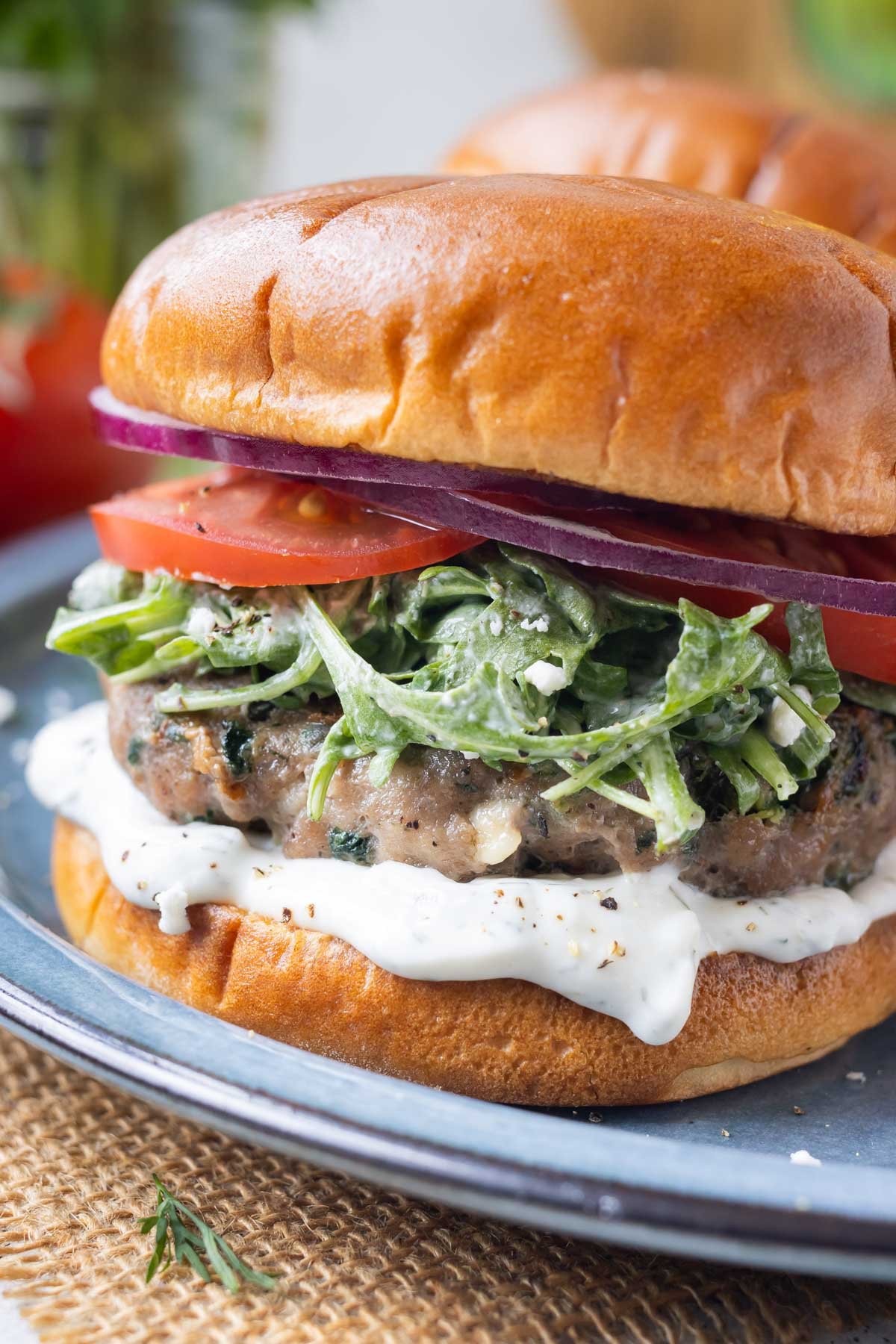
- Ground Meat: The other way we use it most often is in ground turkey meatballs, ground turkey rice bowls, or Greek Turkey Burgers! It mixes in easily and gives a ton of flavor throughout.
- Sauces and Dressings: Add a teaspoon or so to a simple lemon vinaigrette and turn it into the most delicious Greek Salad Dressing, amp up the flavor in your Greek Tzatziki Sauce, give Homemade Hummus a flavor boost, or even mix it into some Homemade Falafel.
- Vegetables: Transform your basic roasted vegetables into a Mediterranean masterpiece by sprinkling on a tablespoon or two of this mix! (Zucchini, squash, bell peppers, and roasted cauliflower are the best!) It even tastes great in salads like this Mediterranean Chickpea Salad or Mediterranean Couscous Salad.
And of course all of these would taste AMAZING alongside my favorite Mediterranean Yellow Rice!
Tap stars to rate!
Greek Seasoning Recipe

email this recipe!
Ingredients
- 2 teaspoons oregano dried
- 2 teaspoons basil dried
- 1 teaspoon parsley dried
- 1 teaspoon dill dried
- 1 teaspoon onion powder
- 1 teaspoon garlic powder
- ½ teaspoon rosemary dried
- ½ teaspoon thyme dried
- ½ teaspoon cinnamon
- 1 teaspoon black pepper
- 2 teaspoons salt optional

Instructions
- In a small bowl or the jar you'll be storing it in, add oregano, basil, parsley, dill, onion powder, garlic powder, rosemary, thyme, cinnamon, black pepper, and salt, if using. Whisk until well combined.2 teaspoons oregano, 2 teaspoons basil, 1 teaspoon parsley, 1 teaspoon dill, 1 teaspoon onion powder, 1 teaspoon garlic powder, ½ teaspoon rosemary, ½ teaspoon thyme, ½ teaspoon cinnamon, 1 teaspoon black pepper, 2 teaspoons salt
Tap stars to rate!
Video
Notes
- Ingredients: It’s best if you use all of these spices and herbs for the most flavor. If you don’t have them all on hand, see the blog post for substitution ideas.
- Oregano: If you can find it, Greek oregano is the best to use. Mexican oregano is milder while Turkish oregano tends to be more potent.
- Salt: Leave the salt out, or reduce by half, if you’d like to control the amount added in future recipes.
- Yield: This recipe makes ~¼ cup of seasoning mix.
- Usage: Use 1-2 tablespoons for every pound of ground meat or vegetables.
- Storage: Store in an airtight container in a cool, dry place for up to a year. Make sure to whisk before using as the onion and garlic powders have a tendency to settle.
Nutrition
Nutrition information is automatically calculated, so should only be used as an approximation.
More Homemade Spice Blends
I love making my own homemade seasonings at home. They taste so much better than store-bought. Try one of these simple and delicious homemade seasoning blends next:

I just made double this recipe with one exception. I added 2 teaspoons of lemon zest and it was wonderful. I’m saving the recipe so I can make my own seasoning in the future.
Thank you so much, Joy! I’m so glad you enjoyed the Greek seasoning! Adding lemon zest sounds like a delicious twist, especially if you plan to use it right away. Thanks for sharing your variation and for taking the time to leave such a kind review. I’m thrilled this recipe has earned a permanent spot in your kitchen!
Delish
Thank you so much! I’m so glad you enjoyed the Greek seasoning. It’s one of my favorite spice blends because it adds so much flavor to so many dishes. Thanks for taking the time to leave a comment!
So I used this on the Allrecipes Greek/Caesar salad smash tacos and it was AMAZING!!! Excited to try it on other dishes as well! My house smelled like a fancy restaurant!
Thanks so much for leaving a comment, Jennifer! That sounds incredible — Greek/Caesar salad smash tacos with this seasoning? Yum! I love that your house smelled like a fancy restaurant. So excited for you to try it on even more dishes!
I halved this recipe. It was the perfect amount for 2 full russet potatoes that I diced and roasted in the oven. I served the potatoes alongside Mediterranean turkey burgers. Absolutely phenomenal flavor profile!
That sounds amazing, Jessica — thank you for sharing! I love how you used it on the roasted potatoes, and pairing them with Mediterranean turkey burgers is such a great idea. So glad the seasoning worked perfectly for you!
Can I just use regular oregano instead of Greek oregano. Actually never heard of Greek oregano and my google searches aren’t turning up anything.
Yes, you can absolutely use regular oregano! Greek oregano is just a specific variety that’s a little more robust and earthy, but standard oregano works perfectly in Greek seasoning. If anything, you might just use a tiny bit less if yours is very strong. But flavor-wise, you’ll be totally fine!