

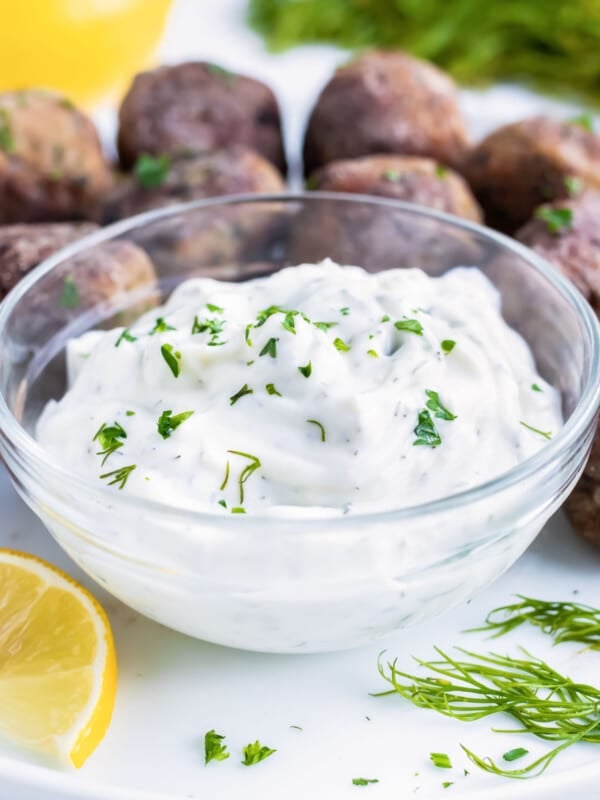

I used to buy the tub. Then I made this in 15 minutes.

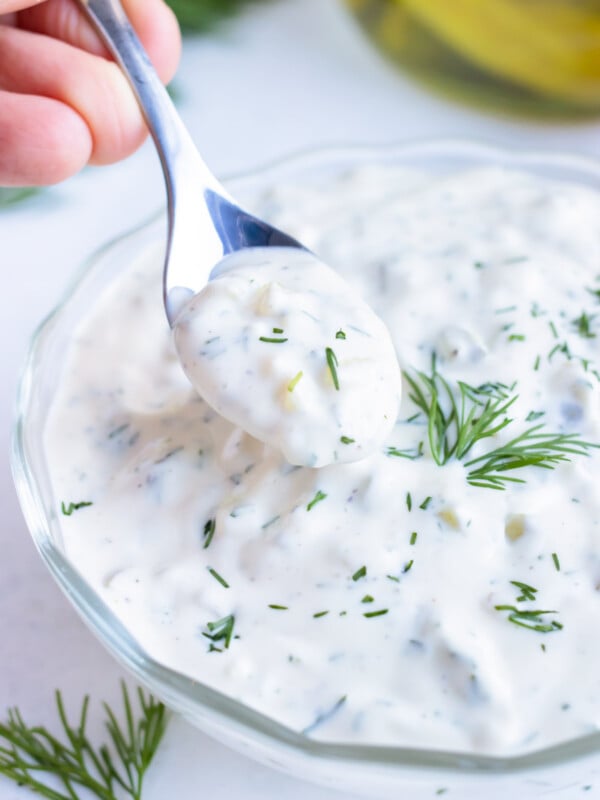
I used to grab a tub of Cedar’s every time Greek night rolled around. They’re legitimately good, but once I figured out how to make tzatziki sauce at home in 15 minutes, I basically stopped buying them.
No box-grating my knuckles. No cucumber sweat in a bowl for half an hour. No “chill 30 minutes before serving” wait.
Just shred, drain, pulse, eat. The same food processor handles the cucumber AND the mixing, two attachments and one bowl, done before the chicken comes off the grill.
It’s the version I make for grilled Greek chicken kabobs, the version I scoop into containers for next-day gyros, and the version that lives next to the falafel and pita bread on every Greek-night platter.
Ingredients and Substitutions
For the exact measurements and detailed instructions, please see the recipe card below.
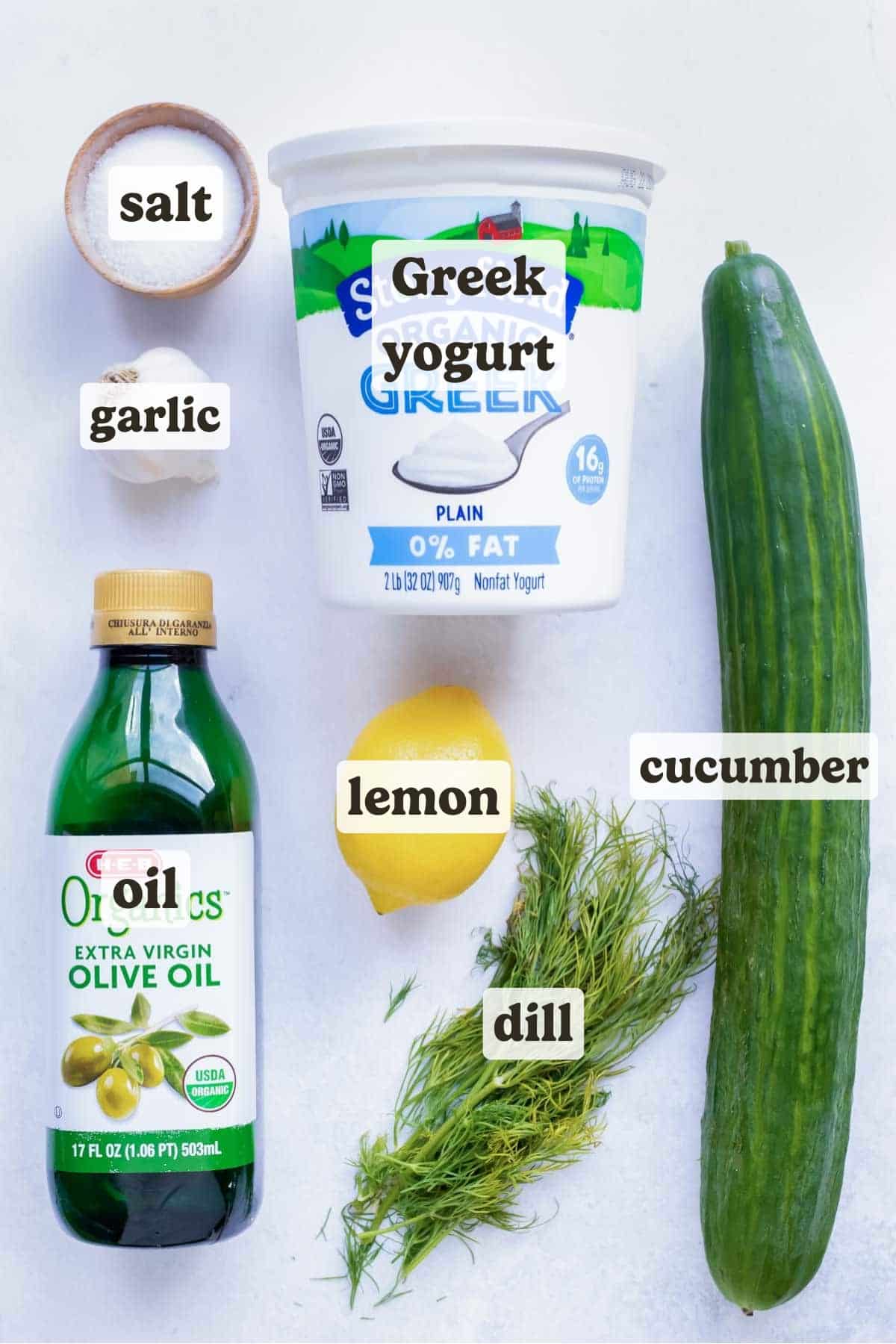
- Greek yogurt. Full-fat is the most authentic and gives the thickest texture. 2% works fine; non-fat will be looser. Dairy-free can sub in if you need it, though the texture won’t match.
- Cucumber. English seedless is the easiest pick since you can shred and go. Cocktail or Persian cucumbers also work, less watery, but you’ll get more skin in the sauce. If you only have a regular cucumber with seeds, halve it lengthwise and scoop the seeds out first.
- Garlic. Fresh, finely minced. Two cloves is my baseline; if you’re garlic-shy, start with one and taste before adding more. A microplane or garlic press skips the knife work.
- Lemon juice. Fresh-squeezed only. Bottled is way too acidic and pungent for a sauce this delicate.
- Fresh dill. The defining herb. Fresh mint is a classic swap or addition if you want a brighter note; parsley works too if that’s what you have.
- Olive oil. A good extra-virgin makes a real difference since you taste it directly.
- Salt. Sea salt or kosher, whatever you have.
Step-by-step Instructions
Please see the recipe card below for the full instructions, ingredient amounts, and a printable recipe.
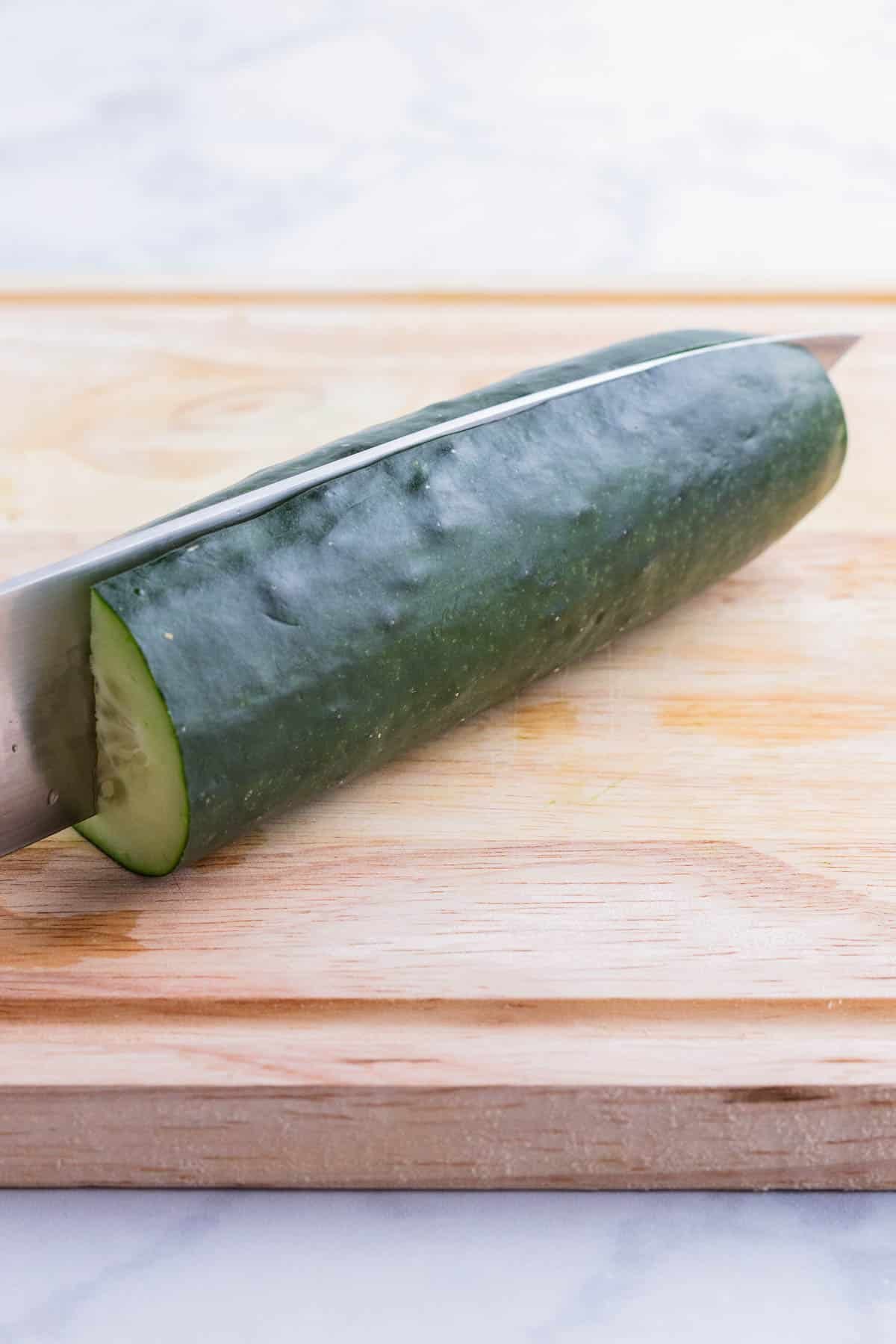
Cut the cucumber.
A large food processor with a grating attachment and S-blade is the best tool for this job. If you don’t have one, a box grater works too, or finely chop the cucumber if you want bigger bites.
Wash the cucumber and peel it if you prefer, though keeping the skin adds color and texture. Trim the ends, slice it lengthwise, then cut into quarters so it fits easily into the food processor’s feed tube.
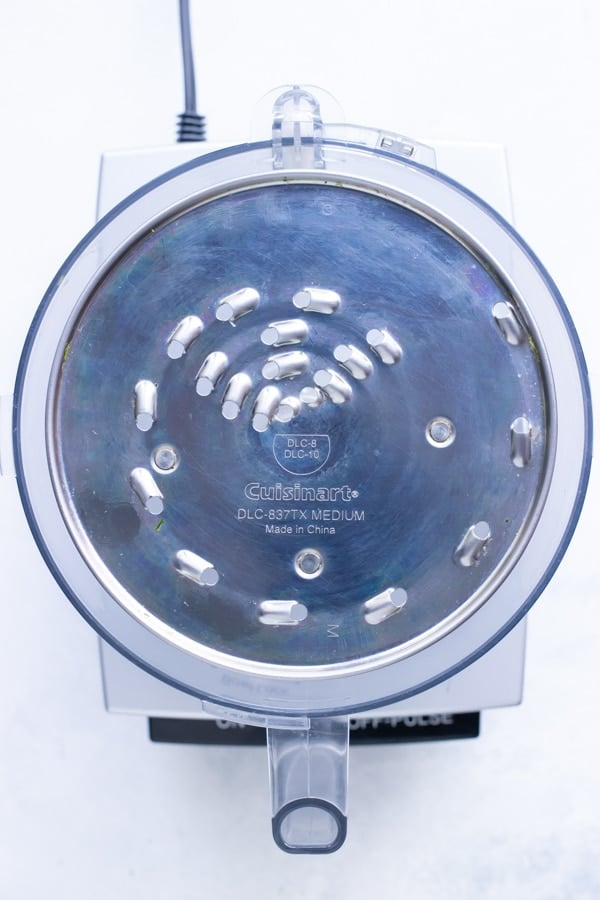
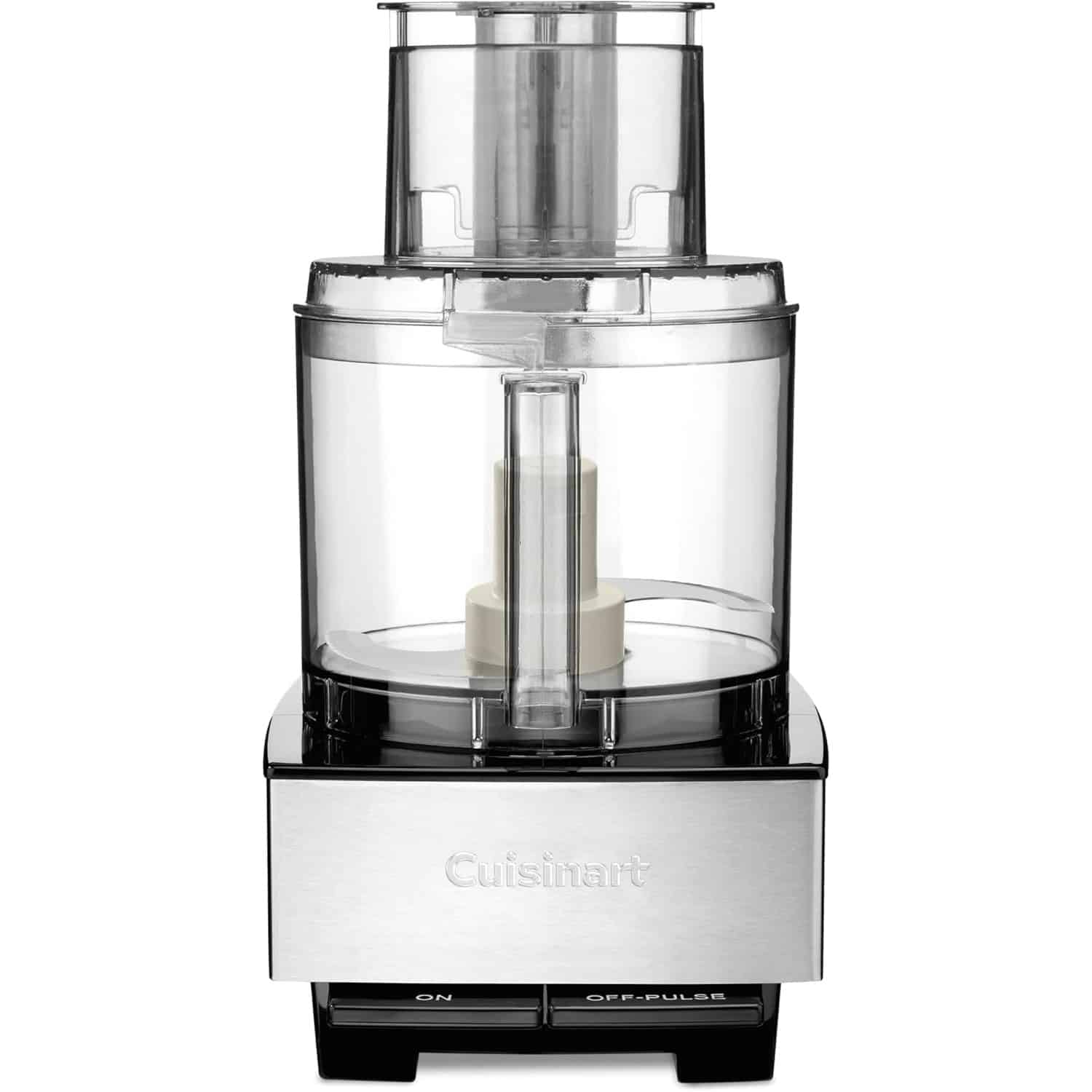
My fave food processor!
I used to dread making anything that needed grating or pureeing. Then I grabbed this Cuisinart and now I make tzatziki, hummus, and pesto on repeat.
And y’all… it does the grating, mixing, AND mincing all in the same bowl. One attachment swap and you’re done.
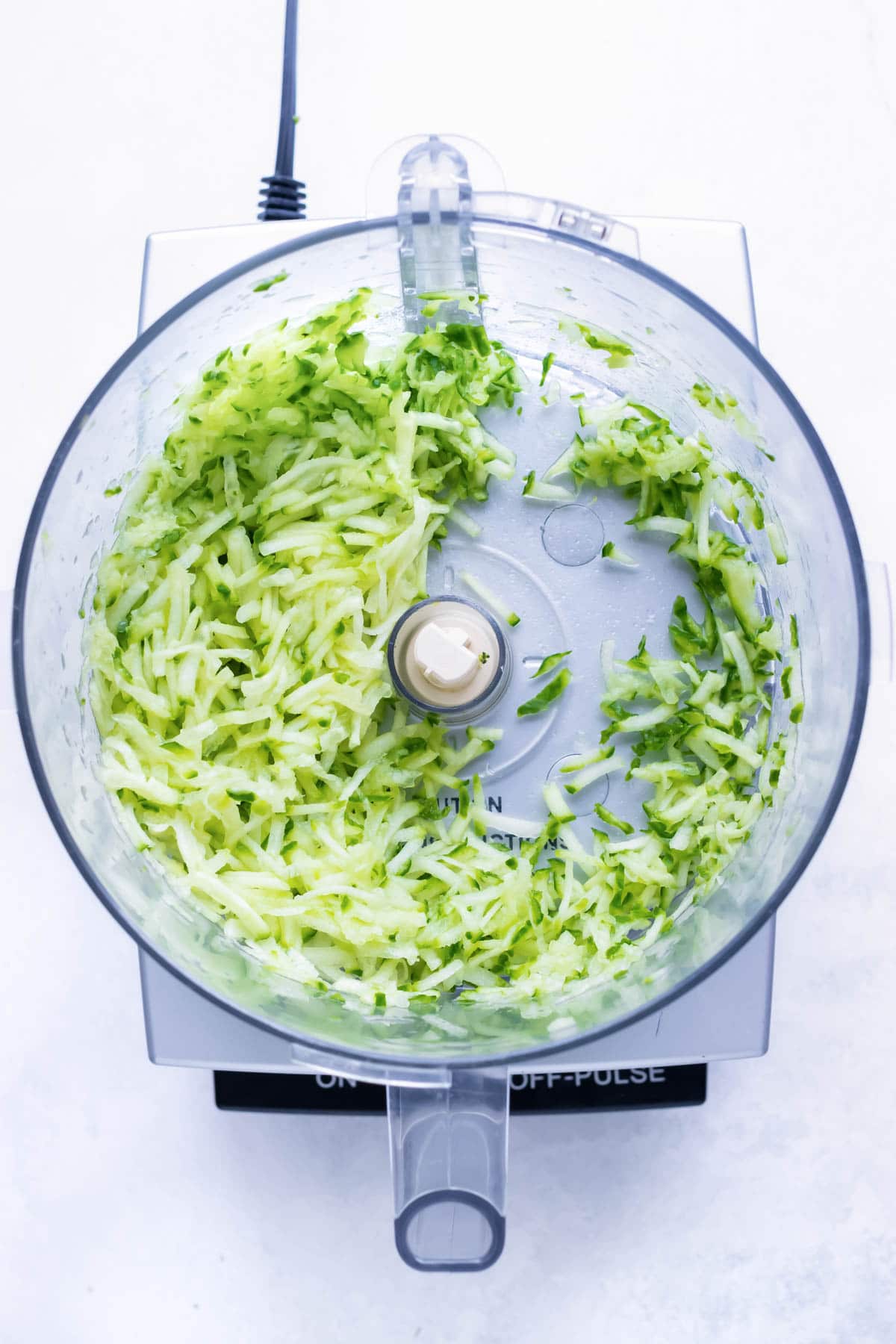
Grate the cucumber.
Grate ½ to ¾ of an English cucumber using the food processor’s grating attachment (or a box grater) until you have about 1 cup.
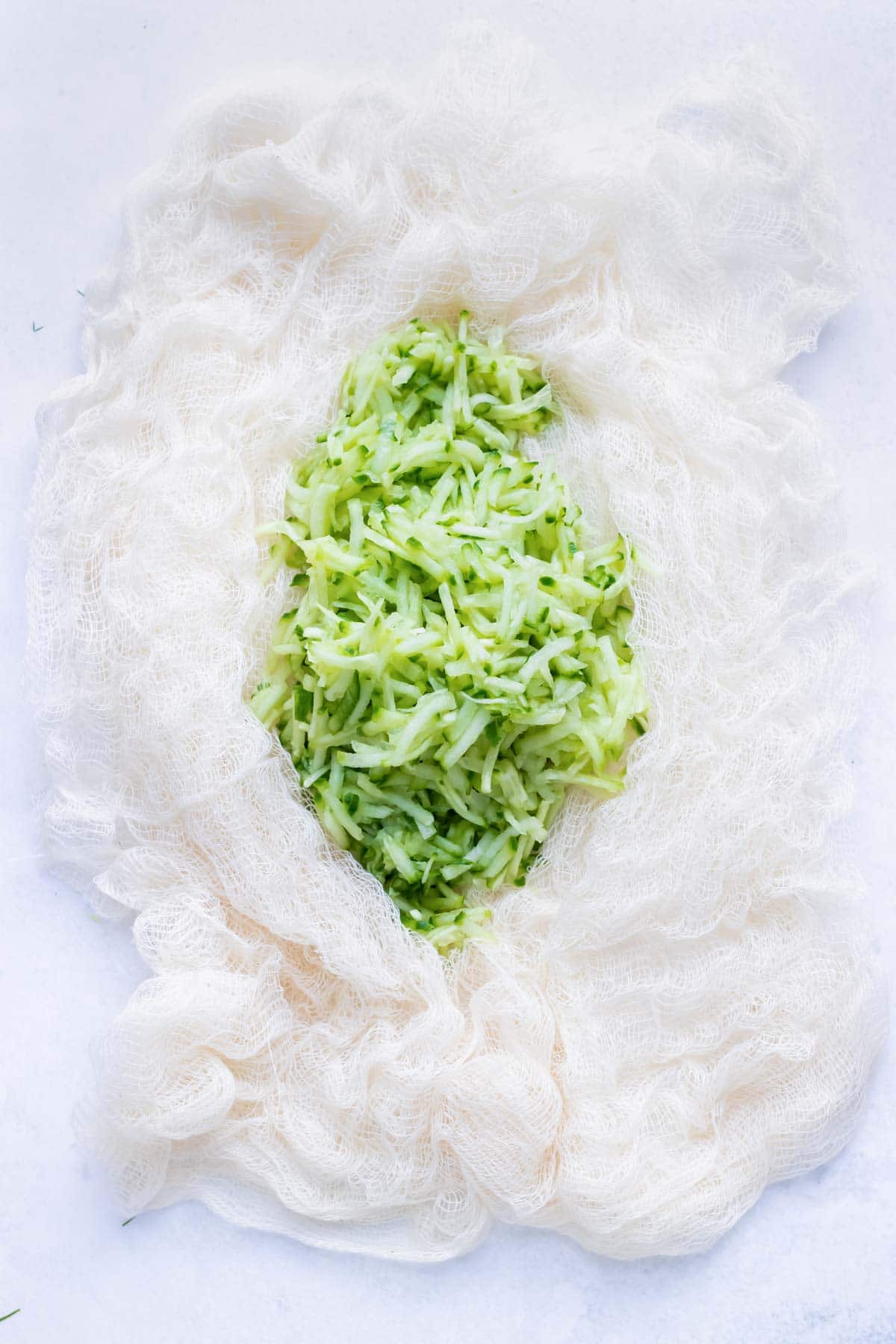
Let it rest 5 to 10 minutes to release the moisture, then wrap it in cheesecloth or a thin towel and squeeze out as much liquid as possible. You should end up with about ½ cup of packed, drained cucumber.
Combine the ingredients.
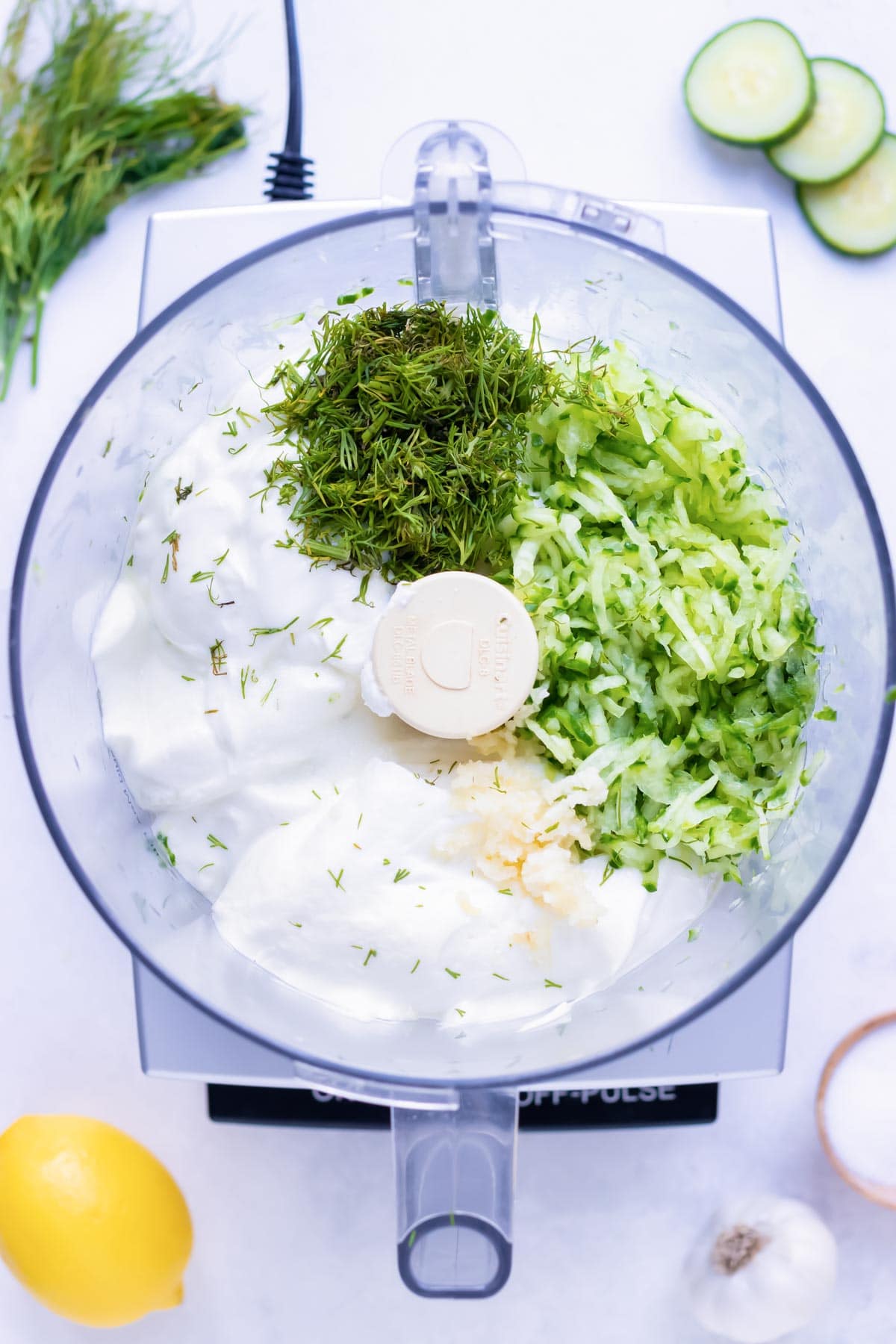
Swap to the S-blade and add the cucumber, yogurt, garlic, lemon juice, olive oil, dill, and salt to the bowl.
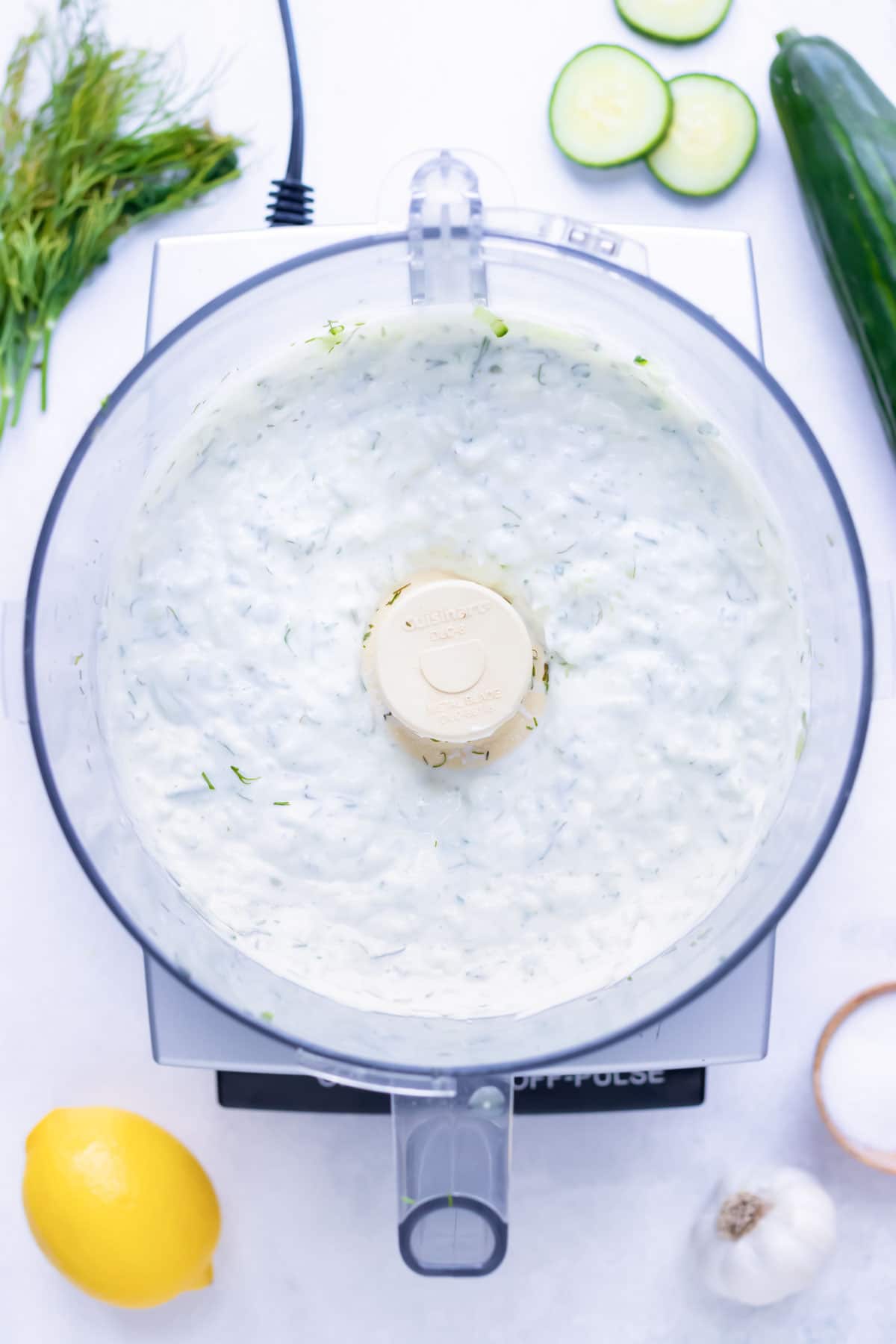
Pulse 10 to 15 times until everything is incorporated but still has a little texture.
Pro Tip: Don’t pulse it too long. A few cucumber chunks throughout is what gives tzatziki its signature texture, over-pulse it and it ends up flat.
FAQs
Yes, hands down. Just-grated cucumber, fresh-minced garlic, and real lemon juice taste like none of those things have been sitting on a shelf, because they haven’t. That said, refrigerated brands like Cedar’s are legitimately good and make a fine backup when you don’t have 15 minutes. The homemade version is the everyday move; the tub is for emergencies.
Yes. Grate the cucumber on the large holes of a box grater, then whisk everything together in a bowl. The food processor just makes it faster and saves your knuckles from grating duty.
Tzatziki keeps in an airtight container in the fridge for up to a week. After a few days the yogurt may release a little liquid; just drain it off or give it a stir before serving. It’s also easy to prep ahead, so make it 1 to 2 days before you need it.
Freezing isn’t ideal. The yogurt separates and the cucumber turns mushy when thawed, so the texture is off. Stick with fridge storage.
What to Serve With It
Creamy Greek tzatziki goes great with everything off a Greek-night menu.
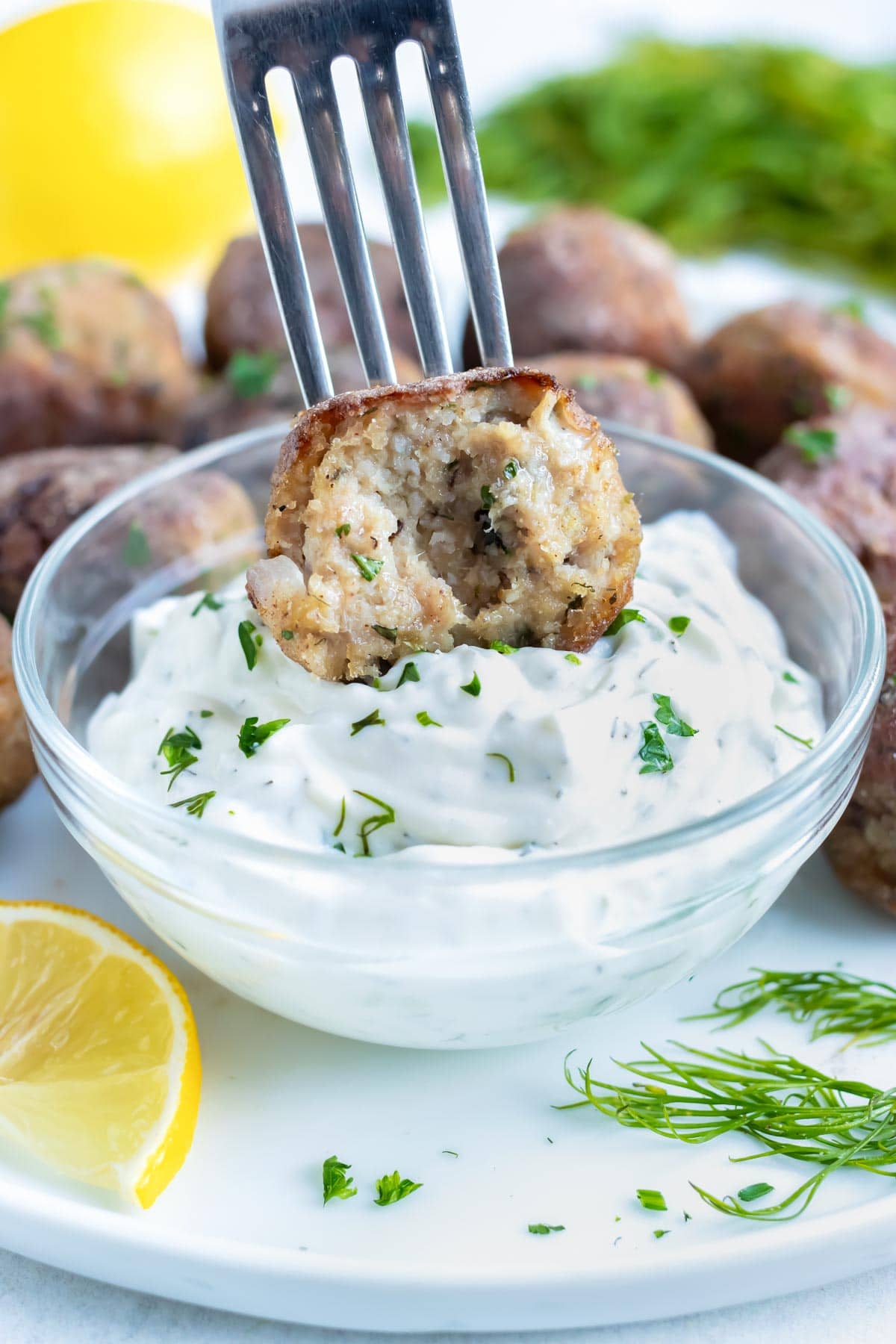
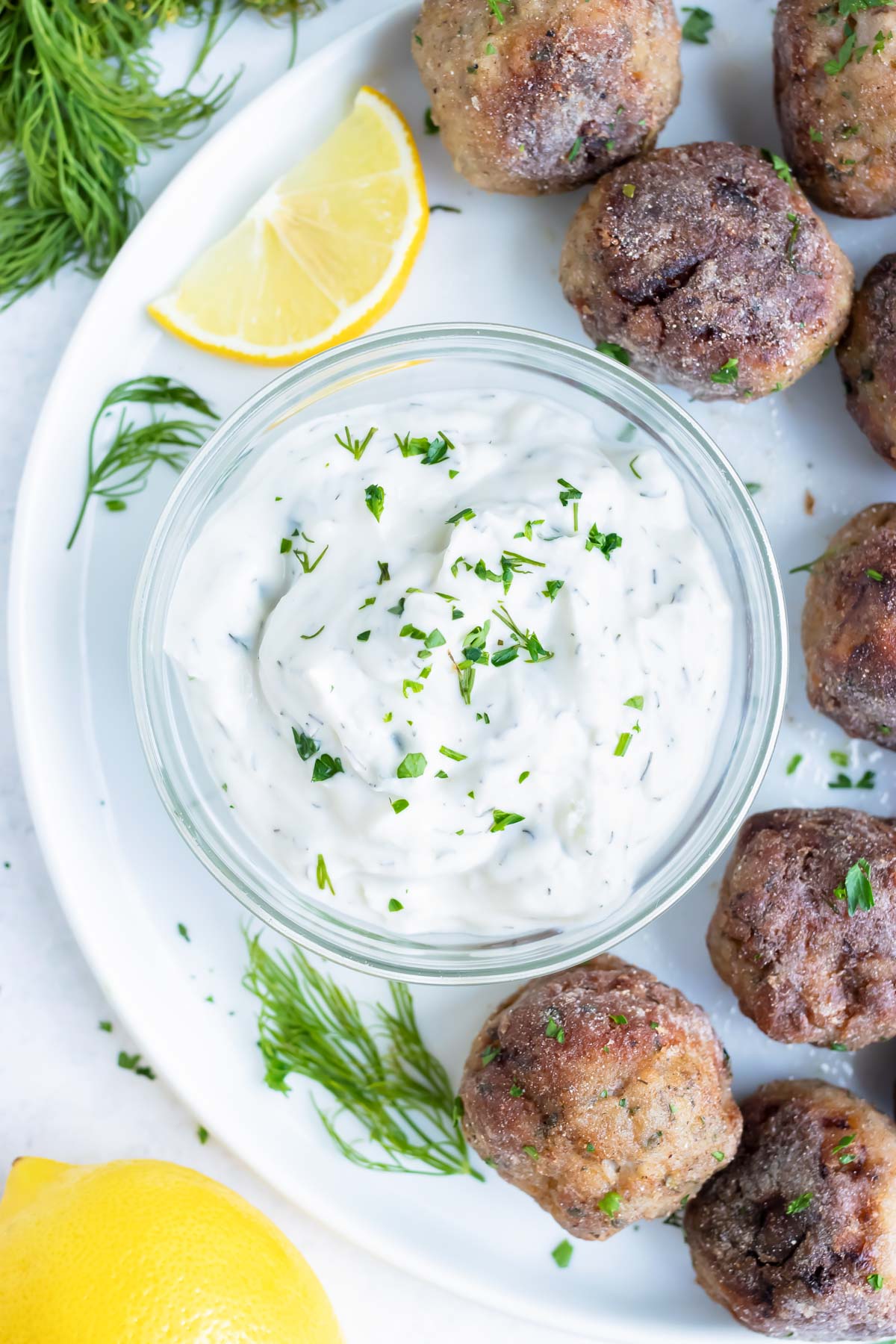
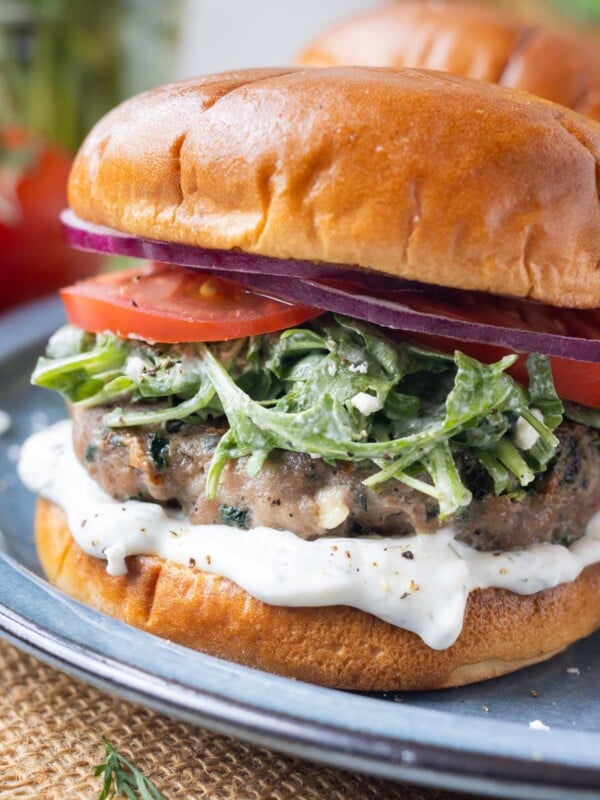
For the main, dollop it over grilled Greek chicken kabobs or chicken shawarma orzo, drizzle it onto Greek turkey meatballs or Greek turkey burgers, or pile it onto a stack of lamb kofta kebabs.
For the sides, scoop it next to crispy falafel, warm pita bread, Mediterranean yellow rice, homemade hummus, and a cucumber tomato salad. If you’re going full Greek night, build the menu around our Greek seasoning and Greek salad dressing so every plate hits the same flavor notes.
Tap stars to rate!
Easy Tzatziki Sauce Recipe


email this recipe!
Equipment
- Cheesecloth
- Mason jars
Ingredients
- ¾ seedless cucumber skin on or peeled
- 2 cups plain Greek yogurt plain, full-fat, 2%, or non-fat
- 2 cloves garlic finely minced
- 2 tablespoons lemon juice freshly squeezed
- 1 tablespoon olive oil
- 1 tablespoon dill fresh finely chopped
- ½ teaspoon salt to taste

Instructions
- Cut the cucumber in half lengthwise and then again into quarters so it will fit into the opening of your food processor.¾ seedless cucumber
- Grate the cucumber in a food processor with a shredding attachment, until you have 1 cup of shredded cucumber.
- Let cucumber sit for 5-10 minutes. Wrap shredded cucumber in cheesecloth or a thin dish towel and wring out any excess liquid. You should end up with ½ cup of packed cucumber.
- Add cucumber, yogurt, garlic, lemon juice, olive oil, dill and salt to the bowl of a food processor with an S-shaped blade. Pulse 10-15 times or until ingredients are well incorporated.2 cups plain Greek yogurt, 2 cloves garlic, 2 tablespoons lemon juice, 1 tablespoon olive oil, 1 tablespoon dill fresh, ½ teaspoon salt
- Serve Tzatziki sauce with Chicken Shish Kabobs, Greek Turkey Meatballs, or Falafel and enjoy!
Tap stars to rate!
Video
Notes
- Cucumber: English seedless is easiest; cocktail or Persian cucumbers also work (less watery but more skin); regular cucumbers work if you scoop the seeds out first.
- Yogurt: Full-fat is most authentic and creamiest. 2% works; non-fat or dairy-free will be looser.
- Moisture: Cheesecloth or a thin lint-free dish towel both work for wringing out the cucumber. Skip this step and the tzatziki turns watery.
- Mixing: Pulse, don’t over-process. Cucumber chunks are part of the texture.
- Make-ahead: Make 1 to 2 days before serving; flavors meld in the fridge.
- Storage: Keep in an airtight container in the fridge for up to a week.
- Freezing: Not recommended; the yogurt separates and the cucumber turns mushy when thawed.
Nutrition
Nutrition information is automatically calculated, so should only be used as an approximation.
More Mediterranean Favorites
Craving more bright, bold flavors? Here are a few Mediterranean favorites to add to your lineup!





Loved this recipe.
Thank you so much, Deb! I’m so happy to hear you loved the tzatziki. It’s one of those simple recipes that adds so much fresh flavor to a meal. Thanks for taking the time to leave a comment!