


Easy Ways to Make a Soup Thicker

There are different techniques for thickening soups to make them creamy. Dairy products, immersion blenders, and starches or flours are just a few. Let’s take a look at these methods!
(There are a few different ways that work if you’re wondering how to thicken chili, too!)


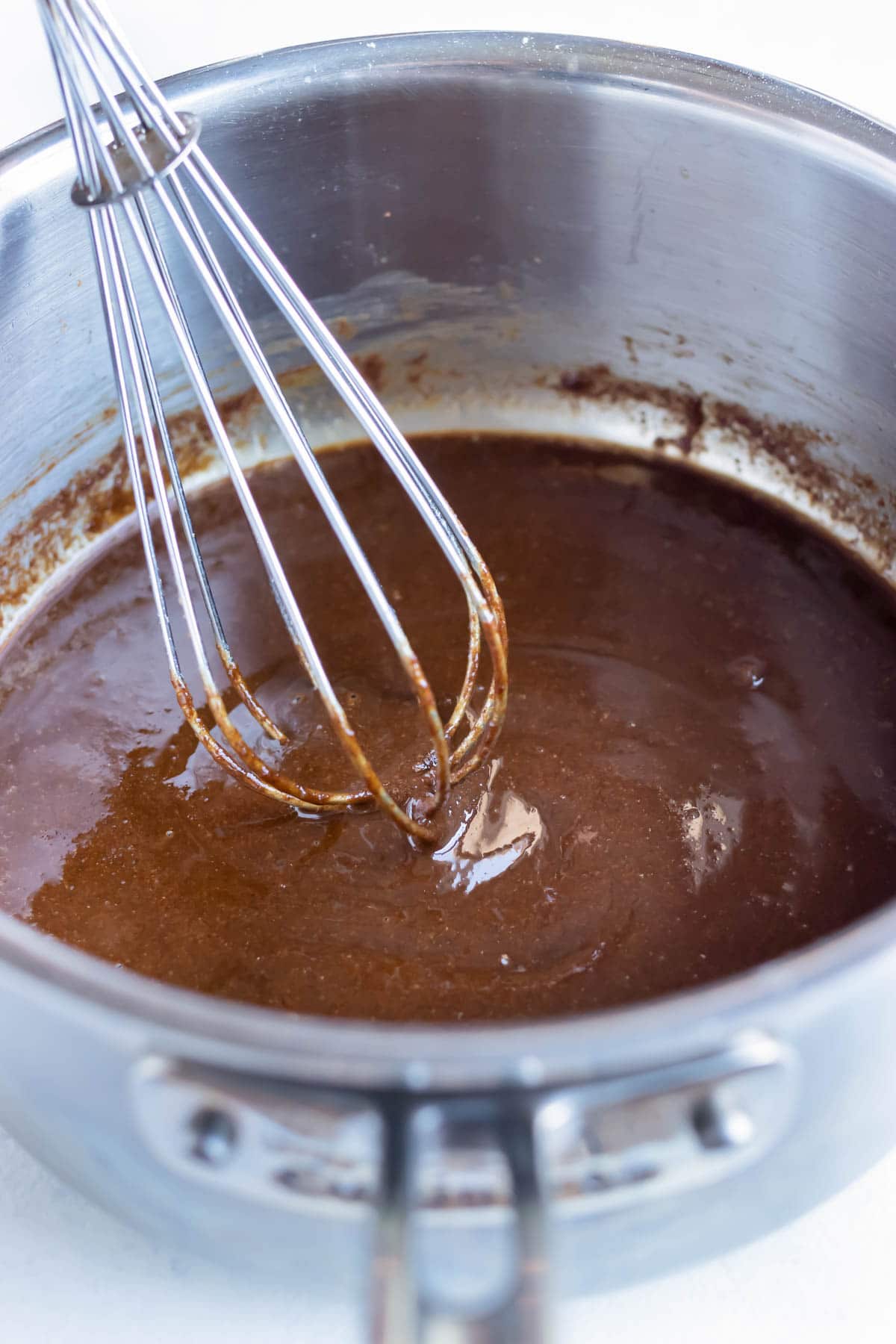
Thicken with a Starch
Cornstarch is an easy way to thicken soup—just whisk 1 tablespoon with 4 tablespoons warm milk or water to make a slurry. Stir it in, boil for at least a minute to thicken, but avoid overcooking or the soup may thin out again.
All-purpose flour can thicken soup like cornstarch, but with more versatility. Use a 2:1 flour-to-liquid ratio to make a slurry, or cook flour with fat to make a roux. For best results, mix the roux into a small portion of soup first, then stir it back into the pot.
Xanthan gum is a sugar-based thickener that can slightly sweeten soup. To avoid clumps, whisk in just a teaspoon at a time over low heat.
Pro Tip: For more information, learn how to make a slurry and how to make a roux.
Thicken with Dairy
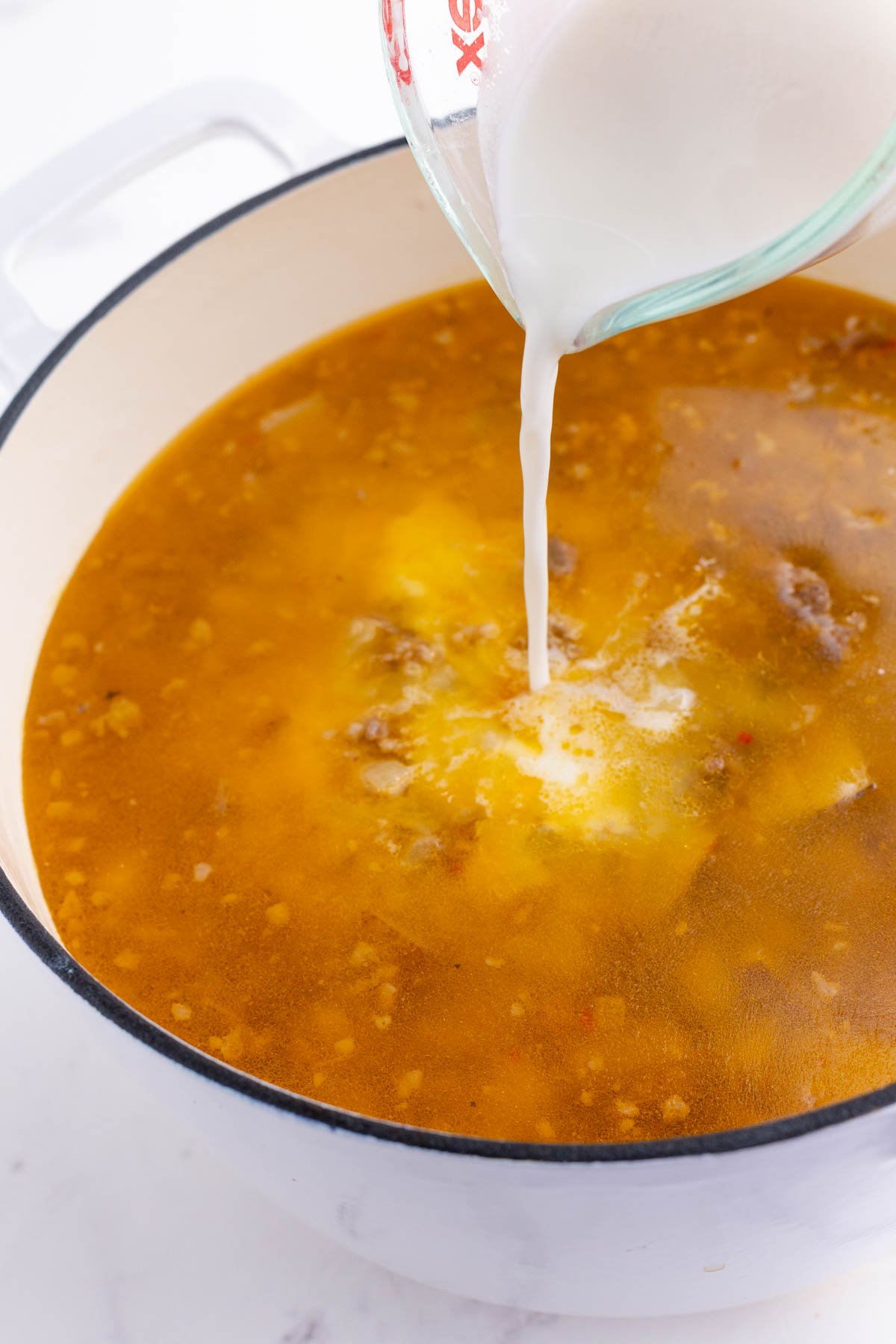
Heavy Cream: Heavy cream (or other high-fat dairy like coconut milk or sour cream) adds rich, velvety texture to soups. Stir it in slowly over low heat near the end of cooking to avoid curdling.
Yogurt or Buttermilk. To prevent any curdling at all, yogurt and buttermilk can be added to cold soup if you’re eating leftover soup. If you’re eating the soup the same day, add these thickening agents slowly to a pot of soup on low heat.

Thicken with a Blender
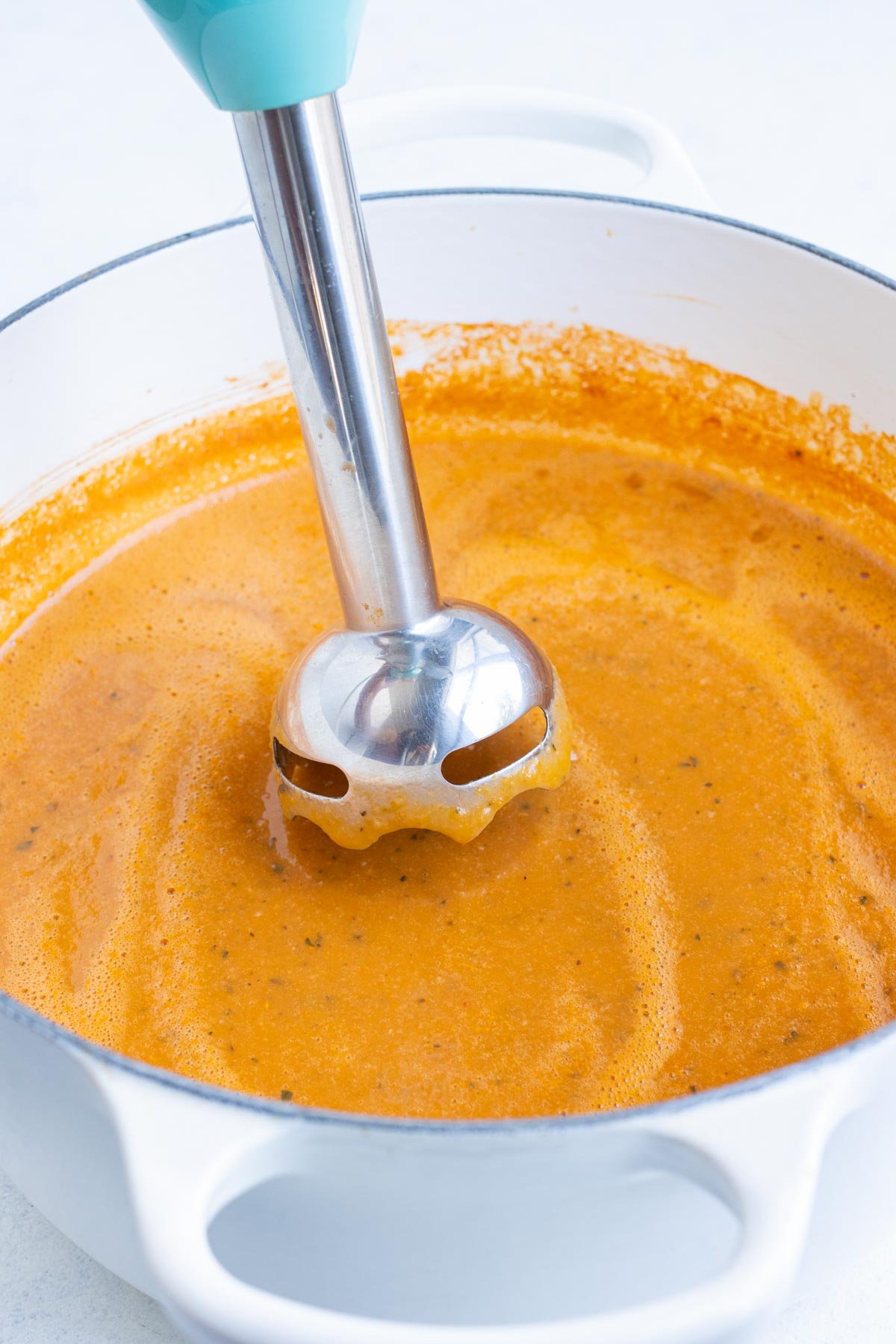
You can thicken soup without adding anything by using an immersion blender right in the pot. Blend vegetables or potatoes for a thicker texture, or blend only part of the soup for a chunkier finish. This method changes texture more than flavor, often resulting in a slightly mushier consistency.
For a smoother texture, use a food processor or blender. Let the soup cool slightly, start on low, then increase speed. Always cover the top with a towel to prevent hot liquid from splattering.
Thicken with an Egg
Surprisingly, egg whites and egg yolks are great thickeners too! This option is good for lemony, creamy soups. You’ll temper your eggs by whisking them together with a small amount of soup in a small bowl.
Then slowly add this mixture into your pot of soup. This one’s not as common, so if you’re all out of options, give this a try!
Thicken with Add-Ins
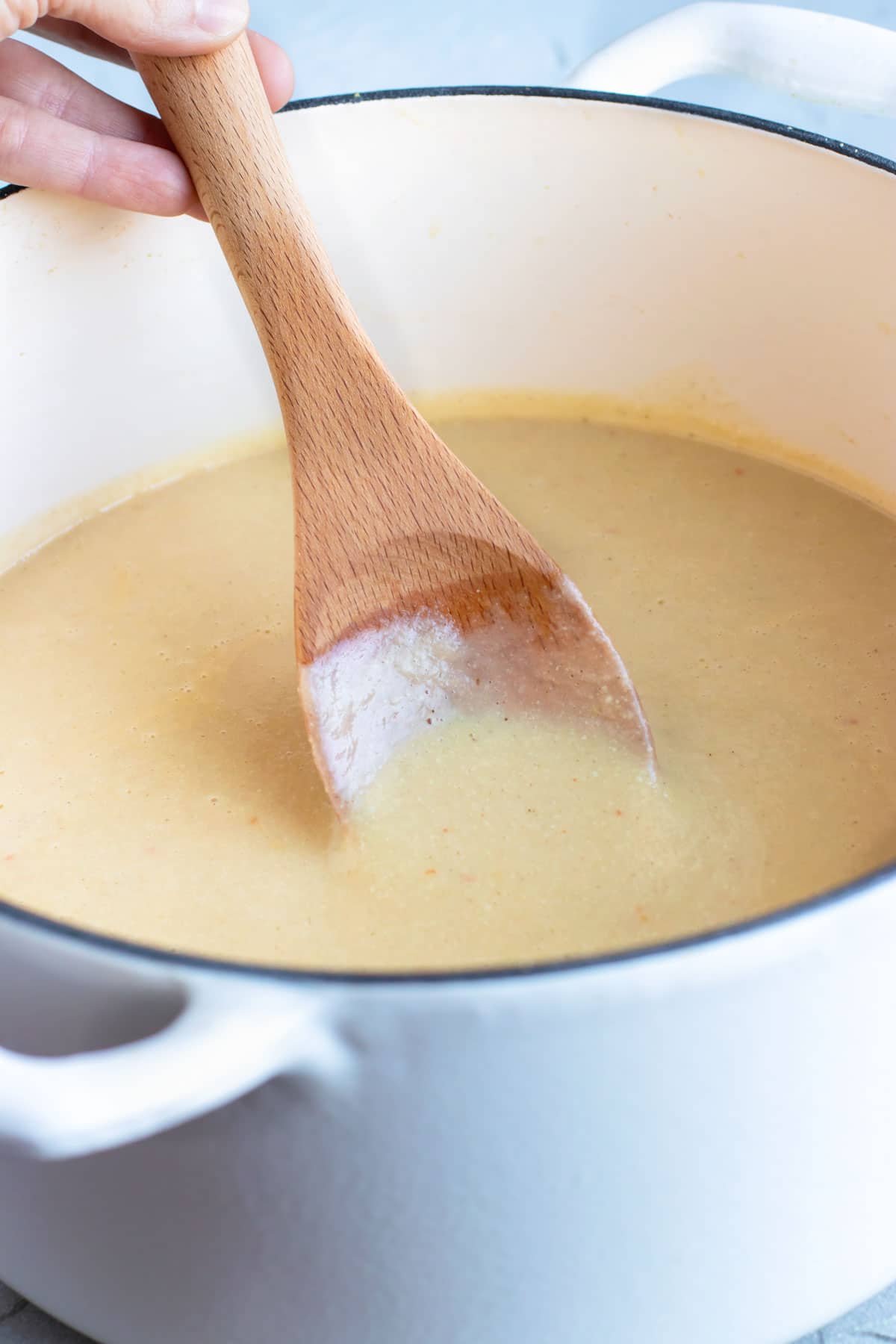
Starchy ingredients like rice, potatoes, pasta, beans, or bread release starch as they cook, naturally thickening your soup. Add them early so they have time to break down and add body.

FAQs
Cornstarch may be a better thickener over flour. It’s important to know that cornstarch is twice as powerful as flour. Flour also begins to form clumps sooner and faster if you aren’t mixing quickly enough. On the other hand, cornstarch shows an immediate change in your soup.
Cooking any kind of soup uncovered allows water to evaporate. If your goal is to thicken a soup, don’t use the lid. The longer you cook your soup uncovered, the less liquid it will contain and the thicker your soup will be.
You can either blend starches or vegetables in your soup, or use more starches—like beans, pasta, and rice—during the cooking process.
Yes, by leaving your soup uncovered as it cooks, you can reduce the amount of liquid it contains.
Cornstarch. A little bit goes a long way if done properly.
Using natural starches like potatoes, rice, or beans in your soup will naturally release their own starch in the soup as it’s cooking.
Normally it takes from 3 to 5 minutes.
Some say that potato starch is the strongest because it is a coarser starch that easily soaks up liquid.
Judge this by the taste and consistency. There shouldn’t be any raw flour or starchy taste when it’s completed. It should also have a smooth texture that can coat the back of a spoon.
Delicious Soup Recipes
If you’re looking for The Best Soup Recipes, check out this post for the heartiest soups. For a thick, creamy soup, try out this vegan Roasted Tomato Basil Soup. This Italian Wedding Soup is perfect for any event.
Try this tasty version of Cauliflower Soup or this Olive Garden Minestrone Soup will leave your guests wanting more! For a simple, easy dinner give this Crock-Pot Chicken Tortilla Soup a go.
Want something new? This Cream of Asparagus Soup will work wonders for your next soup night. Don’t forget about this Roasted Butternut Squash Soup this fall. And you’ll really bring the wow factor with this colorful Creamy Beet Soup with Coconut Milk for your next potluck dinner.