

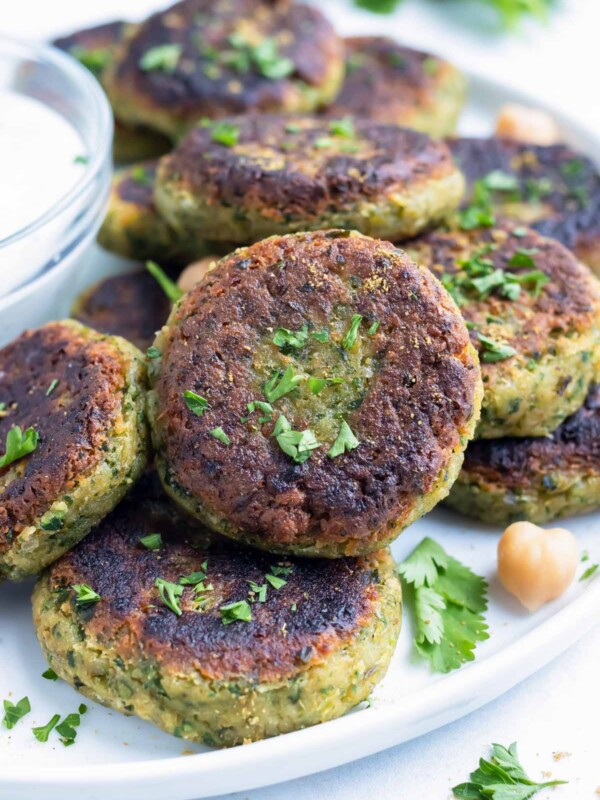

Why my gluten-free falafel starts with a can, not an overnight soak
Just about every falafel recipe out there says the same thing: you have to use dried chickpeas, soaked overnight, or it won’t work. Canned will be too soft, too wet, too mushy to hold its shape.
Which is a fine rule if you know on Monday that you want falafel on Tuesday. (I almost never do.)
So can you actually make Gluten-Free Falafel with canned chickpeas? Yes, but three things have to go right.
The chickpeas need to be dried off really well after you rinse them, there has to be baking powder in the mix so they aren’t dense, and the dough has to chill before it hits the pan.
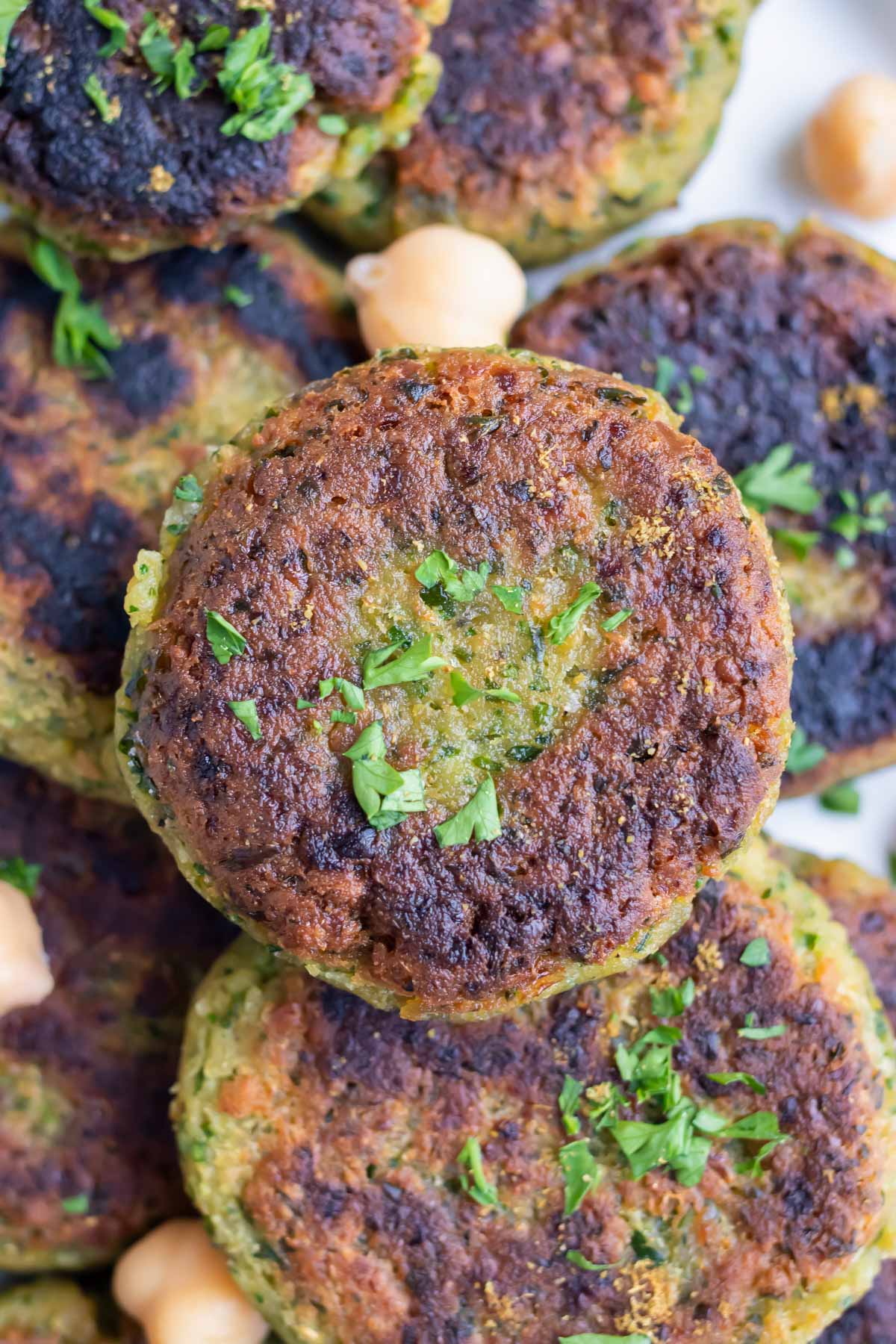
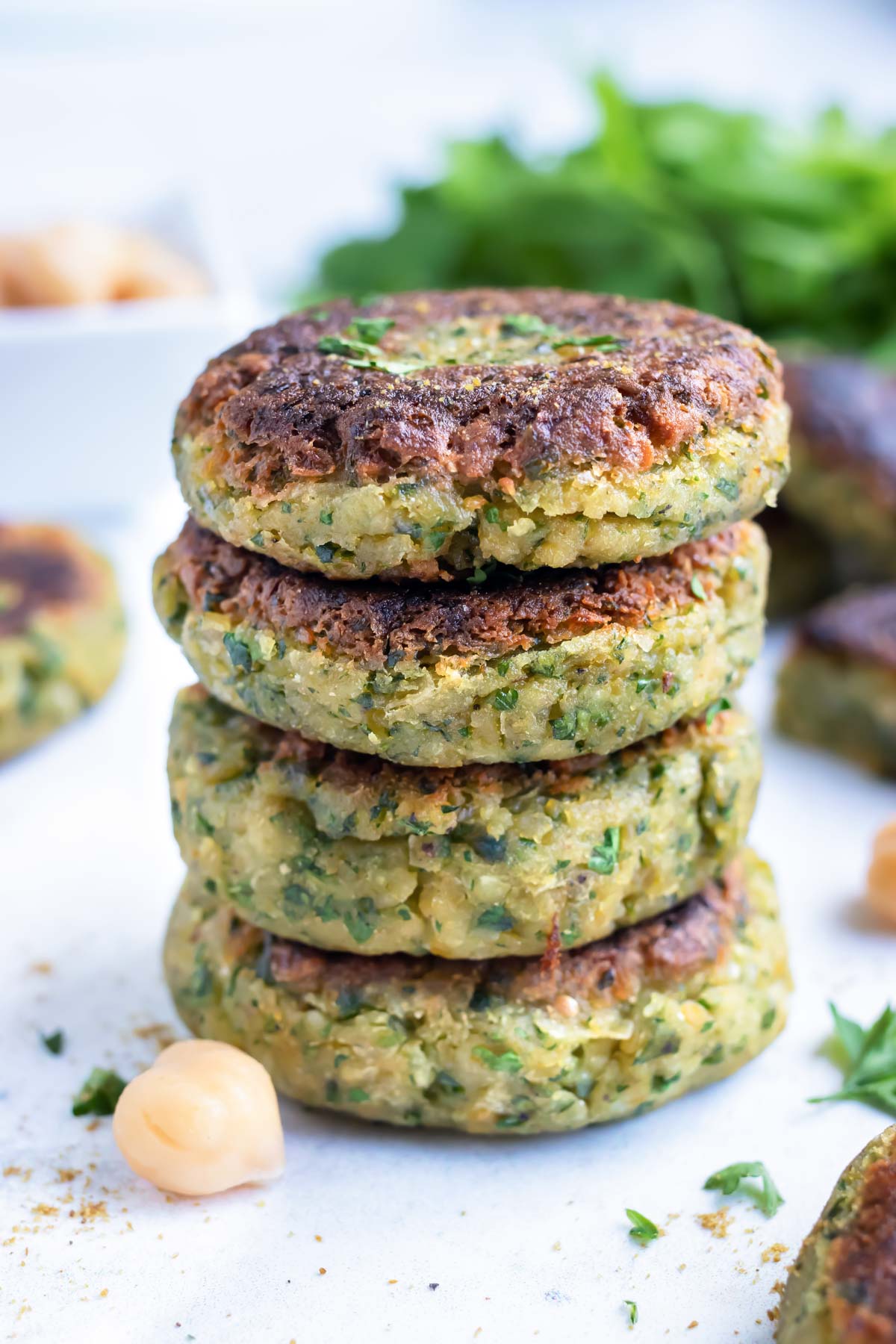
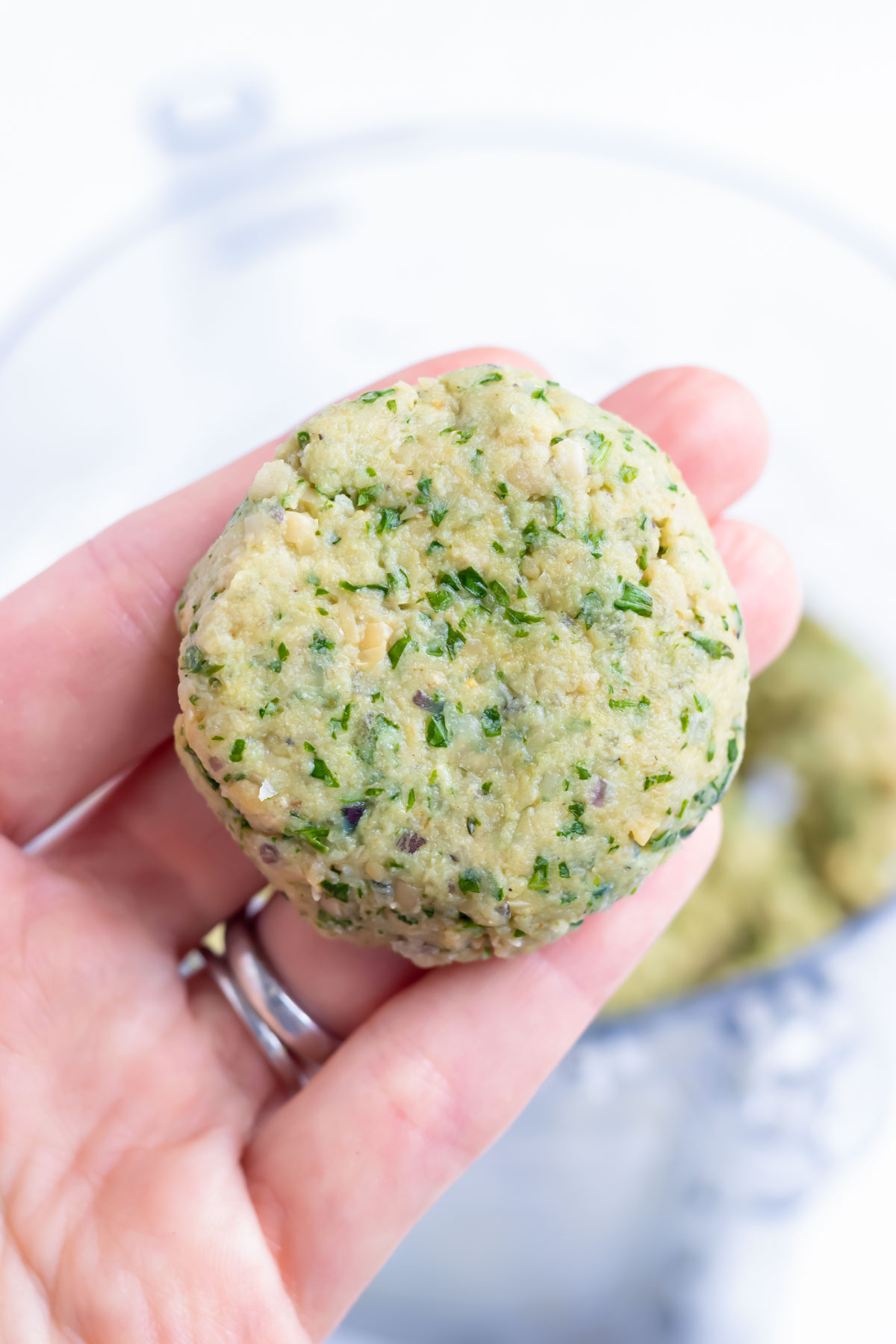
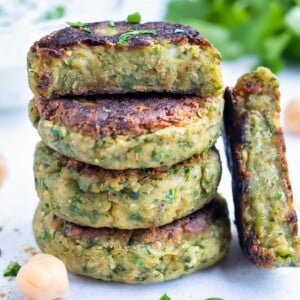
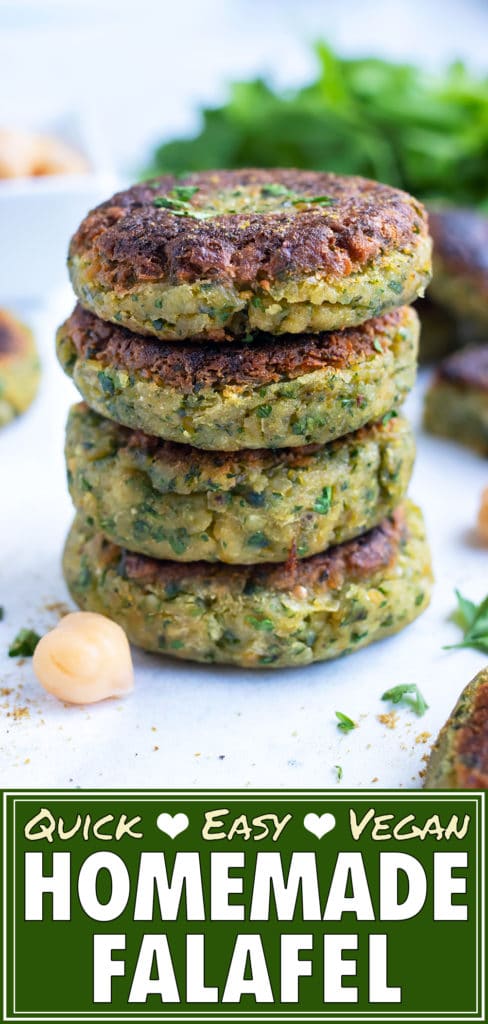
The other thing that matters is the shape. Flat patties about a half inch thick cook through evenly and stay put in the skillet, while balls tend to crack and fall apart on you.
Pile them into warm pita bread with a big spoonful of Tzatziki sauce and some chopped cucumber, and nobody at the table is going to ask whether you soaked anything.
Excellent and easy. Holds together
– Hope E.
Ingredients and Substitutions
For the exact measurements and detailed instructions, please see the recipe card below.
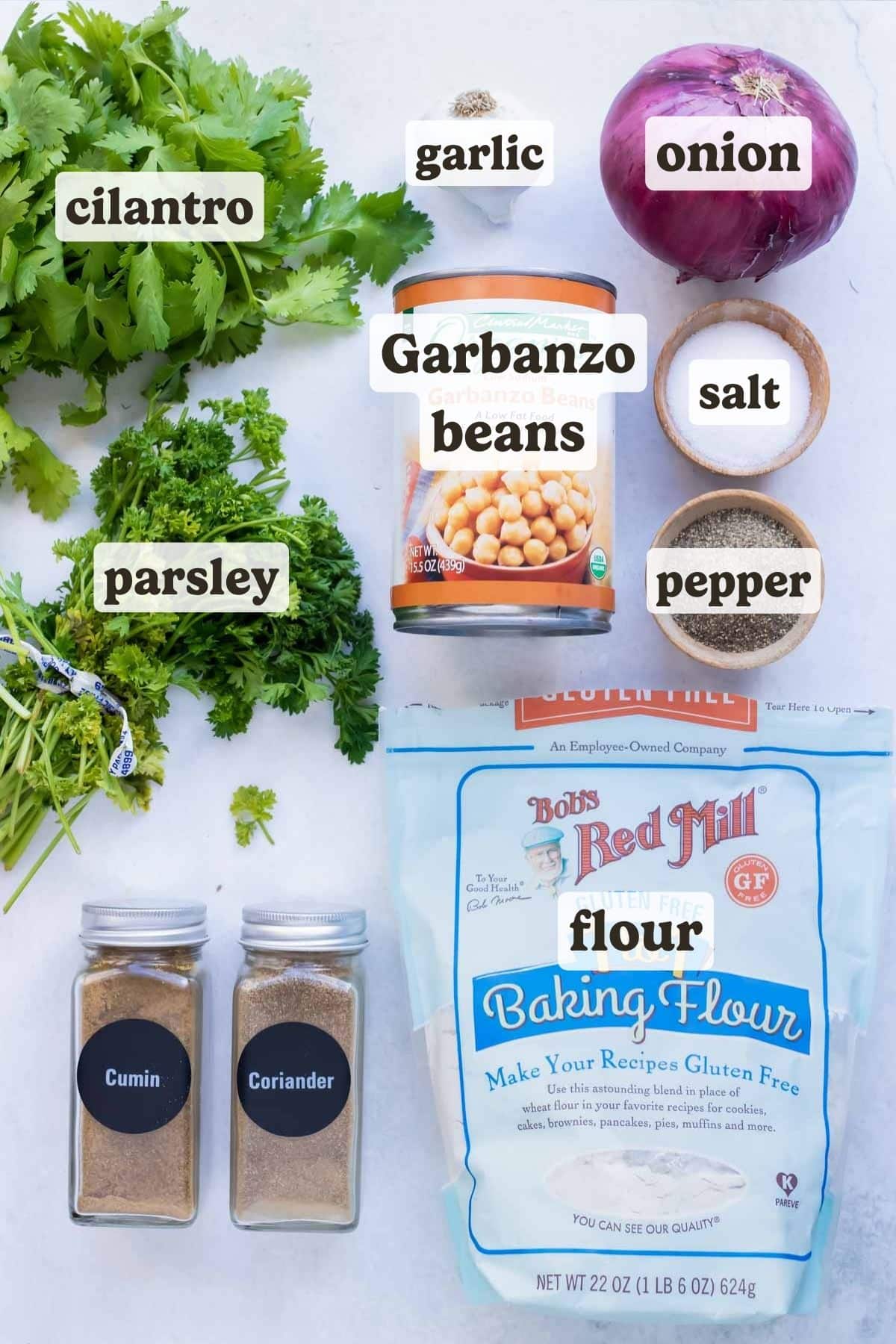
- Chickpeas: One standard can, rinsed, drained, and then dried really well. That drying step is what separates falafel that holds together from falafel that doesn’t.
- Cilantro and parsley: Both go in, and the combination is what makes falafel taste like falafel. If cilantro isn’t your thing, use all parsley and add a little extra.
- Red onion: Finely chopped so it disappears into the dough. Yellow or white onion works too, it’s just a bit sharper.
- Gluten-free flour: A 1-to-1 all-purpose blend is the binder here. Regular all-purpose flour works the same way if you’re not avoiding gluten, and chickpea flour is a good swap if you want to keep it grain-free.
- Garlic: Crushed or finely minced. Fresh is worth it here since there’s nowhere for jarred garlic to hide.
- Baking powder: Small amount, big job. It keeps the inside light instead of pasty, which matters more with canned chickpeas than with soaked.
- Cumin and coriander: The warm, earthy base underneath the herbs. Cumin is the one you’d notice if it went missing.
- Cayenne: Optional and just a pinch. It adds a little warmth in the back without making them spicy.
- Avocado oil: For pan frying, since it handles medium heat well. Olive oil works too.
How to Make Falafel
Please see the recipe card below for the full instructions, ingredient amounts, and a printable recipe.
Dry the chickpeas well
Rinse and drain the can, then spread the chickpeas out on a towel and pat them dry. Take an extra minute here, since it’s the step that decides whether they hold together.
Do not skip the drying
Canned chickpeas hold onto more water than you’d think, and that water is what turns falafel dough into paste. A clean kitchen towel and thirty seconds of patting is all it takes.
Pulse it in the food processor
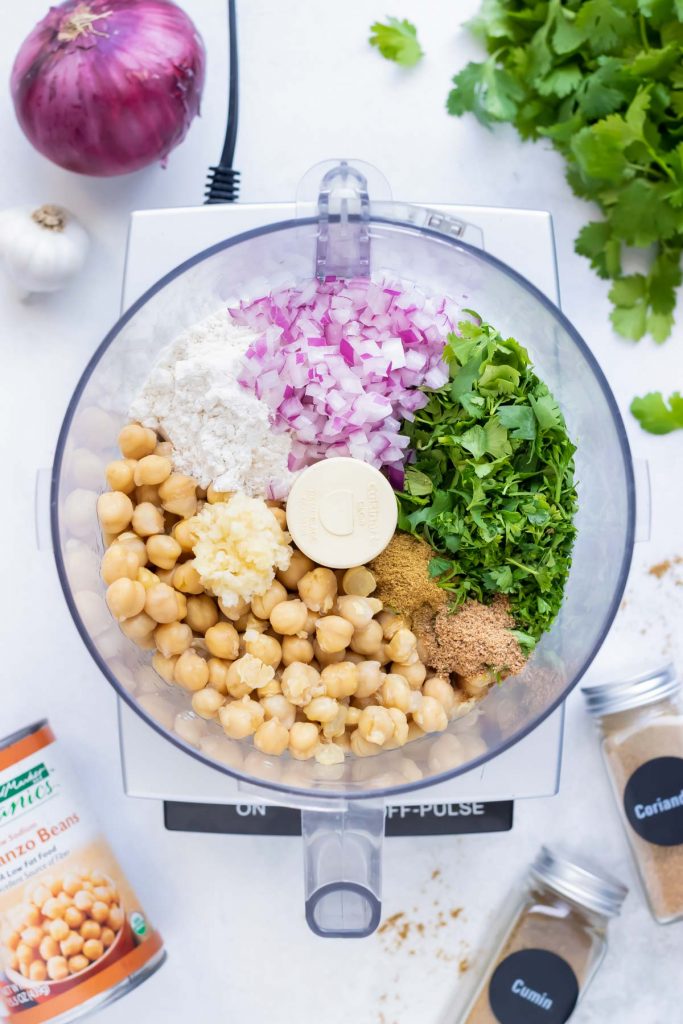
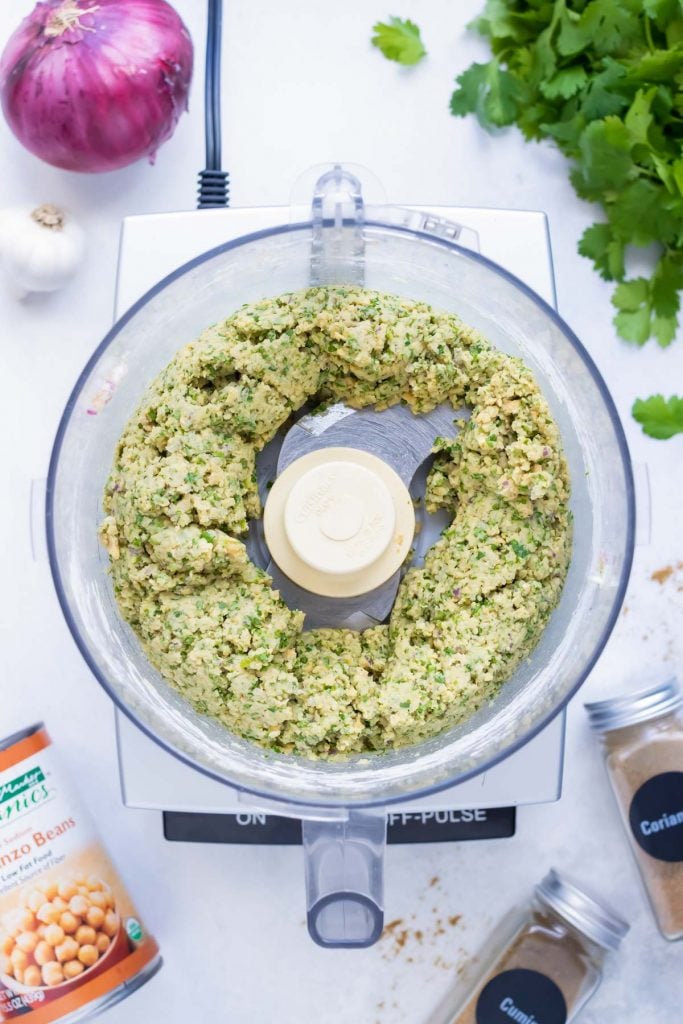
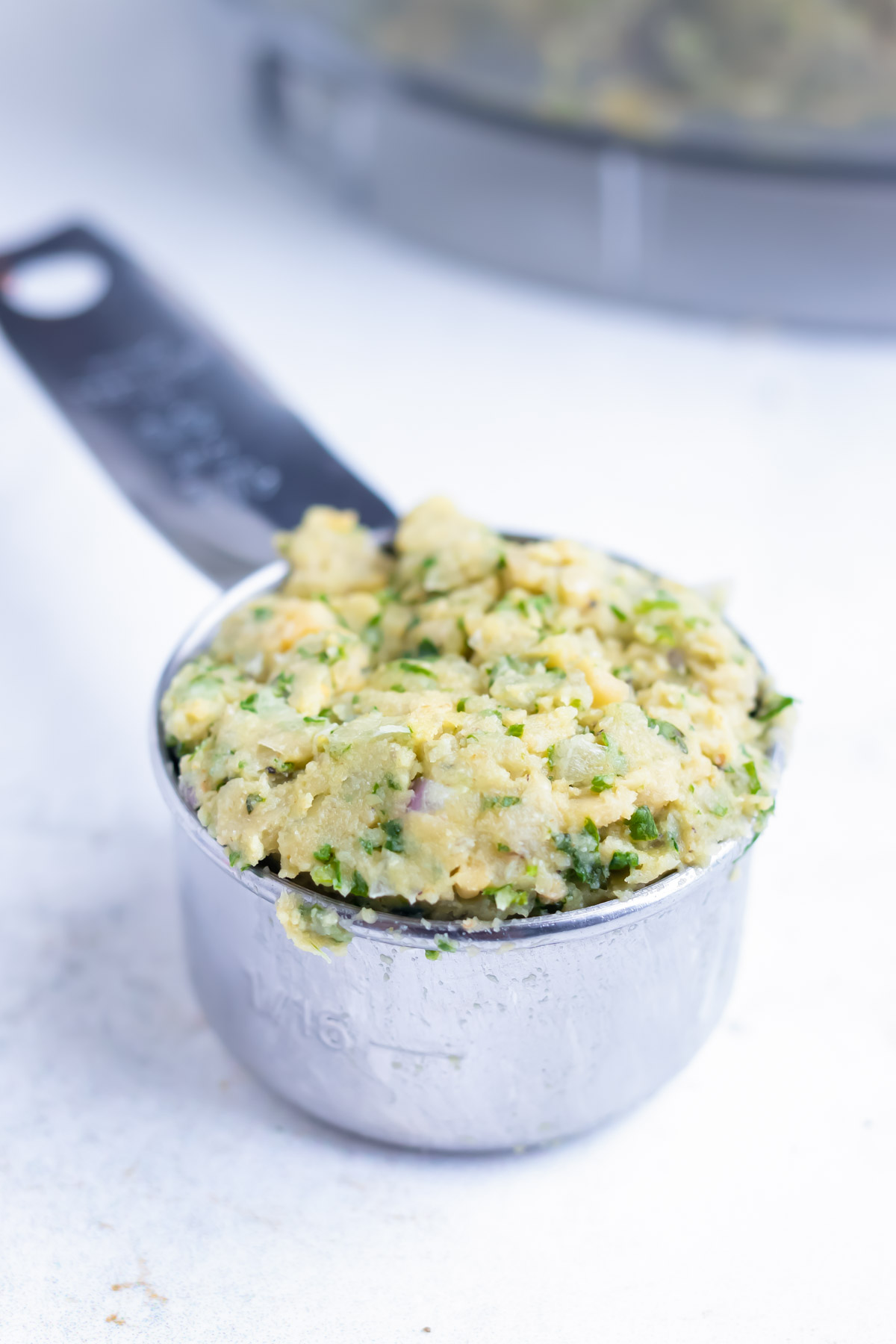
Add everything except the oil to a food processor and pulse 30 to 40 times. Stop when the mixture just starts clumping together, while you can still see individual bits of chickpea and herb.
Pulse, don’t purée
If you let the processor run, you’ll end up with hummus instead of falafel dough, and it won’t hold a patty shape. Short pulses, and check it often.
It saves SO much time!
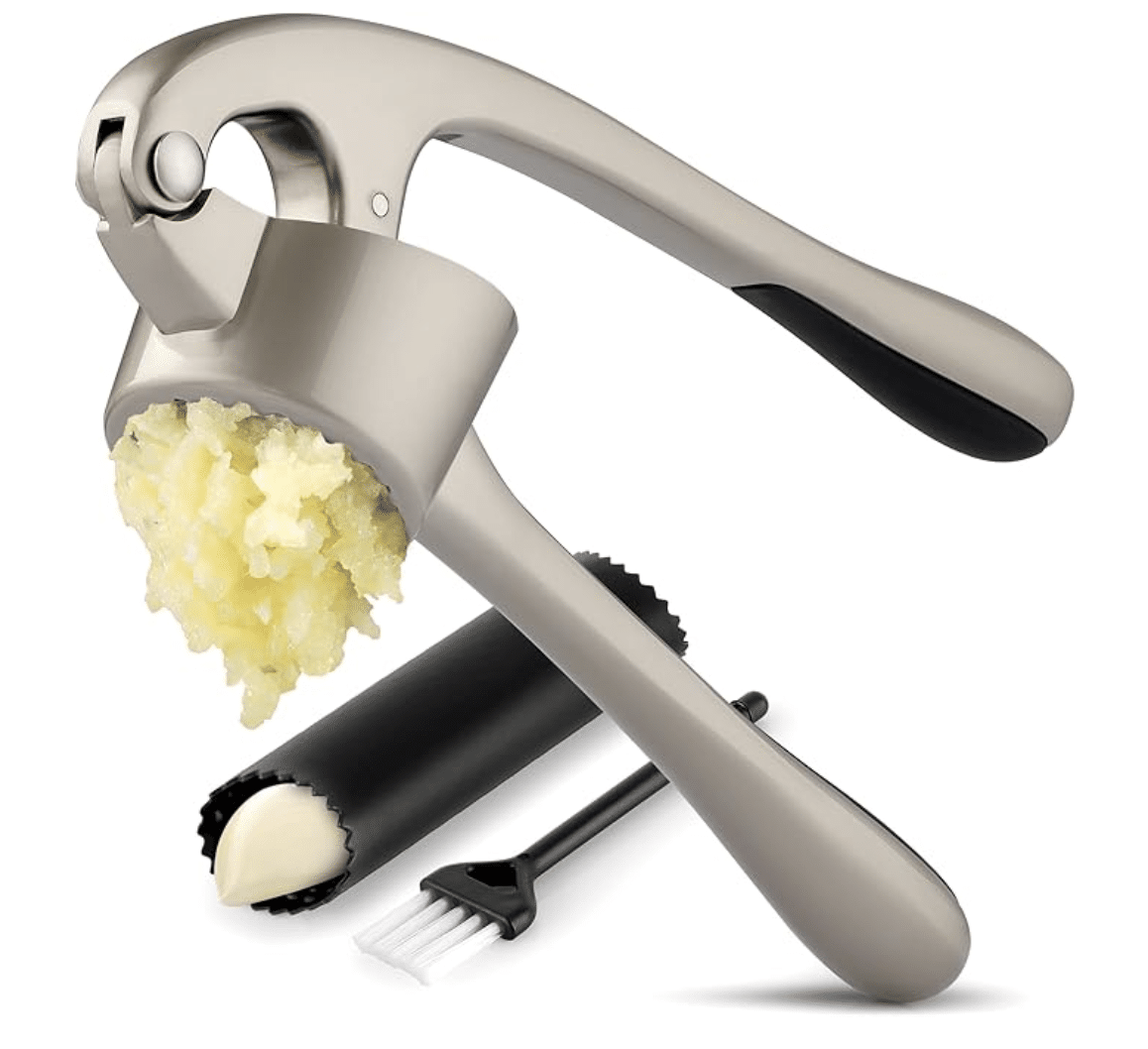
Since it’s super important to get the garlic pretty small for this recipe, a garlic press like this one is a lifesaver!
It’s easy to use, finely minces the garlic, and does it in a fraction of the time as chopping it up by hand.
Chill the dough
Move the mixture to the fridge for 30 to 60 minutes. The flour takes on the extra moisture and the dough firms up enough to shape without sticking to your hands.
Shape into flat patties
Scoop about 2 tablespoons and press it into a patty roughly a half inch thick. You’ll get around 12, and flat is deliberate since patties cook evenly where balls tend to crack.
Pan fry or bake
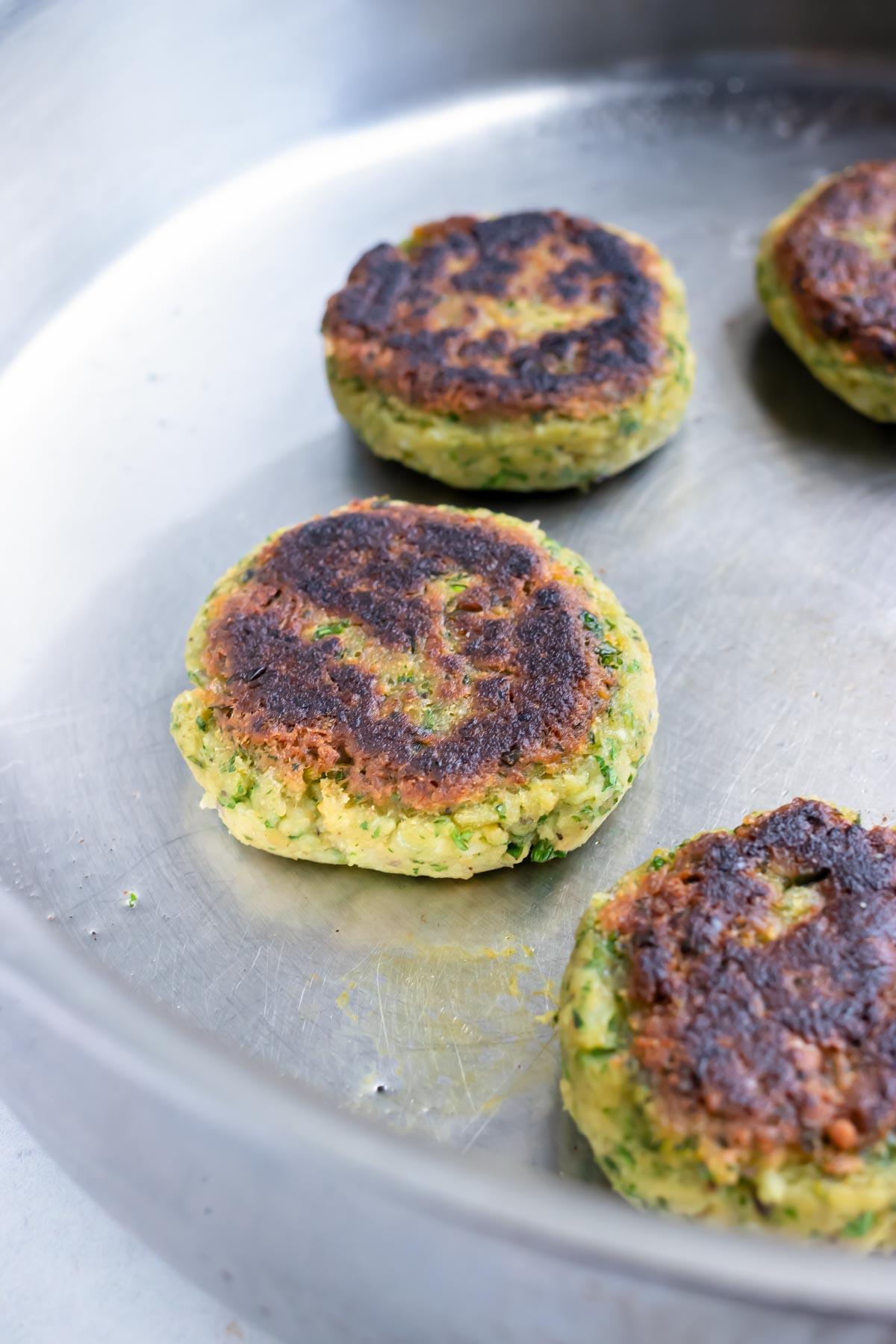
For the skillet, heat a tablespoon of oil over medium and cook 6 at a time for 3 to 4 minutes per side.
To bake instead, put them on a parchment lined sheet at 350 degrees for 15 to 20 minutes, flipping halfway.

The Sheet Pan I L❤️VE!
Your veggies will end up steaming instead of roasting if you overcrowd the pan. So my tip… use the largest sheet pan you have and spread everything out!
Serve them warm
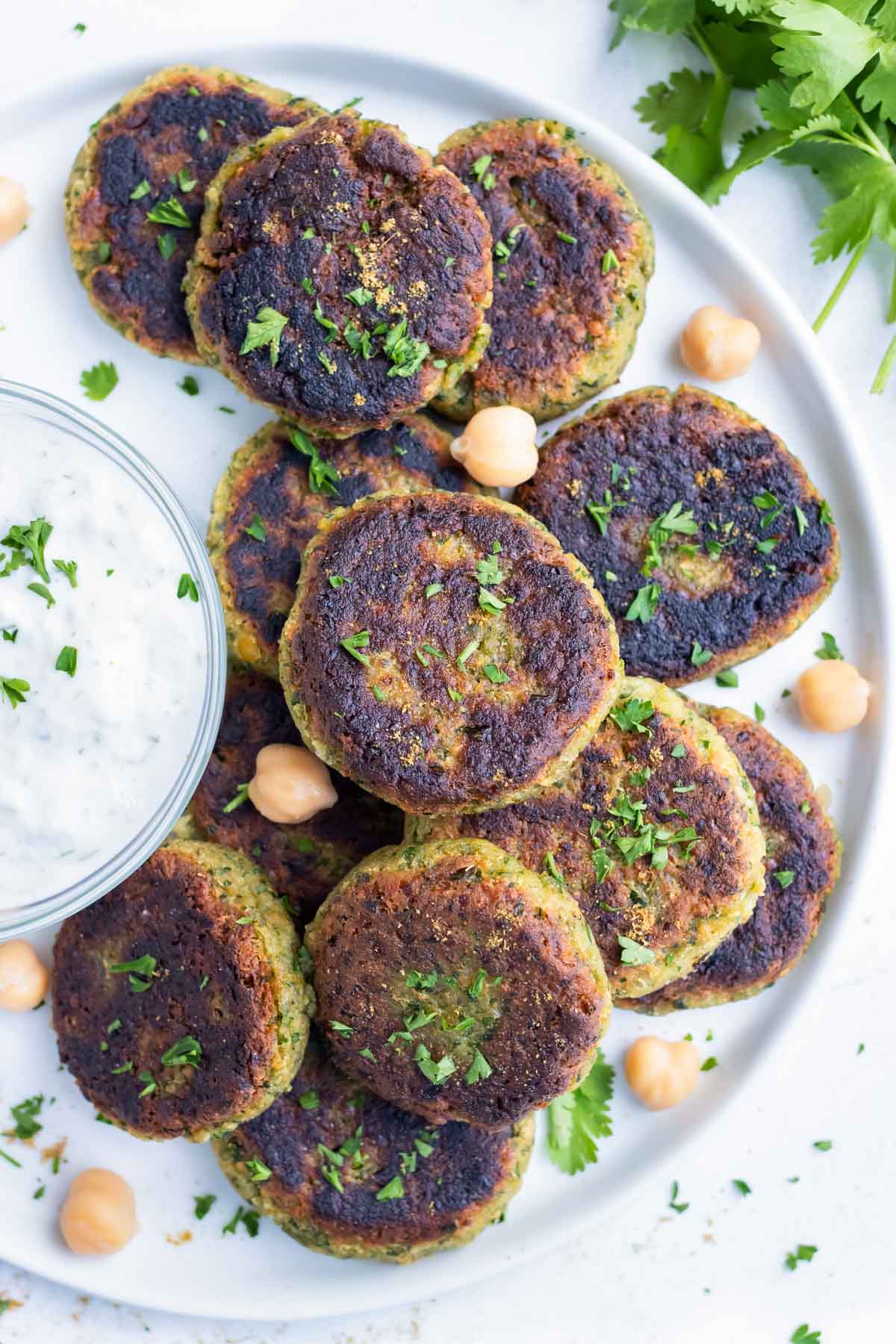
Tuck them into pita with tzatziki, cucumber, and tomato, or pile them over a salad. They’re best within a few minutes of coming out of the pan, while the outside is still crisp.
Oops! What did I do wrong?
My falafel fell apart in the pan.
Almost always one of three things: the chickpeas were still wet, the dough didn’t chill long enough, or you shaped them into balls instead of patties. Give the dough another 20 minutes in the fridge and press them flatter, and they’ll hold.
The inside came out mushy.
That’s moisture. Pat the chickpeas dry before they go in the processor, and make sure you’re not over-pulsing, since breaking them down completely releases even more water.
They turned out dense and heavy.
Usually over-processing. You want visible texture in the dough, not a smooth paste, and it’s worth checking that your baking powder is still active since that’s what keeps the middle from going solid.
They taste flat.
Falafel needs more salt than you’d guess and a lot of fresh herb. Taste the raw dough before you shape it and adjust, since the recipe gives you a salt range on purpose.
The outside browned before the inside cooked.
Your heat is too high. Medium is right for a half inch patty, and if they’re coloring fast, pull the pan off for a minute and let it come down.
FAQs
It’s the one piece of equipment that really matters. A blender over-processes the mixture into a purée, and chopping by hand won’t get the chickpeas broken down enough to bind.
If you only have a blender, pulse in very short bursts and scrape down constantly.
They are. There’s no egg in the dough, so the gluten-free flour and baking powder do the binding on their own.
You can, and you’ll get a slightly coarser texture. Soak them 12 to 24 hours and drain them well, using them raw rather than cooked, and you can skip the chill since the dough will already be firm.
Falafel is a Middle Eastern and Mediterranean dish made from ground chickpeas, fresh herbs, garlic, and warm spices, shaped into balls or patties and cooked until the outside is crisp. Parsley and cilantro do most of the work on the herb side, with cumin and coriander behind them. It’s traditionally served in pita, over salads, or alongside hummus and tzatziki.
Traditional falafel is naturally vegan, and as long as the flour in it is a gluten-free blend, it’s naturally gluten-free too.
Falafel itself is usually gluten-free, but the version you order out often isn’t.
The chickpeas, herbs, and spices are all naturally free of gluten. The problem is what gets added.
If you’re ordering out, it’s worth asking two questions: what’s in the mix, and is the fryer shared? A lot of places genuinely don’t know, which is its own answer. Making it at home takes all of that off the table. This recipe uses a gluten-free 1-to-1 flour blend as the binder, so you know exactly what’s in it and exactly what it was cooked in.
Cooked falafel keeps in an airtight container in the fridge for 3 to 4 days. To reheat, use a skillet over medium or a 350 degree oven for a few minutes. Skip the microwave, since it steams them and you lose the crisp shell entirely.
Freeze them cooked and fully cooled, in a single layer on a sheet pan first, then move them to a bag for up to 2 months and reheat straight from frozen in the oven. Fair warning, they come back a little softer inside than they were fresh, though the outside crisps up again just fine.
Tap stars to rate!
Gluten-Free Falafel Recipe

email this recipe!
Ingredients
- 15 ounces can chickpeas rinsed and drained
- ½ cup cilantro finely chopped
- ½ cup parsley finely chopped
- ½ cup red onion finely chopped
- ¼ cup flour gluten-free 1-to-1 blend
- 3 cloves garlic crushed
- 1 teaspoon baking powder
- 1 teaspoon cumin
- ½ teaspoon coriander
- Pinch of cayenne pepper optional
- ½ – ¾ teaspoon salt to taste
- ¼ teaspoon black pepper
- 2 tablespoons avocado oil or olive oil

Instructions
- Add all of the ingredients, except for the oil, to a large food processor with an S-shaped blade.15 ounces can chickpeas, ½ cup cilantro, ½ cup parsley, ½ cup red onion, ¼ cup flour, 3 cloves garlic, 1 teaspoon baking powder, 1 teaspoon cumin, ½ teaspoon coriander, Pinch of cayenne pepper, ½ – ¾ teaspoon salt, ¼ teaspoon black pepper
- Cover the processor with a lid and pulse ingredients for 30-40 times, or until the mixture just starts to clump together.
- Refrigerate mixture for 30-60 minutes to help the dough stick together.
- Scoop out 2 tablespoons of dough and shape into a patty about ½-inch thick. Repeat with the remaining falafel dough. You should end up with about 12 patties.
To Cook in Skillet:
- Add 1 tablespoon of oil to a large stainless steel or non-stick skillet over medium heat.
- Place 6 of the falafel into the skillet once the oil begins to sizzle and cook for 3-4 minutes per side. Repeat with the remaining oil and patties.
To Bake in Oven:
- Preheat oven to 350 degrees.
- Place falafel patties evenly spaced on a large baking sheet lined with parchment paper.
- Bake in preheated oven for 15-20 minutes, flipping halfway through.
- Serve falafel with Greek Tzatziki sauce and homemade pita bread. Enjoy!
Tap stars to rate!
Notes
- Dry the chickpeas: After rinsing and draining, pat the chickpeas dry with a towel. This is the most important step for falafel that holds together.
- Don’t over-process: Pulse 30-40 times only. You want visible texture, not a smooth paste.
- Make ahead: Mix the dough and refrigerate up to 24 hours before shaping and cooking.
- Storage: Store cooked falafel in an airtight container in the refrigerator for 3-4 days.
- Reheating: Warm in a skillet over medium heat or in a 350 degree oven. Skip the microwave, it makes them soggy.
- Freezing: Freeze cooked and fully cooled falafel in a single layer on a sheet pan, then transfer to a bag for up to 2 months. Reheat from frozen in the oven. They come back slightly softer inside than fresh.
Nutrition
Nutrition information is automatically calculated, so should only be used as an approximation.
What to serve with falafel
The classic move is falafel in warm pita bread with a thick spoonful of Greek Tzatziki Sauce, some chopped cucumber and tomato, and a little red onion. If you want the sauce situation to get serious, put out Easy Homemade Hummus and Baba Ganoush next to it and let everyone build their own.
For a bigger plate, Mediterranean Yellow Rice is what I’d put underneath them. It cooks on the stovetop while the falafel is in the fridge chilling, so the timing works out without any juggling.
On the salad side, Greek Pasta Salad and Mediterranean Chickpea Salad both go great here, and a simple pile of greens with Greek Salad Dressing is enough if you’re keeping it easy. Falafel on top of a salad instead of in a pita makes a genuinely good lunch the next day.
And if this turns into the meal you keep coming back to, Arayes and Greek Chicken Tacos with Tzatziki live in the same weeknight territory.
More chickpea recipes
One can of chickpeas goes a long way around here. These are the ones we keep reaching for.
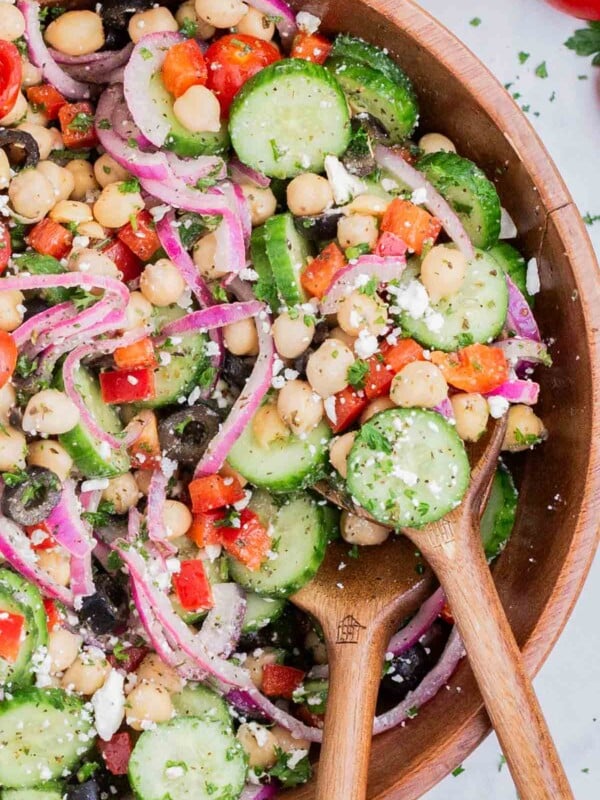
Mediterranean Chickpea Salad
20 mins
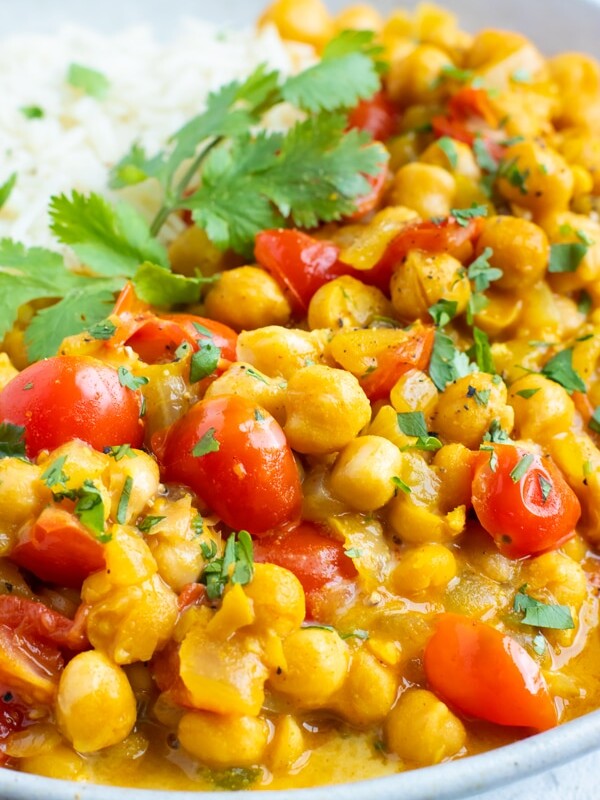
Chickpea Curry
30 mins
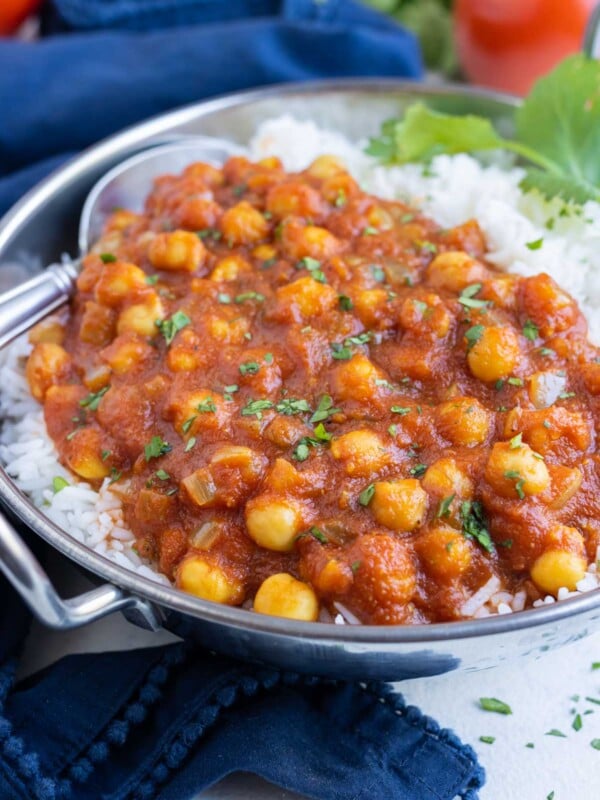
Chana Masala
30 mins
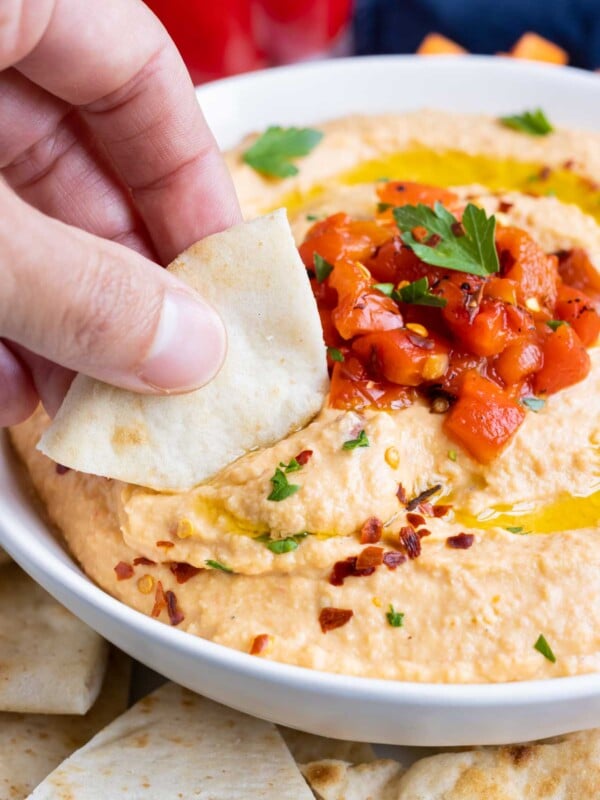
Roasted Red Pepper Hummus
10 mins
Excellent and easy. Holds together
Yay! So happy to hear you enjoyed the recipe, Hope! Thanks so much for taking the time to leave a comment and rating!
Hi it says it makes12 servings does that mean 1 serving is 1 falafel per person? Is it 69cals for one falafel? Usually 3 would be 1 serving.
Hi Tamsin! Yes, 1 falafel is 1 serving, so the recipe should make 12 falafels coming in at 69cals/falafel. Hope you enjoy the recipe!